Look Who I Found!

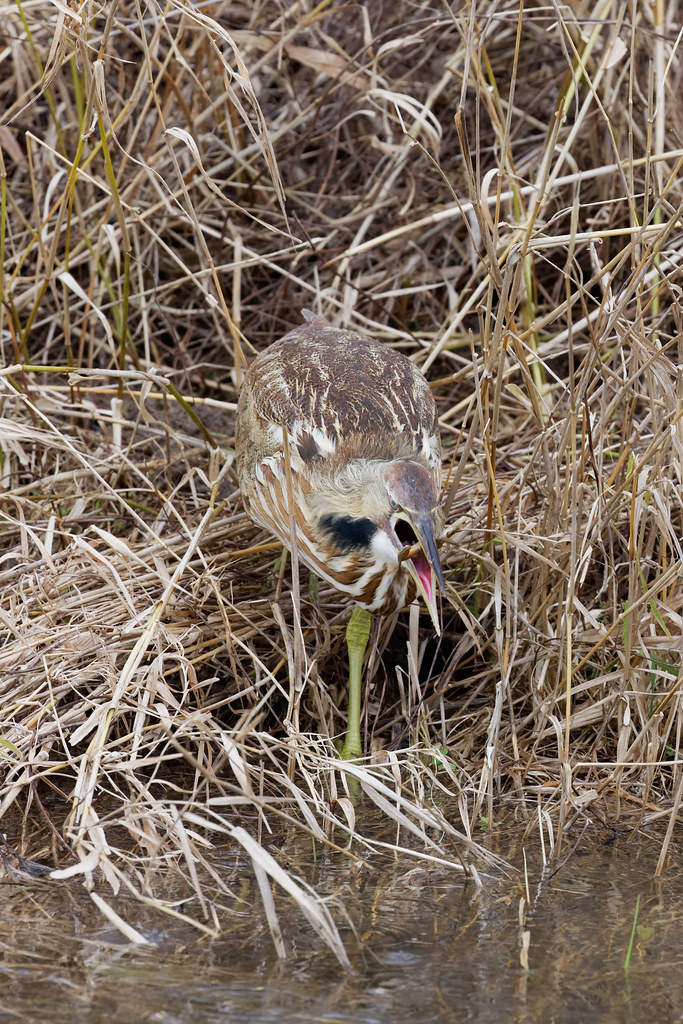
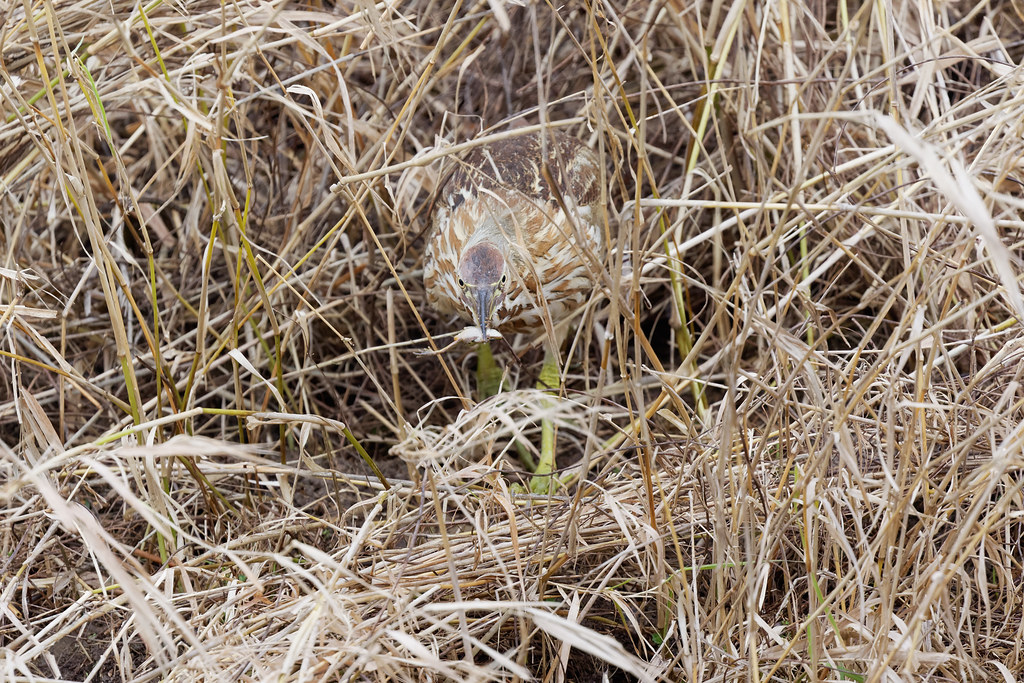
A close-up of an American bittern hunting in tall grasses

I visited Ridgefield a handful of times over the Christmas break and was saddened to see that my favorite spot to watch bitterns, a little strip along Rest Lake, had been mowed close to the ground. There is plenty of cover in other areas near this strip so the bitterns still have ample places to hunt, they just won’t be visible from the road. So I was ecstatic on my last visit, when I had stopped to watch some bufflehead in an earlier section of Rest Lake, to notice this bittern hunting in the tall grasses. I only had a little window through the grasses to see it but it was a real delight to watch one of my favorite birds again.

Settling In

An American bittern in tall grasses at sunset

An American bittern seemingly ready to settle in for the night. It had been hunting up and down the channel in a light afternoon rain, but as the sun peaked out at sunset it settled into the grasses and hunkered down. Which made me wonder, where do bitterns spend the night? I’ve no idea if it was going to stay here for a while, but it was a lovely little parting gift on Christmas of 2014, as after taking these pictures I left for home.

The picture below is a zoomed in version of the bittern. I had upgraded my camera gear not long before, picking up the Canon 7D Mark II camera in late October and the Canon 100-400 mm II lens in mid-December. The new lens replaced my old 100-400 lens which I had for almost 14 years, but it was having some issues after so much use (I took it on every hike I went on) so I’m glad Canon finally updated it. This picture was zoomed in to 400mm, the top picture was at 100mm.

Really love this lens, very thankful for it.

An American bittern in tall grasses at sunset

Catch, Dunk, Swallow

An American bittern swallows a Pacific treefrog

They say pictures never lie but they can certainly give the wrong impression. This American bittern, swallowing a treefrog it just caught, caught it further away from the water but came down to the water, dunked it, and swallowed it. As adults treefrogs often live near water but spend most of their time on land (and more often near the ground rather than in trees). The bittern has covered both its eyes with a nictitating membrane to protect them as it flips the frog down towards its throat.

Backside

An American bittern scans the water for food

One benefit to earning an animal’s trust is that you can often watch it for a long period of time. The downside is that it often has its back to you as it doesn’t consider you a threat. I had been watching this bittern hunt on the far bank for over an hour when it swam over and sat down right in front of me. It turned around to scan the water and I loved the geometry formed by its body and beak, its two round eyes sticking out from the side of its head.