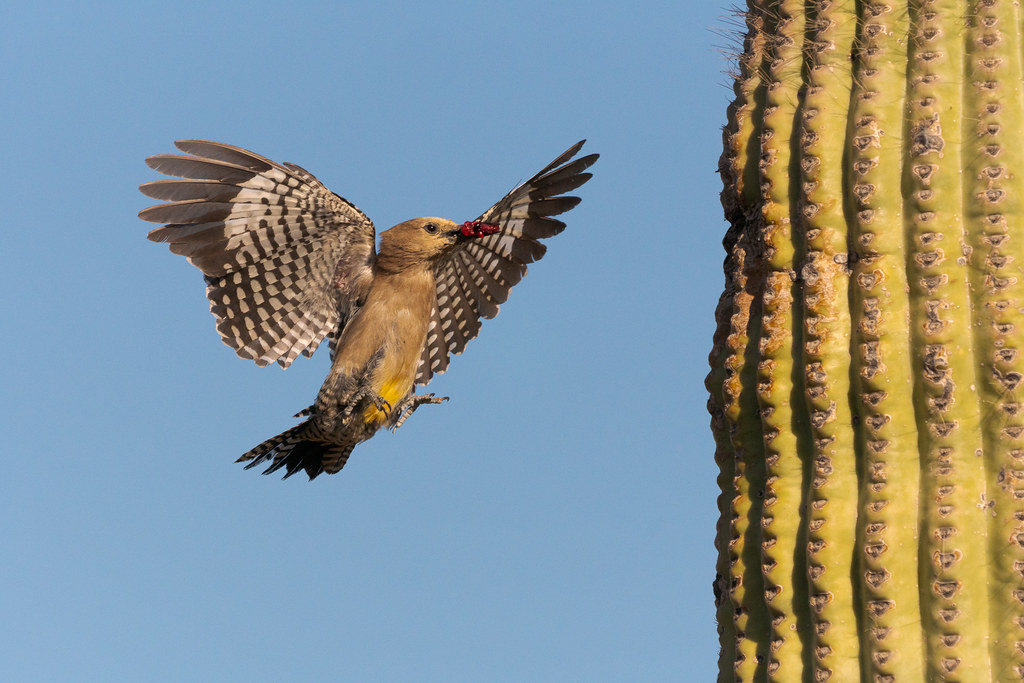
Early on a spring morning, a Gila woodpecker brings food to her hungry babies waiting inside the saguaro. I’m not sure what she’s holding in her bill, my first thought was fruit but I couldn’t tell for sure (the saguaro’s aren’t fruiting yet). What a jewel she is!
Tag: cactus
Environmental
I’ve photographed Harris’s hawks up close several times the past couple of weeks but I was delighted to make an environmental portrait of a distant adult as light from the rising sun swept over the desert. The palo verdes below it were in full bloom while some of the saguaros towering above it were just starting to flower.
Rage, Rage Against the Rising of the Light
A Harris’s hawk calls out from atop a blooming saguaro in the moments before the sun rises above the distant peaks. I’m guessing it did rise, a heavy cloud cover blanketed the desert so the sun hid its face most of the morning. Perhaps the hawk was staying in touch with another hawk on a nearby saguaro, or perhaps like me it was protesting the earlier and earlier rising of the sun. My alarm went off at 4:15am that morning!
Morning Face
Thankfully I managed to get up at 4:30am on Friday, Saturday, and Sunday and was on the trails before sunrise, as that is how I met this Gila woodpecker shortly before the sun crested the hills behind me. Most of the saguaros old enough to bloom don’t have flowers yet but are putting out buds that make handy perches. Some of those buds have bloomed, however, as evidenced by the pollen covering the front half of his head.
The Marcus Landslide
According to the signs along the trail, the Marcus Landslide occurred 500,000 years ago, which is before we moved to Arizona. The landslide itself was only discovered in 2002 by a couple of graduate students who named it after a geology professor who died while leading students on a field trip. The estimates are that the original height of the area was 4100 feet (taller than any of the other McDowells) and that 25.8 billion pounds of debris fell 1300 feet and spread out over an area 4000 feet long and 1650 feet wide. It’s a bit unusual in that the slide spread out over a much longer area than the height of the fall, making the resulting landslide less obvious. In addition to the scenery I love the trail because of the wildlife, it’s a fantastic spot for seeing phainopepla in the winter and with all the boulders I’m hoping an excellent spot for lizards now that they are out of hibernation.
Beauty All Around
It has been a sad day but not a day without beauty. In between talking to the vet in the morning and taking Ellie in to be euthanized, I walked into my office and saw Boo and Trixie transfixed in the window. I walked over assuming they were looking at a bird and was delighted to instead see a western whiptail in the bushes next to the window, a favorite lizard on the trails but a new yard species for me. When we got home with heavy hearts after saying goodbye to Ellie, I saw a cactus wren in the backyard, a first for the new house although I had seem them at the rental house and of course on the trails. This one was perching on a saguaro fruit last summer in McDowell Sonoran Preserve.
It’s a Good Thing Saguaros Aren’t Carnivorous
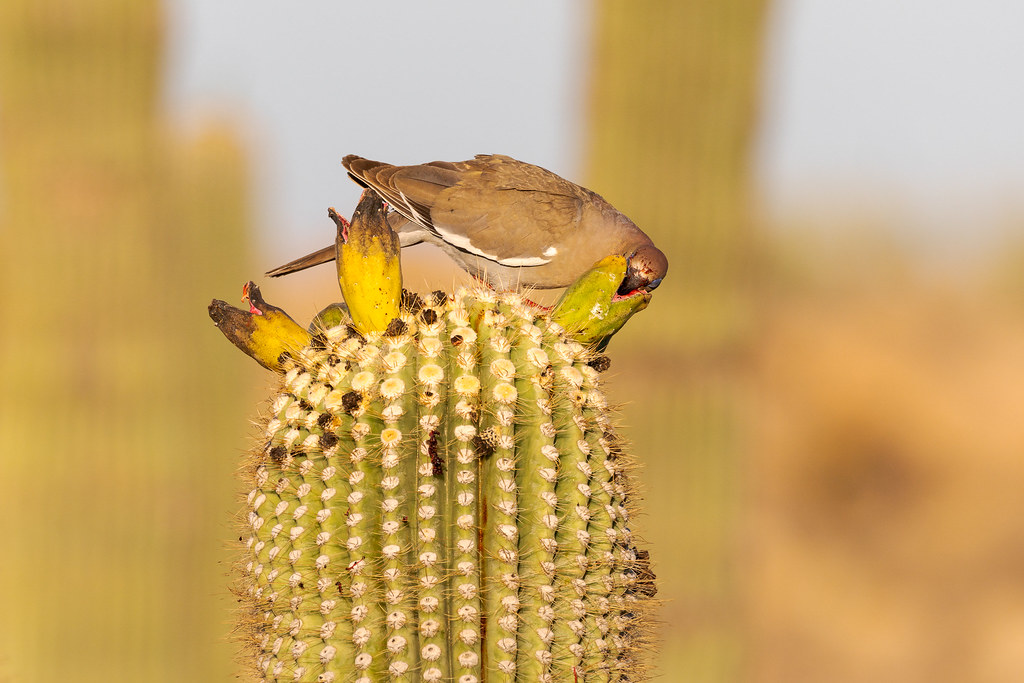
Last spring I was amazed at how many birds fed at saguaros as they bloomed and fruited, such as this white-winged dove sticking its face into fruit at the end of an arm along the Latigo Trail. It’s a good thing saguaros aren’t carnivorous or a lot of birds would lose their heads!
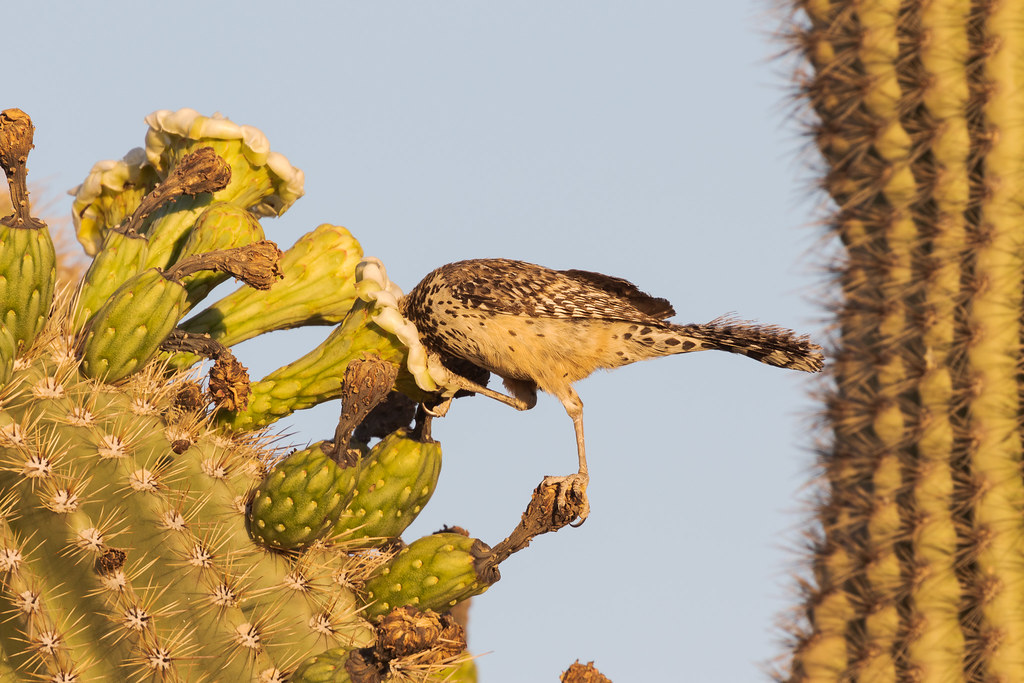
Cactus wrens are smaller than the doves but still large for wrens, this one stuck its head deep into a blossom on the saguaro where it was building its nest and raising its young. When it emerges its head will be covered in pollen, some of which will be deposited at the next blossom it visits.
The tiny verdin had to stick most of its body into the fruit to feed at the back, in this picture it is feeding closer to the front and only its head is hidden. When the fruit ripens it is the white-winged doves that eat the most, but other birds enjoy the short-lived bounty as well.

Early to Rise
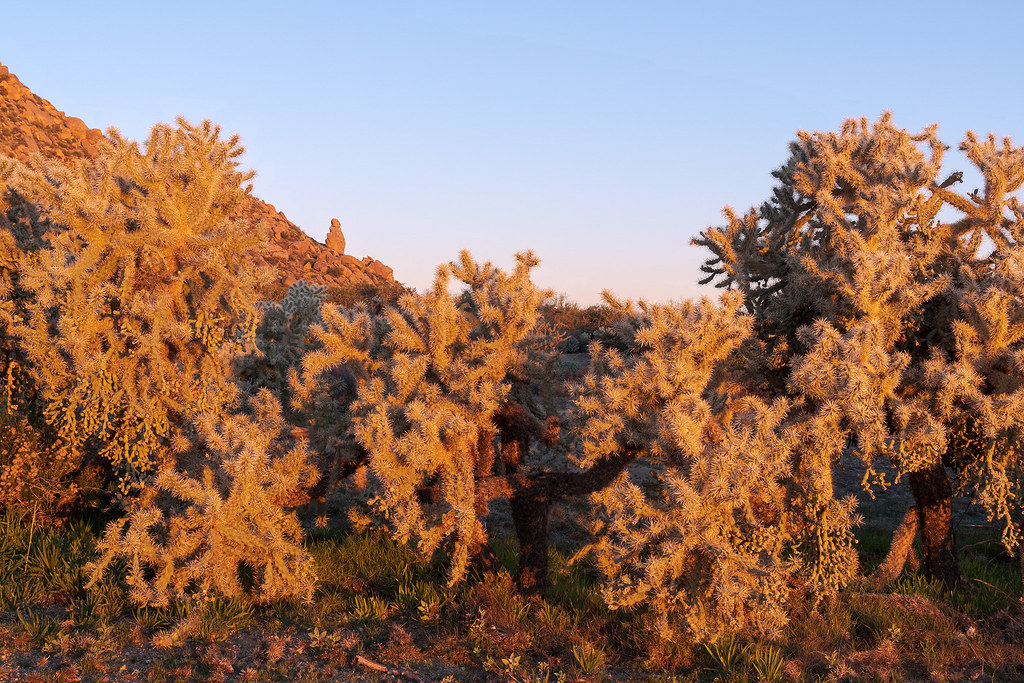
In December I arrived when the Tom’s Thumb trailhead opened so I could hoof it out as quickly as possible to photograph this bank of chain fruit cholla before sunrise, with my beloved Guardian looking out over the desert in the background. At that time of year I can hike as fast as I can without worrying about surprising a rattlesnake as they are still hibernating. My favorite shot turned out to be the first one of the desert bathed in the soft blue light before the sun rose above the mountains behind me, but I also like the one below of the same scene bathed in the red light of sunrise.