Turning Rocks Into Lizards

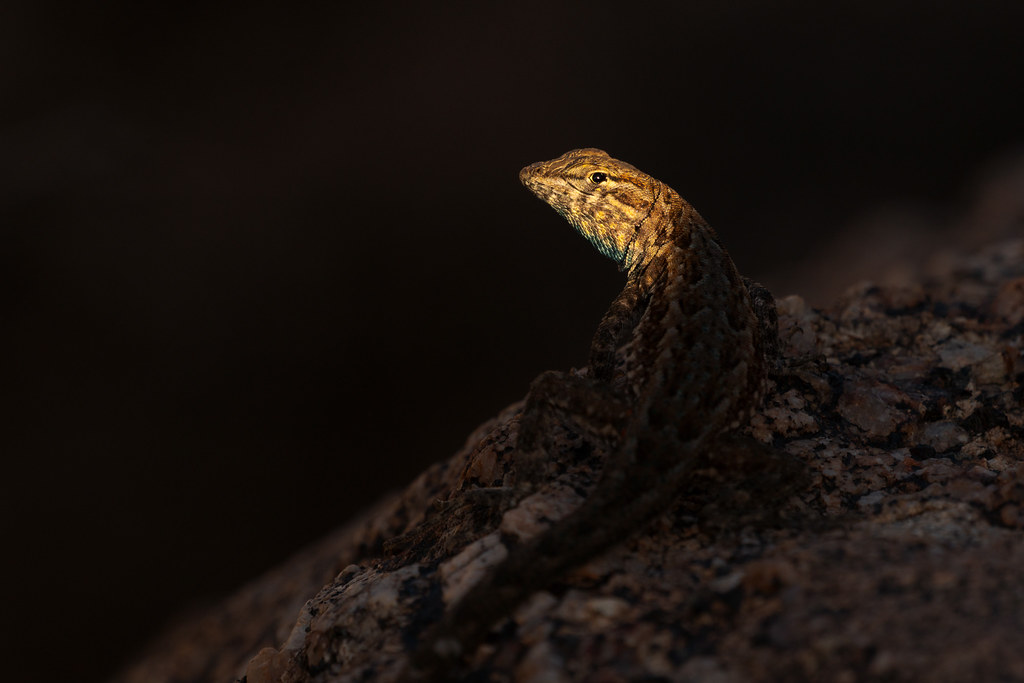
A desert spiny lizard peeks out from behind a rock on the Rustler Trail in McDowell Sonoran Preserve in Scottsdale, Arizona

As I hike the pattern recognition part of my brain is constantly scanning for objects that might be wildlife even though they often turn out not to be. I spent a summer in Florida in the mid-90’s and was delighted by the many alligators there, it took years after we moved to Oregon for that part of my brain to stop trying to identify possible alligators when I hiked in marshland. In Yellowstone on a gravel road there was a large rock in the distance that in the periphery resembled a bear. I loved that road and drove it a number of times and as I approached that spot, I’d tell myself not to be fooled even for an instant by what I came to call Bear Rock. But every time the pattern recognition would kick in for a fraction of a second and say “Hey is that a …” before the rest of my brain would reply “I just told you it wasn’t going to be a bear!”

Here in the Sonoran Desert I am fooled by cholla skeletons that look like rattlesnakes, twigs like small lizards, granite protuberances like large lizards. I try to use my mental powers to turn rocks into lizards but usually I fail, rock stays rock. But sometimes I succeed and the rock comes to life, such as this beautiful desert spiny lizard on the Rustler Trail in McDowell Sonoran Preserve. One success is worth a thousand misses.

Do Not Adjust Your Sets

A wavy pattern in a saguaro cactus along Brown's Ranch Road in McDowell Sonoran Preserve in Scottsdale, Arizona

The early morning light falls on one of my favorite saguaros, I love its wavy pattern and look for it whenever I’m hiking Brown’s Ranch Road. If you’re too young to understand the reference in the title and never experienced adjusting horizontal and vertical hold on a television, consider yourself lucky. In my day …

Disappearing Act

A white-winged dove perches on an ocotillo starting to leaf out after the summer rains in McDowell Sonoran Preserve

This ocotillo had just started leafing out in the middle of July with the arrival of summer thunderstorms in the Sonoran Desert. The white-winged dove perched in the morning light is one of thousands I have seen, they are not only the bird I see most in our backyard but out in the desert as well, never more so when seemingly one or two or three were atop every saguaro as they devoured the ripening fruit. But after a self-imposed two week ban to allow a knee to heal, I returned to the trails twice last weekend and didn’t see a single one. Not one!

From what I’ve read, the white-wings arrived in the desert about the time I did and will be leaving this fall. So I suppose in a month or so they will be gone from our backyard as well. The smaller mourning doves and much smaller Inca doves will appreciate it, the larger white-wings are more aggressive, but our cats and I will miss them.

Soft Browns

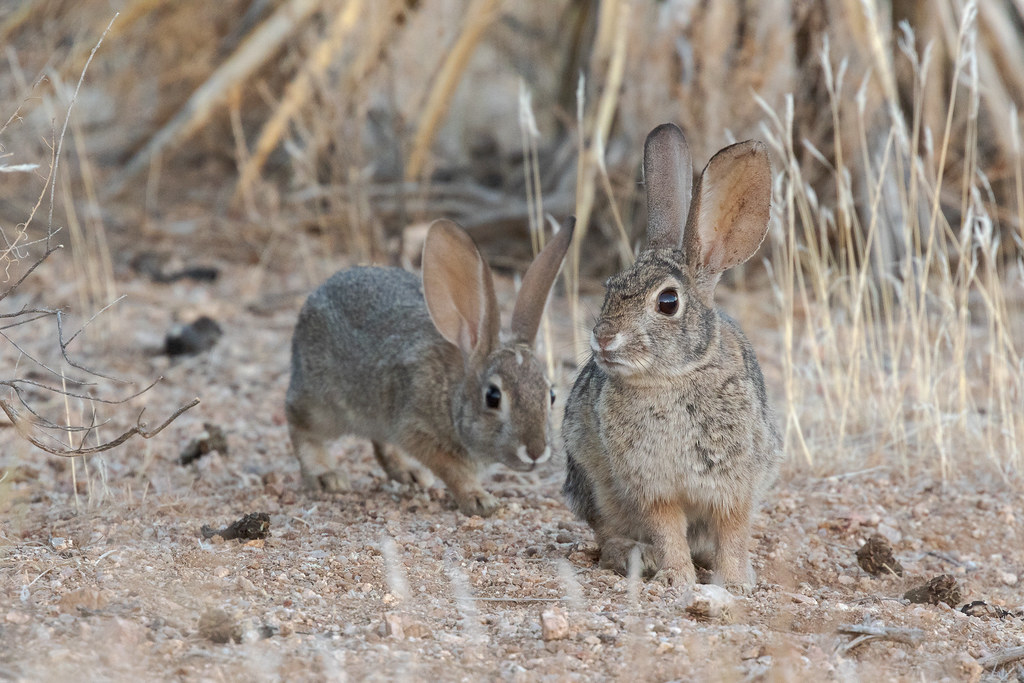
A desert cottontail eats dried grasses in the soft light before the sun was up on a warm spring morning in the Brown's Ranch section of McDowell Sonoran Preserve in Scottsdale, Arizona

A desert cottontail eats dried grasses in the soft light before the sun was up on a warm spring morning. I was back on the trails this morning after taking a couple of weeks off to let a sore left knee heal and didn’t see a single cottontail (or jackrabbit), most of the time I see at least one if not a handful so either today I was unlucky or perhaps they are not as visible in the summer. I meant to go hiking yesterday but forgot to set my alarm so I walked the pup instead, Ellie and I saw four cottontails on a short walk in the neighborhood.

Under Tom’s Thumb

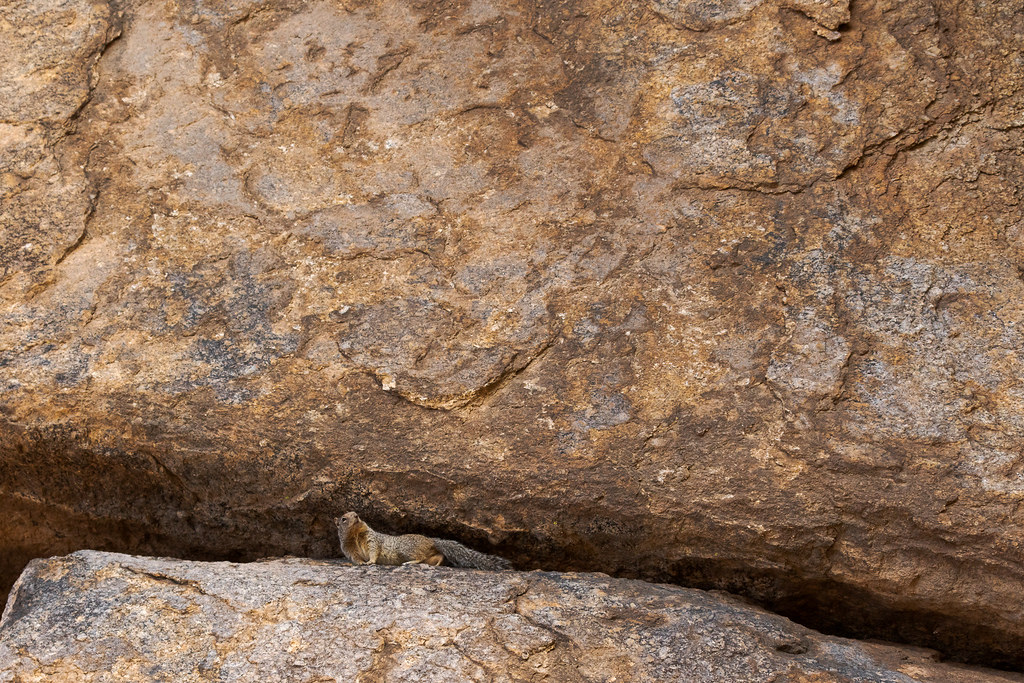
An environmental portrait of a rock squirrel between two massive granite rocks at Tom's Thumb in McDowell Sonoran Preserve

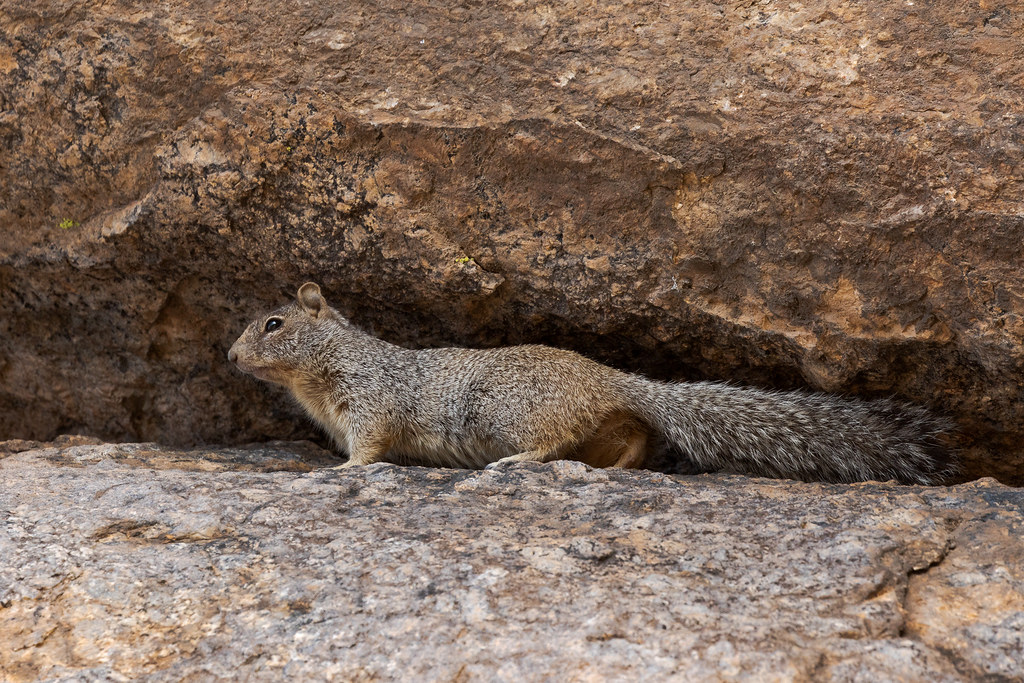
I met this rock squirrel back in April a few weeks after we moved here. One of the reasons I love a telephoto zoom like the 100-400mm lens so much (this is the Canon, I only got the Sony recently) is that you can zoom in and take a traditional portrait of a small animal far away, like the shot below, but you can zoom out and take an environmental portrait as well like the picture above (when the scenery allows it). In this case I vastly prefer the environmental portrait as you get a feel for the massive rock this squirrel is perching under. Given more time I would have preferred an ever wider perspective with a different lens to show that it was perched high off the ground between much more massive granite boulders above and below than you can see here, but the squirrel only paused for a moment as it ran up the rocks at the approach of a dog on the trail.

I was struck by how at ease this rock squirrel was in the rocks as it moved about the narrow passages and great heights as easily and gracefully as a tree squirrel in the trees. I was delighted to find both rock squirrels and Harris’s antelope squirrels in the desert as I had mistakenly surmised I was leaving squirrels behind when we left Oregon. I fell in love with chipmunks and squirrels at an early age, we had a forest behind our house as a child in Michigan, I can’t remember ever not loving them. They’re a rarer treat now than then, but a treasured treat always.

A rock squirrel between two massive granite rocks at Tom's Thumb in McDowell Sonoran Preserve

Learning to See in the Desert

A zebra-tailed desert on the ground near The Amphitheater in McDowell Sonoran Preserve

Hiking in the desert feels both normal and unfamiliar. I know so much more about this unique environment than when we moved here but I have so much more to learn. As I hike the trails I’m well aware that the animals are living their lives perhaps not far from where I’m walking but even for those within my sight I wonder how many I actually see. I’m still developing eyes for the desert.

I am making progress, each hike is an opportunity both to look and to see. While taking a water break near the Amphitheater I spotted what I thought might be a lizard in the scrub and walked closer with my camera, almost turning around on a couple of occasions when I became convinced it must be a stick or bit of dried cactus. Thankfully I kept going and discovered this lovely zebra-tailed lizard. It happened again this morning, out on the Rustler Trail I thought I saw another zebra-tail in the middle of the trail so I slowed my approach, but repeatedly doubted myself until I was close enough to remove all doubt.

Sometimes though I think I could live here for decades and still not see what lies before me. The only reason I saw the lesser nighthawk below was that I stopped for a water break and it flew towards a nearby rock before seeing me and settling down further off on this fallen tree, hidden in plain sight. I’ve seen them flying low over the desert numerous times but I now wonder how many I’ve passed that were settled in for the morning.

A lesser nighthawk is barely visible as it rests on a fallen tree in McDowell Sonoran Preserve

Look How Far the Light Came

A white-winged dove straddles two pieces of fruit on a saguaro cactus on the Latigo Trail in McDowell Sonoran Preserve in Scottsdale, Arizona

Look how far the light came
To paint you
This way
Bruce Cockburn “Look How Far”

It was 5:30 a.m. on July 4th as I walked along the Latigo Trail, most of the desert still in darkness. I stopped when the rising sun fell upon this tall saguaro and the white-winged dove feeding on its fruit. Minutes later the clouds in the east obscured the sun and its rays no longer fell upon the clouds in the west nor the cactus before me, save for the tip top where the dove stood. A moment later all was in shadow. I was struck by how much had to occur for me to be standing there, to catch the light that traveled many millions of miles in mere minutes, to behold its beauty and bear witness to its passing.