Two Halves

Two Halves

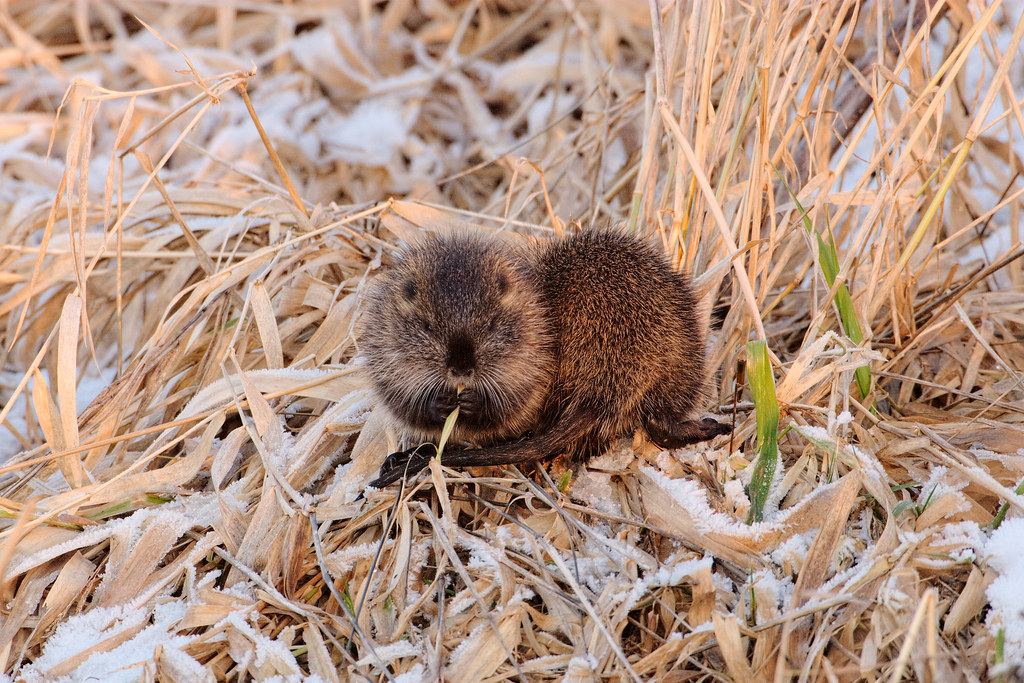
I got lucky with the top picture: the soft, warm light of sunset, the frost from an unusually cold winter day, the perfect pairing of these two baby nutria, one facing forward, the other backward, and the one nutria eating a blade of grass while holding it in its tiny hands. Then they each walked off into the shadows and out of my sight. Nutria are not native to the Northwest but they are by far the most commonly seen of our aquatic rodents, and as you can see are able to give birth and raise young even during winter.

A baby nutria walks across ice on a cold winter's day.

A baby nutria walks across frost and grass at the end of a cold winter's day.

Good Morning

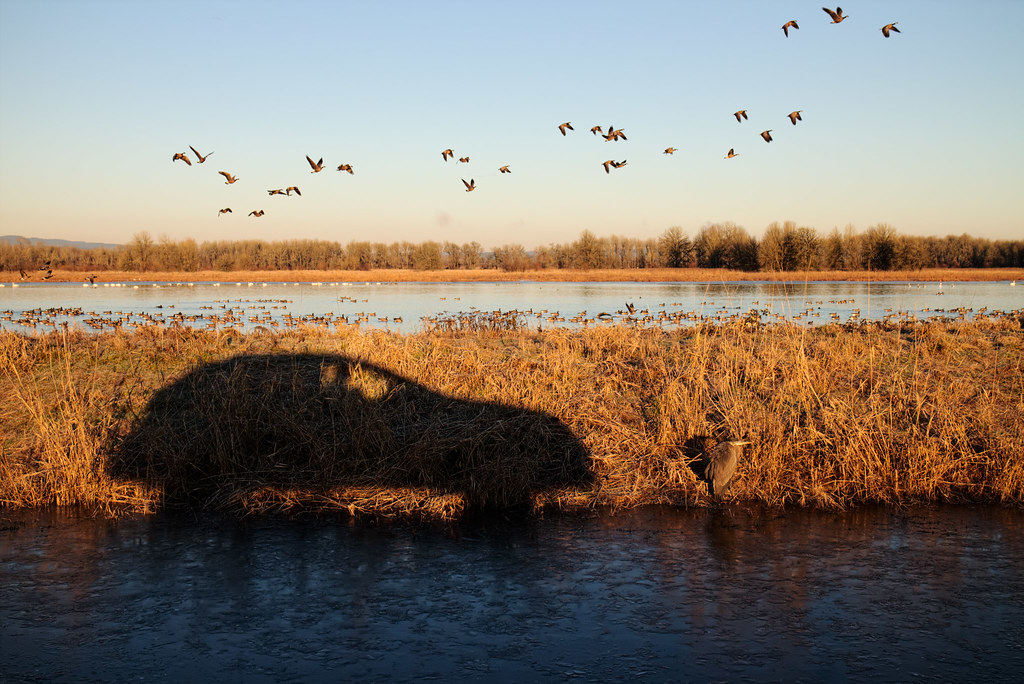
A view of Rest Lake at sunrise from my Subaru XV Crosstrek

The last day of the year got off to a cold but sunny start. I stopped at Rest Lake when I came across this great blue heron sitting beside the frozen channel and then sat listening to the cackling geese and tundra swans in the lake behind it. I couldn’t resist a self-portrait when the rising sun created a perfect shadow of my little Crosstrek on the bank.

A Closer Look

A close-up view of a great egret

Not only was I fortunate to be able to photograph great egrets numerous times in December, but even on this day I had several opportunities, including full-body portraits as one caught numerous bullfrogs. There were times I saw egrets very close to the road but in each case someone else had stopped and, rather than risk spooking the bird, I continued past.

Late in the day I got my chance at a close look when I came across this egret at Rest Lake. It was mostly watching the water for frogs but occasionally if another car came past it would gently turn its head in my direction. That rarely happened as there was a sudden lull in traffic, but I spent a lovely twenty minutes watching it at close range before it finally took flight to chase off another egret that had flown in a ways down the shore.

Four Hours

A close-up view of the head of an American bittern

In December 2013 I visited Ridgefield after a long absence and came across this bittern late in the day as the sun momentarily peaked through the clouds, giving me some beautifully soft light. It lasted but a moment and the bittern was moving as it hunted along the shoreline, so I was thankful I got a nice picture when it paused for a moment in the open in front of water that was reflecting a patch of blue sky.

The funny thing is, I came across this same bittern four hours earlier in a very similar spot and a very similar pose, but then it was completely overcast and raining, leaving some small drops on the bittern’s head. I like each picture for different reasons, but it clearly shows the impact of not just the different light but also the different reflections in the water, as in this picture all of the sky was gray.

A close-up view of the head of an American bittern

A Mouthful of Bullfrog

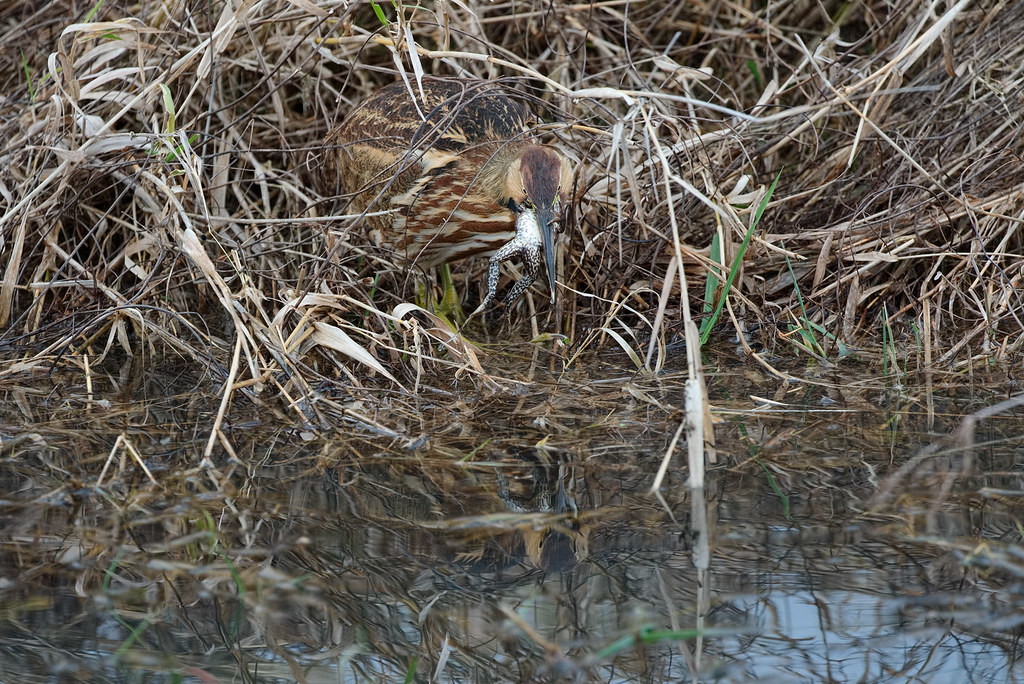
An American bittern prepares holds a large bullfrog in its mouth

Normally I’m pretty good at spotting bitterns at Ridgefield but I saw them on only three out of ten visits to the refuge over the Christmas break. I worried I was losing my touch until I found this bittern on Christmas Eve slowly working the channel beside Rest Lake. I suspect the real reason I haven’t seen as many this year is that the grasses in this area, normally my best spot for seeing them, have been cut lower in places, eliminating cover for both the bitterns and the animals they are hoping to catch.

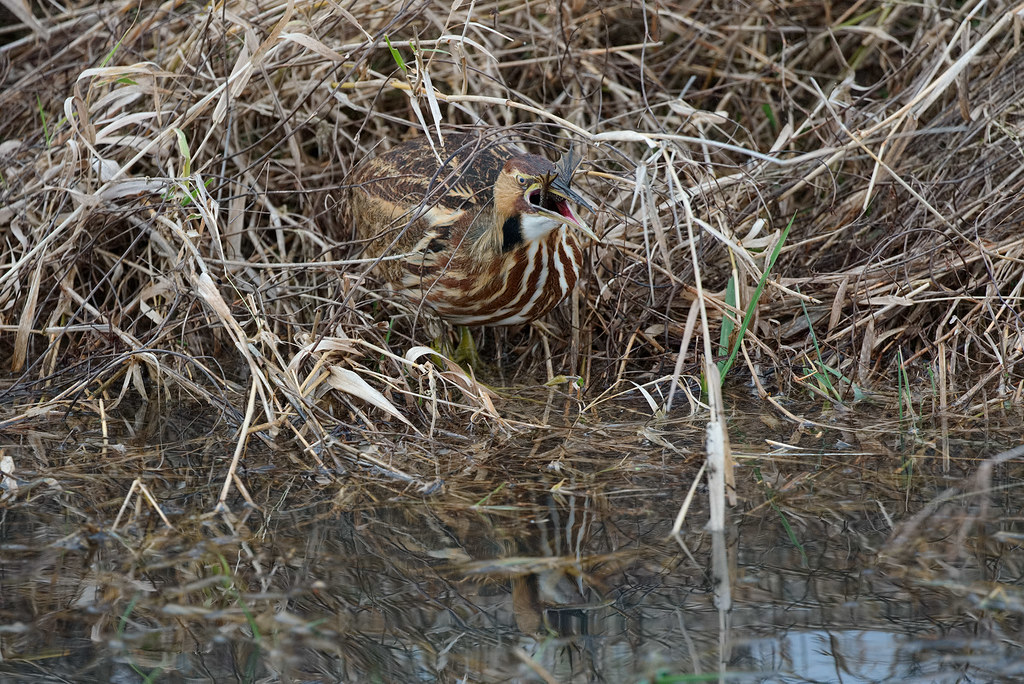
The bittern snagged a large bullfrog from the water as you can see in the top picture. In the picture below the bittern has swallowed most of the frog with only the rear feet sticking out of its mouth. The bittern has protected its eyes from the frog’s claws with a nictitating membrane, a common tactic in the chaos of swallowing something that doesn’t want to be swallowed.

An American bittern swallows a large bullfrog