Turning Rocks Into Lizards

A desert spiny lizard peeks out from behind a rock on the Rustler Trail in McDowell Sonoran Preserve in Scottsdale, Arizona

As I hike the pattern recognition part of my brain is constantly scanning for objects that might be wildlife even though they often turn out not to be. I spent a summer in Florida in the mid-90’s and was delighted by the many alligators there, it took years after we moved to Oregon for that part of my brain to stop trying to identify possible alligators when I hiked in marshland. In Yellowstone on a gravel road there was a large rock in the distance that in the periphery resembled a bear. I loved that road and drove it a number of times and as I approached that spot, I’d tell myself not to be fooled even for an instant by what I came to call Bear Rock. But every time the pattern recognition would kick in for a fraction of a second and say “Hey is that a …” before the rest of my brain would reply “I just told you it wasn’t going to be a bear!”

Here in the Sonoran Desert I am fooled by cholla skeletons that look like rattlesnakes, twigs like small lizards, granite protuberances like large lizards. I try to use my mental powers to turn rocks into lizards but usually I fail, rock stays rock. But sometimes I succeed and the rock comes to life, such as this beautiful desert spiny lizard on the Rustler Trail in McDowell Sonoran Preserve. One success is worth a thousand misses.

The One-eyed Towhee

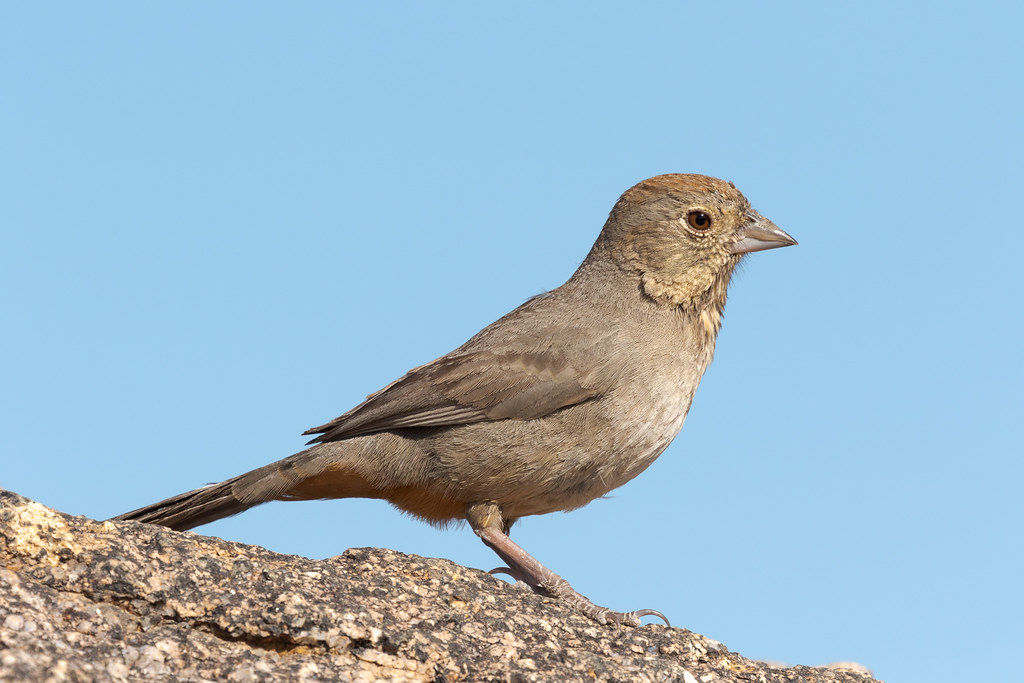
A canyon towhee is missing one of its eyes at Balanced Rock in McDowell Sonoran Preserve

In May I arrived at Balanced Rock on my first visit to this lovely rock formation in the Granite Mountain section of McDowell Sonoran Preserve. After taking some pictures of Balanced Rock itself, I sat down on a large granite slab for some water and cereal bars before heading back. I put my camera away but brought it back out when a pair of canyon towhees flew in. I could tell something was wrong with one of the eyes of one of the pair but couldn’t tell what as it flitted about until I looked at the pictures: one of its eyes was missing. To me it looks like a congenital defect, as though the eye and the surrounding feathers never formed.

I felt a great deal of sympathy for the little bird as life in the desert is hard enough. But even more I felt admiration as it flew about the rocks and perched in trees with all the grace and alacrity typical of birds despite the limited depth perception. Obviously it had survived into adulthood and apparently found a mate (canyon towhees are typically monogamous and often mate for life). I couldn’t say if its mate helps it find food, or if it supplements its diet with crumbs left behind by hikers like me who stop to eat, or if it feeds just fine on its own, but it seemed healthy.

May you have a long happy life, little one.

A side view of a canyon towhee at Balanced Rock in McDowell Sonoran Preserve

Rock Climbing

A Harris's antelope squirrel stands up as it looks out from a rock in McDowell Sonoran Preserve in Scottsdale, Arizona

I love this little spot on the Vaquero Trail. I first started stopping here to look for the Harris’s antelope squirrels that use the rocks as a lookout, replete with a surrounding network of holes leading underground. It’s a nice spot for a water break and a little breakfast and in that quiet I’ve seen a variety of other desert wildlife, from birds to mammals to reptiles. Including a remarkably beautiful creature I didn’t know existed and which I hope didn’t eat my beloved little squirrels.

Rock Squirrel

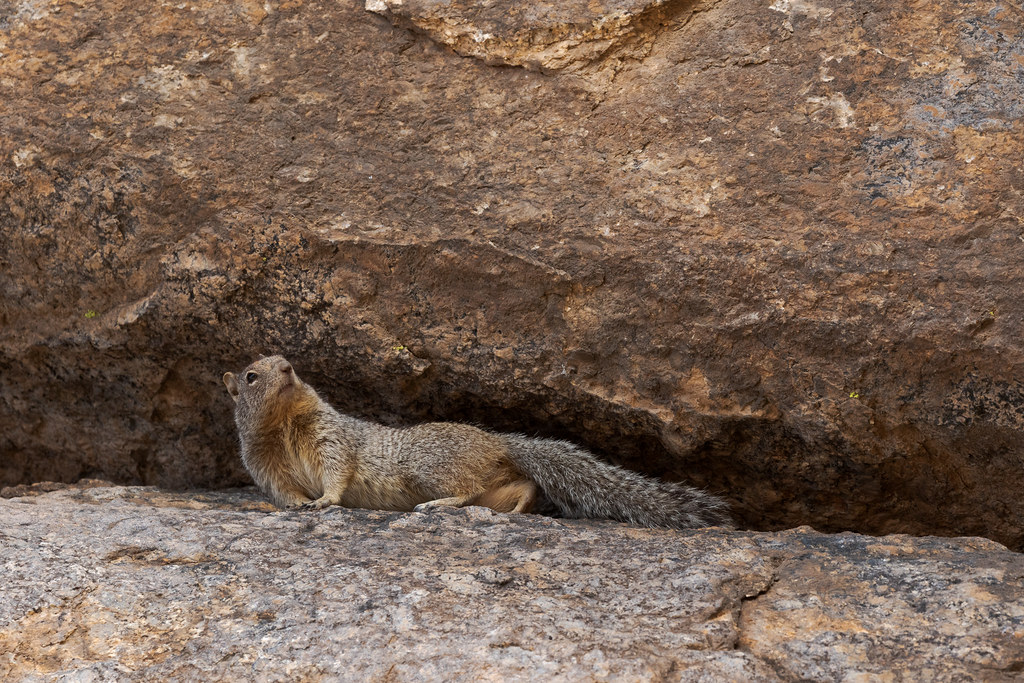
A rock squirrel looks out from a crevice in the massive rock formation known as Tom's Thumb in the McDowell Sonoran Preserve in Scottsdale, Arizona

A rock squirrel lives up to its name as it crawls along a crevice in the massive rock formation known as Tom’s Thumb in the McDowell Sonoran Preserve. It had been at the base of the formation but crawled way up into the crevice when hikers with a dog approached. This is not a new species for me, we saw one during our visit to New Mexico a decade ago, but it is nice to be reunited. I owe a lot to that trip, not only because we had a great time but because it got me thinking about moving to the Southwest when looking for a job. I’ll eventually make it over to New Mexico but for now I’m focusing on trails near our home in Scottsdale.

Elephant Skin

Rock formations resemeble an elephant's skin on a vertical cliff face at Cobble Beach in Yaquina Head Outstanding Natura Area in Newport, Oregon

There is so much I will miss about the Pacific coast, but there are three places I’ll miss most of all: Rialto Beach in Olympic National Park in Washington, Enderts Beach in Redwood National and State Parks in California, and Cobble Beach in Yaquina Beach Outstanding Natural Area in Oregon. All three are scenic and all three have good tide pools. But the reason I’ll miss Yaquina Head so much is not just that it also has a beautiful lighthouse, but it has harbor seals. Up close. I could watch them for hours, and I have.

It also has elephants, of a sort.

While watching the harbor seals swim near the southern end of Cobble Beach, I turned around and saw an elephant in the cliff wall right behind me, or at least an elephant’s skin. The rock formations of the vertical cliff face are fascinating, to the point that I stopped photographing the seals for a while and started photographing the rocks.

Threat Assessment

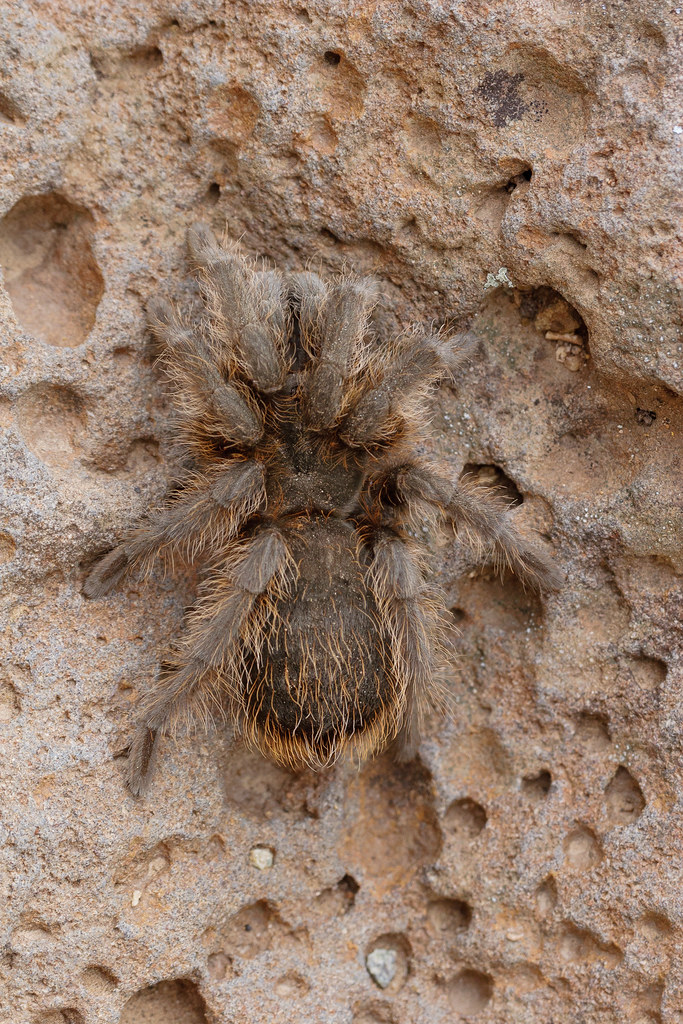
A tarantula tries to hide in a crevice under a rock

I grew up thinking tarantulas were deadly assassins that would kill you if you crossed their path, as I lived far from their domain and my impressions were formed based on how I saw them portrayed on television. We love to demonize and vilify certain animals (and worse, people) based on primal fears, and on deliberate lies told to mask the real threats, but in truth tarantulas are not a threat to us. As my wife and I walked down the path and stopped to watch this tarantula in New Mexico, she noticed us (their vision is poor but they are good at sensing vibrations in the ground) and ran over to this rock and tried to hide in a crevice but was slightly too big to fit. I always feel bad when I frighten an animal when I hike but thankfully she decided to trust us and climbed out onto the rock. A lesson my young self did well to learn – I was the threat.

A tarantula climbs up a rock