Dogs & Typography

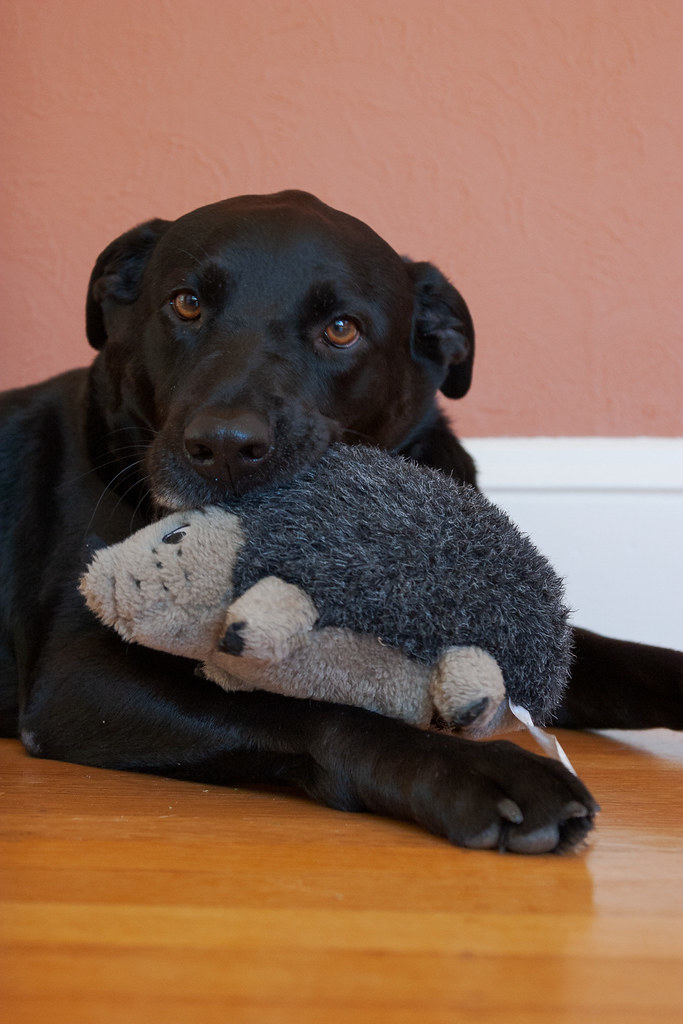
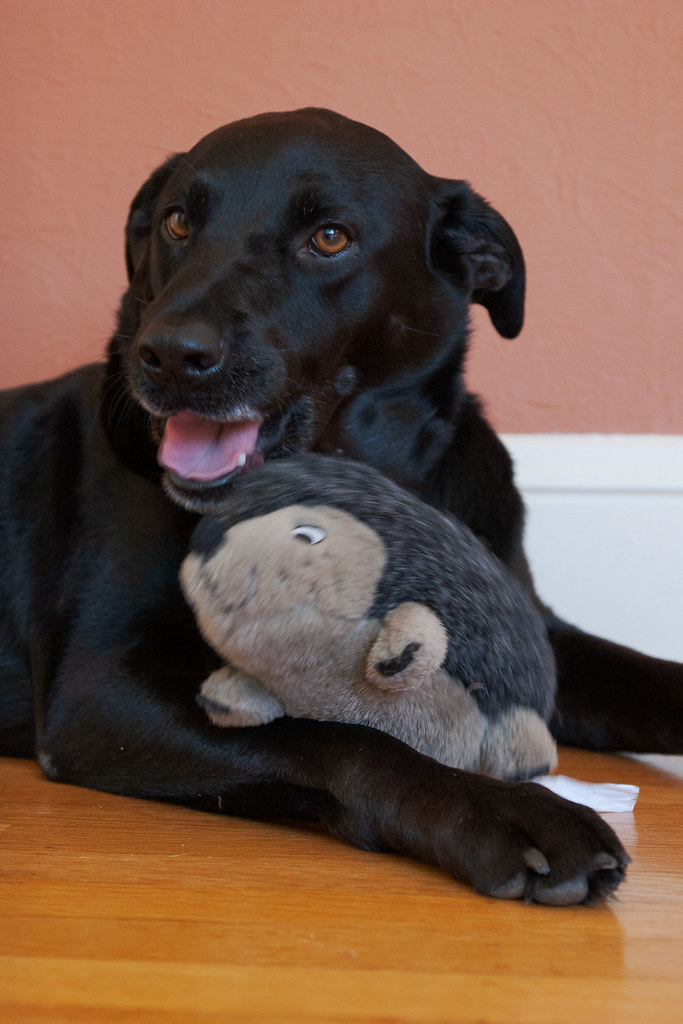
Our dog Ellie looks up while lying on the hardwood floor on July 18, 2009. Original: _MG_5925.cr2

I’ve been trying to write a description of Ellie to go along with this picture but it keeps coming out wrong. She’s obviously a black lab, but whenever I type it out she comes across as huge and gray with big floppy ears and large white tusks. I couldn’t figure out why, then it dawned on me: I was writing with an Ellie font!

Sign of Sanity

A Douglas' squirrel sits atop a tree stump on the Hoh River Trail in the Hoh Rain Forest in Olympic National Park

While visiting Olympic National Park in 2004, my wife and I escaped the crowds of the Hall of Mosses Trail and walked down the lovely Hoh River Trail where we met this Douglas’ squirrel. When you spend time photographing something as common as a squirrel at a place as special as the Hoh Rain Forest, some of the other tourists look at you with a mixture of curiosity and pity, as though you’re either slightly mad or slightly a moron.

Both of which might be true, but I enjoy photographing squirrels and do it no matter where I am, especially species like this one that I see less often. While the squirrels I see in my yard in the city are invaders from the east, the Douglas’ squirrel is one of the native tree squirrels in the Northwest.
Sam, Sleeping

Our cat Sam sleeping on the cat tree on August 9, 2009. Original: _MG_6171.cr2

I felt really rundown when I woke up this morning — I’m not a morning person but this was not something to be fixed with a hot shower, breakfast, and a shot of caffeine — so I’m taking my first sick day of the year. Sam took advantage of my unexpected presence to take a long catnap on my legs. Here my photogenic feline sleeps on the top of the cat tree in our dining room.

At Least One of Us is Sleeping

Our cat Scout sleeping on the window seat of our house in Portland, Oregon on August 9, 2009. Original: _MG_6209.cr2

We arrived home late at night after a week-long trip to visit family in Mississippi and I knew I wasn’t going to get much sleep. Whenever I return from a long absence, Scout wakes me up throughout the night in 30 to 60 minute intervals to pet her and reassure her.

Even though we had a friend pet sit while we were gone, Scout doesn’t like strangers or disruption in her life and stayed hidden for most of the week. That first night back, however, she let me sleep more than I expected. She made up for it the next couple of nights and by the weekend I was pretty worn out. After she was satisfied that life was back to normal, she returned to her favorite haunts like the window seat and slept a peaceful sleep.

Sunset on the Rocks

An American pika peaks out from a rock wall near sunset on the Pinnacle Peak Trail in the Paradise area of Mount Rainier National Park

When I visited Mount Rainier National Park in the fall of 2008, I saw more pikas on the the Pinnacle Peak Trail than I’d ever seen on a single trail before. It would only be a slight exaggeration to say I saw more pikas on that hike than I had seen in my entire life until then. They weren’t all close to the trail, the talus fields are extensive and often lead far from the trail, but some of them were close enough for pictures, including this pika that popped out of a rock wall near sunset.

What Are Your Intentions?

An American bison stands on the Storm Point Trail at sunset in Yellowstone National Park

Bison are the easiest of the big mammals to see in most of Yellowstone as they sometimes hang out in large groups near the road. They generally leave people alone but seem so docile that inevitably someone will get too close and end up getting hurt. It’s not so easy to underestimate them on the trails, however, where it’s hard to ignore their size and speed. And of course the horns. You are in their domain and there is no car to retreat to.

This was one of a group of bulls that was coming in my direction on the Storm Point Trail. While you are supposed to stay on the trails in Yellowstone, I decided to let the bulls have the right-of-way and stepped into the meadow. However, they soon veered off the trail themselves to go for a romp in the wallows so I was able to safely continue down the trail.

Struggling Catnip

Our cat Scout sits near a patch of catnip

Scout sniffs the trellis where the clematis will eventually grow. The catnip in front of her was one of her favorite spots in the yard. It grew pretty well when Templeton was the only one eating it, but once Scout acquired a taste for its pleasures, it never grew much above the height it’s at now. It eventually died completely when some of the neighborhood cats completely smothered it, but once I blocked off their access a few years later by sealing off the bottom of the fence, a couple of volunteer catnip plants immediately took root and are now growing strong and tall once more.

Blend Modes

A western fence lizard sunbathes on a rock at Smith Rock State Park

Fence lizards come in a variety of shades from light to dark, but most of the lizards I saw at Smith Rock on this hike had this light coloring. I don’t know if it is genetically more common or if it leads to higher survival rates by enabling the lizards to better blend in with the lightly colored rocks in the park.

Ooomm-ka-chooom

An American bittern calls out at Ridgefield National Wildlife Refuge on May 10, 2009. Original: _MG_4365.CR2

It amuses me that a bird that tries so hard not to be seen has a call that can be heard from so far away. The bittern has a distinctive ooomm-ka-chooom call that is one of my favorite sounds of the marsh, it reminds me more of a gurgling swamp than a bird. In this picture it has spread its throat out, sending out its call across the marsh.

📷: Canon 20D | Canon 500mm f/4 | Canon 1.4X
🗓️: May 10, 2009