Strike a Pose

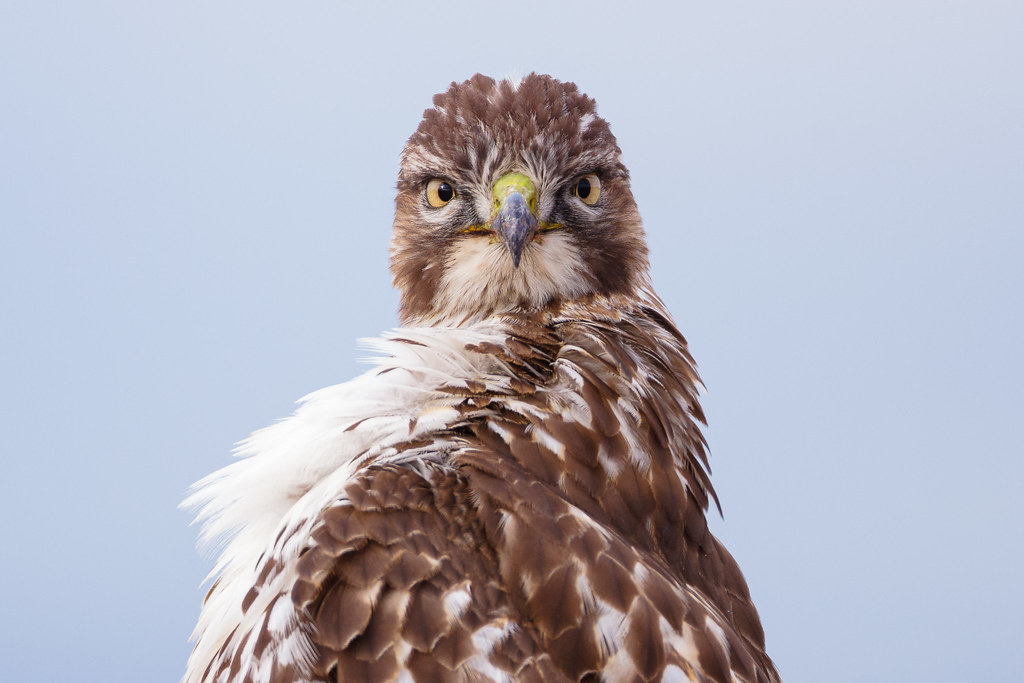
A close-up of a young red-tailed hawk looking into the camera while preening its feathers on the auto tour of Ridgefield National Wildlife Refuge in Ridgefield, Washington on February 9, 2008. Original: _MG_8524.cr2

A young red-tailed hawk pauses while preening its front feathers on a winter afternoon at Ridgefield in 2008. Although birds of this age have long since lost the the extreme nervousness they had after fledging, I like that its expression portrays some of the goofiness they retain as they experience new things in their first year. Not that they should be underestimated, they are already formidable predators as the blood around its mouth and beak suggest. The signposts near the auto tour were favored perches of the young hawks and provided opportunities to watch them at length, especially on rainy days if traffic was sparse.
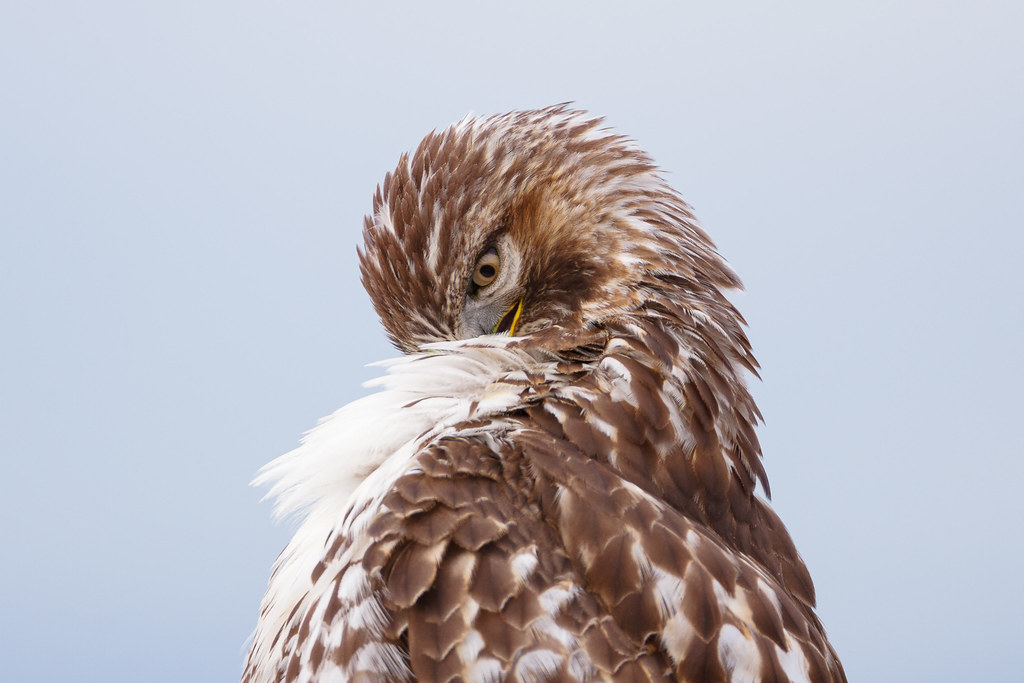
A close-up of a young red-tailed hawk preening its feathers on the auto tour of Ridgefield National Wildlife Refuge in Ridgefield, Washington on February 9, 2008. Original: _MG_8517.cr2

There Are Predators and There Are Predators

A close-up of the yellow legs of an American bittern as it hides in the shallows of Rest Lake at Ridgefield National Wildlife Refuge in Ridgefield, Washington on December 25, 2011. Original: _MG_6943.cr2

We often think of predators as animals with sharp teeth and claws but I wonder if the owner of these yellow legs isn’t the creature that most haunts the nightmares of the fish and frogs and voles of Ridgefield. If you see these yellow kicks hiding in the shallows, best hope the bittern isn’t hungry.

Williamson’s Sapsucker

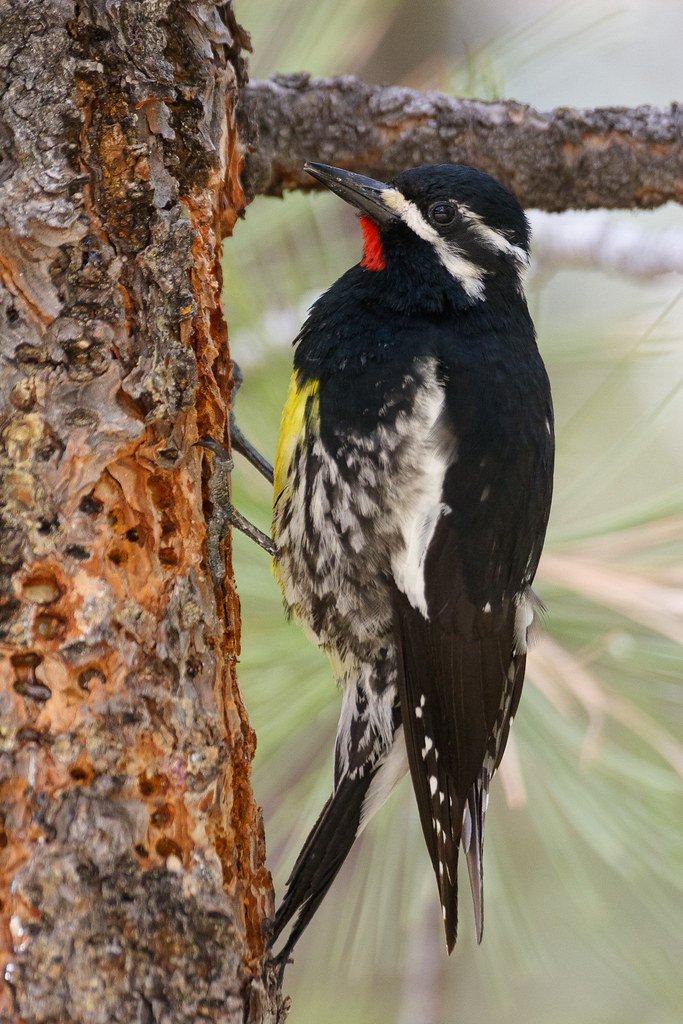
A male Williamson's sapsucker perches on a tree peppered with holes on the Cerro Grande Route in Bandelier National Monument in New Mexico in May 2007. Original: _MG_7688.cr2

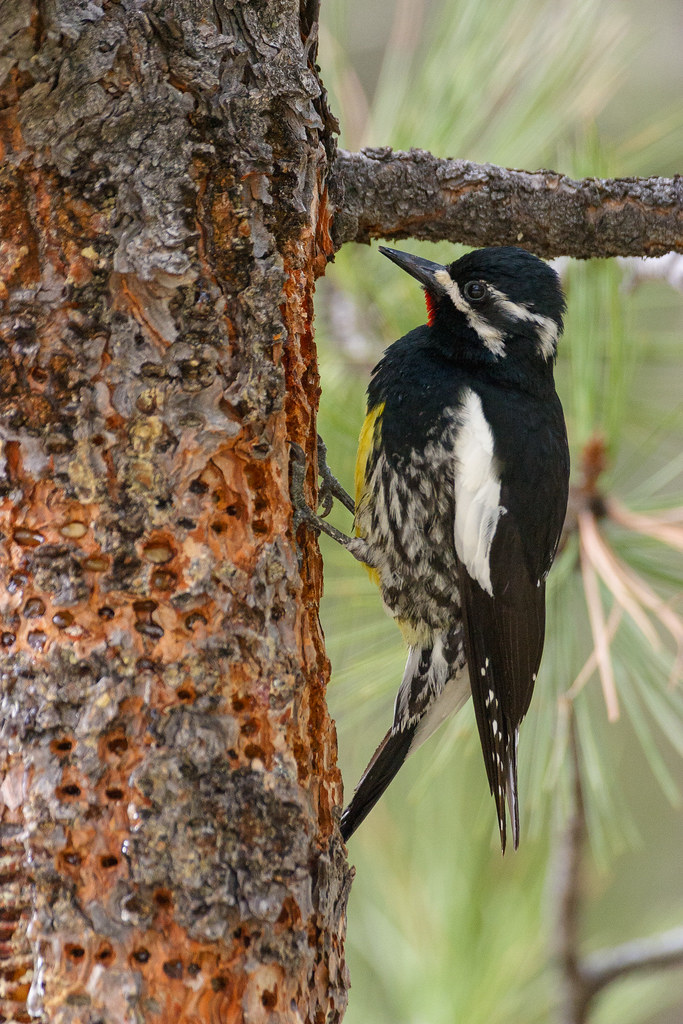
A trip to New Mexico in 2007 provided my one and only view of the lovely Williamson’s sapsucker, this is a male perched on a favorite tree. They prefer Ponderosa Pine forests and that’s not a habitat I’ve been in much since. You can see the irregular and regular pattern of holes he’s drilled into the tree to encourage it to secrete the sap he craves. It was a wonderful trip although it had far more import than I could have known as when it came time to look for work a decade later, it got me thinking of New Mexico, which got me thinking about Arizona, and here we are.

A male Williamson's sapsucker shows off his red neck patch and yellow belly while perched on a tree lined with holes on the Cerro Grande Route in Bandelier National Monument in New Mexico in May 2007. Original: _MG_7714.cr2

A male Williamson's sapsucker perches on a tree peppered with holes on the Cerro Grande Route in Bandelier National Monument in New Mexico in May 2007. Original: CRW_6328.crw

Purple Crown

A male Costa's hummingbird head flashes purple as he looks in my direction in the Troon neighborhood of Scottsdale, Arizona in February 2020. Original: _RAC3253.arw

A Costa’s hummingbird shows off his purple crown on a winter morning. The color is based on the way the light falls upon the feathers, not pigment, so when he had his head turned his crown appeared black (as the rest of his face and throat does here, but they will light up too if the light is at the right angle).

All-Crab Breakfast

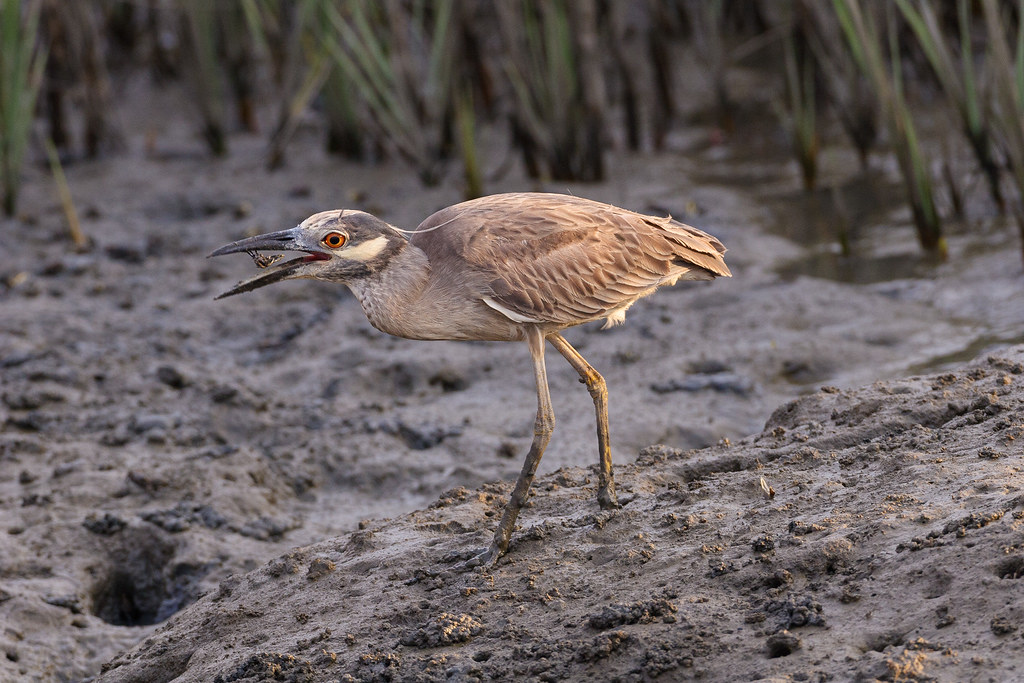
A yellow-crowned night heron tosses back a fiddler crab as it hunts in the mud of a saltwater marsh while the tide was out at Huntington Beach State Park in Murrells Inlet, South Carolina in July 2007. Original: _MG_2833.cr2

On a sunrise walk on the boardwalk through the saltwater marsh at Huntington Beach State Park, I met this yellow-crowned night heron hunting fiddler crabs in the mud while the tide was out. The hungry bird snared one after the other, tossing them down its throat, so it’s a good thing the little crabs seemed endless in number. Taken in the summer of 2007.

Changing of the Guard

A female Gila woodpecker perches outside their nest in a saguaro as the male prepares to leave on the 118th Street Trail in McDowell Sonoran Preserve in Scottsdale, Arizona in May 2020

A female Gila woodpecker brings food to the nest while the waiting male is about to pop out and make room for her. This is zoomed in less than the previous pictures to show more of the saguaro, I was kicking myself later for forgetting to take a much wider shot with my regular lens of the full saguaro and the surrounding desert. I forgot partially because of the excitement of watching woodpeckers and partially because it was 5:30am. At that hour I’m just happy if I dress myself properly because that isn’t guaranteed.

Are You a Tasty Bee: Gila Woodpecker Edition

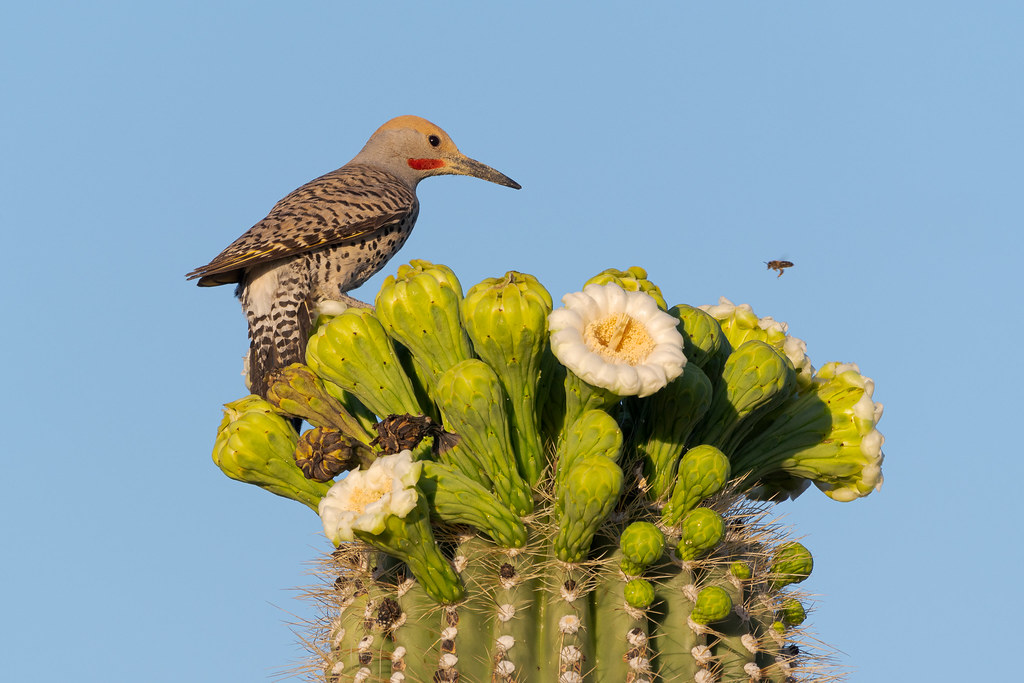
A male Gila woodpecker looks down at a honeybee hovering above a saguaro blossom near the 118th Street Trail in McDowell Sonoran Preserve in Scottsdale, Arizona in May 2020

Do Gila woodpeckers eat honeybees? With the sun starting to rise this honeybee hovered over the saguaro blossom for so long that this male craned his neck out and started watching it. If he was thinking about jumping out and snaring it he never did, he stayed at the nest entrance until his mate returned. Which didn’t take long, the pair was pretty amazing to watch, even before sunup they were constantly bringing food back to the nest. I don’t know if they eat honeybees or not but there is an ample supply nearby when the saguaros are blooming.

A male Gila woodpecker looks out while a honeybee hovers above a saguaro blossom near the 118th Street Trail in McDowell Sonoran Preserve in Scottsdale, Arizona in May 2020

Two-tailed Thrasher

Two curve-billed thrashers perch on a saguaro such that it looks like the thrasher in front has two tails, one in front and one in back, in the Troon neighborhood of Scottsdale, Arizona in January 2020

The curve-billed thrasher is common here but not so the two-tailed thrasher, this is the only one I’ve seen. To my eyes it looks like a failure in design, one tail in front and one behind, but perhaps I’m not the best judge since one of us soars above the desert and one of us gets dizzy standing on a ladder.