I met one of my favorite birds, a green heron, right before the sun came up at Huntington Beach State Park in South Carolina in the summer of 2007. I loved that little park, any place that gets me up long before the sun has to be pretty special. To all those in the Carolinas and elsewhere in Florence’s path, I hope you will be safe and sound. Look after each other.
Category: Birds
The Green Web
Dew Blue
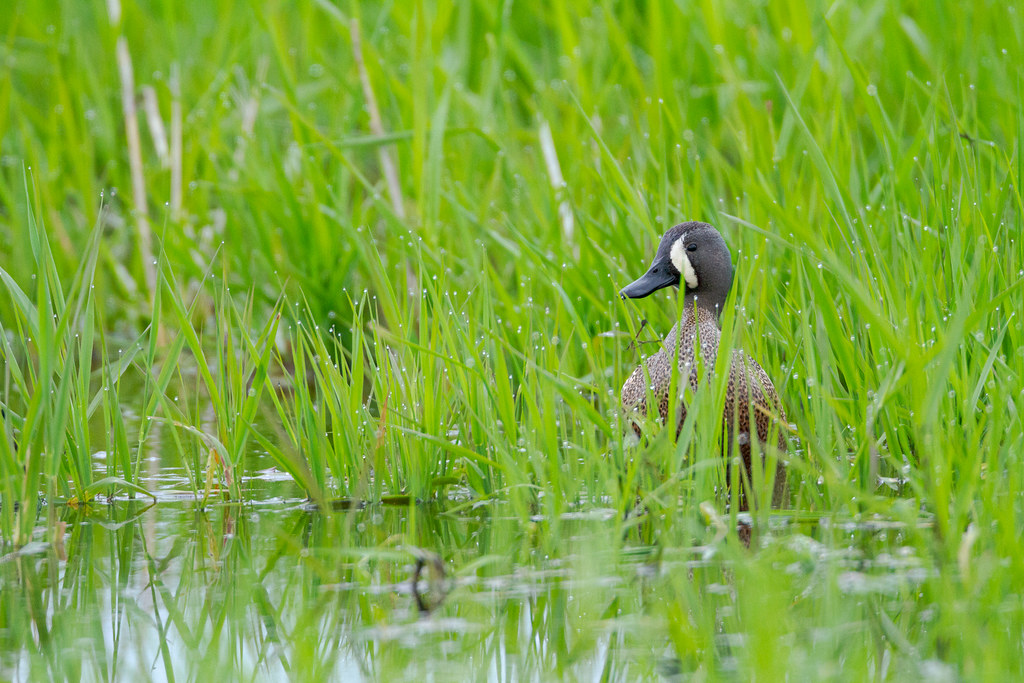
Green-winged and cinnamon teal were easy to see at Ridgefield but not so the blue-wings, so it was a special treat to find this lovely fellow in the dew-topped grasses growing in Horse Lake early on a spring morning in 2011. I spent the day at the little refuge, arriving at 6:30am and leaving at 5:30pm.
I Will Sing
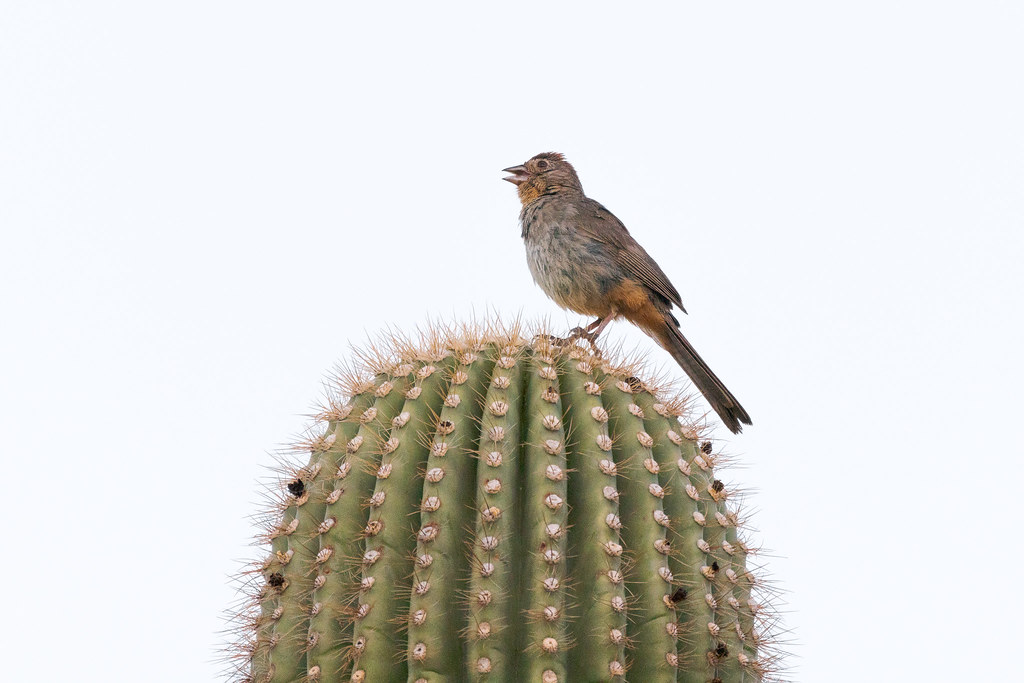
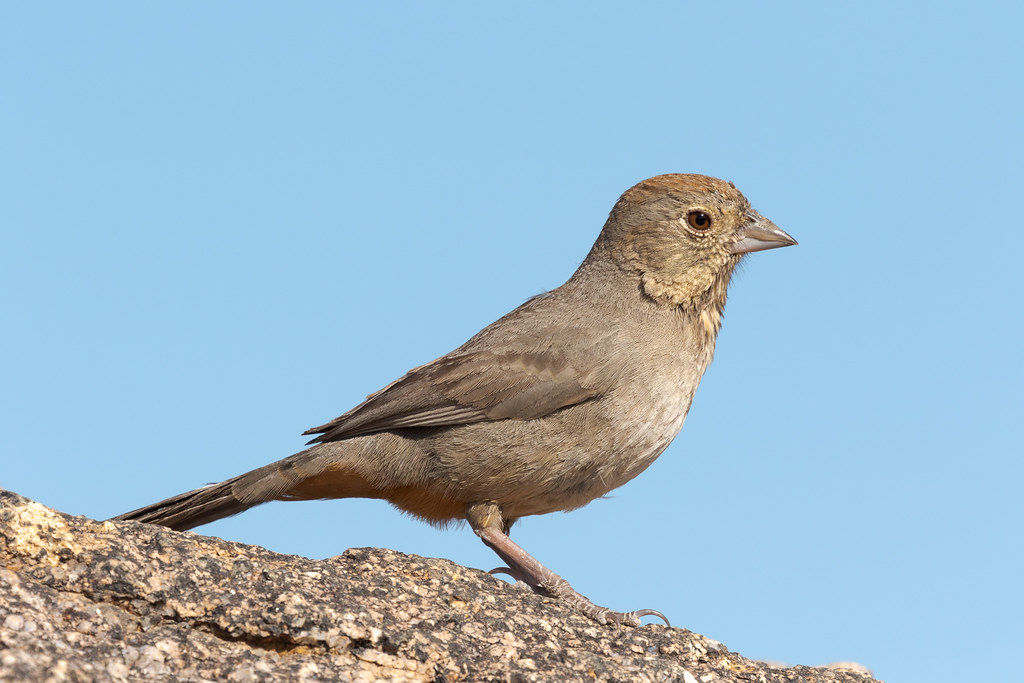
The sun had not yet crested the distant hills as this canyon towhee serenaded me atop a saguaro, a lovely reward for getting out of bed so early on the weekend. It was the only picture I took that day but it was a lovely day on the trails nevertheless. This morning I deliberately slept in as I knew I would be too tired to feel safe driving if I got up at 4 a.m. so I chose a good night’s sleep instead. I see many of the same birds in our backyard as on the trails (we even had a couple of Harris’s hawks perching in the palm trees recently) but with the towhees it’s a bit different, a pair of Abert’s towhees are regular visitors to our feeders but I’ve never seen them in the desert, while canyon towhees have never graced our yard but I’ve seen them many places around the preserve.
Swimmers
After moving to Arizona I have fallen in love with having a swimming pool in the backyard, swimming has become second only to hiking as my favorite way to exercise in the summer heat, even though I’ll never look as lovely in the water as this northern pintail swimming in Ruddy Lake at Ridgefield National Wildlife Refuge.
Northern
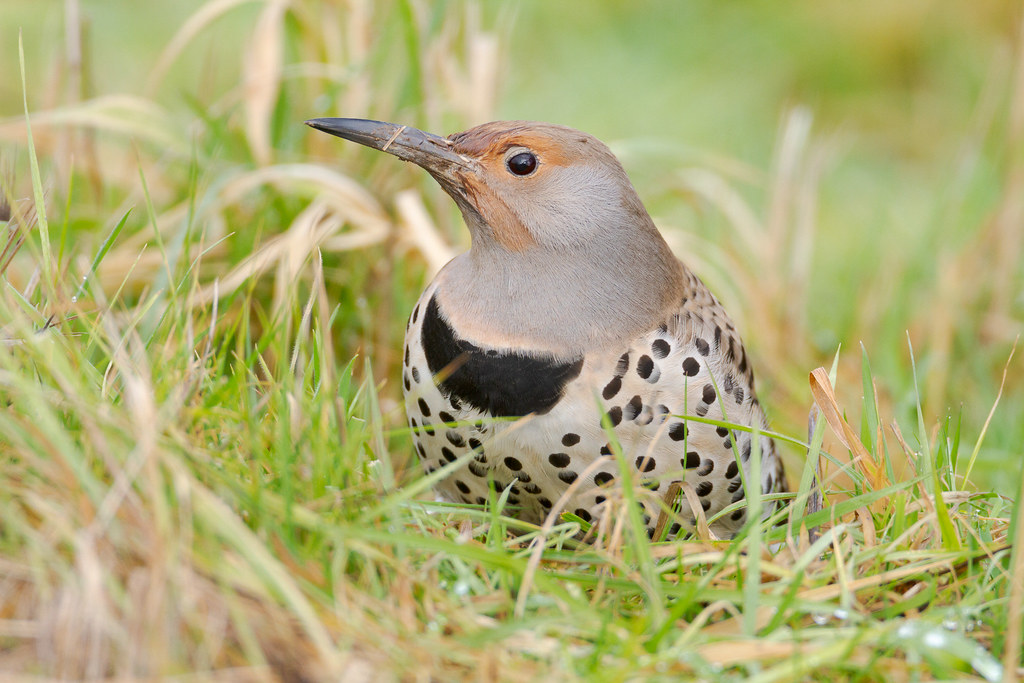
A female northern flicker searches for breakfast in a meadow on a rainy winter morning at Ridgefield in 2012. Given its widespread distribution across my country I wrongly assumed this would be the flicker I’d see most often in Arizona, but so far I’ve only seen the gilded flicker. To be fair I’ve only hiked in the desert, perhaps we’ll be reunited when I visit the forests. The two flickers are quite similar both in appearance and call, so in a way it feels like we were never separated.
Disappearing Act
This ocotillo had just started leafing out in the middle of July with the arrival of summer thunderstorms in the Sonoran Desert. The white-winged dove perched in the morning light is one of thousands I have seen, they are not only the bird I see most in our backyard but out in the desert as well, never more so when seemingly one or two or three were atop every saguaro as they devoured the ripening fruit. But after a self-imposed two week ban to allow a knee to heal, I returned to the trails twice last weekend and didn’t see a single one. Not one!
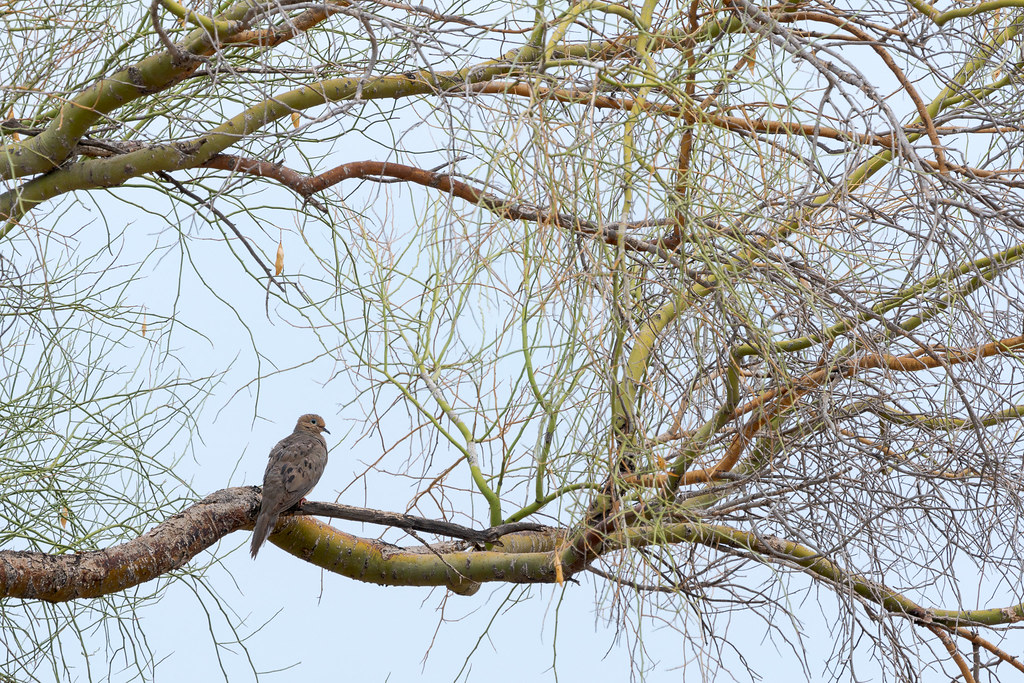
From what I’ve read, the white-wings arrived in the desert about the time I did and will be leaving this fall. So I suppose in a month or so they will be gone from our backyard as well. The smaller mourning doves and much smaller Inca doves will appreciate it, the larger white-wings are more aggressive, but our cats and I will miss them.
The One-eyed Towhee
In May I arrived at Balanced Rock on my first visit to this lovely rock formation in the Granite Mountain section of McDowell Sonoran Preserve. After taking some pictures of Balanced Rock itself, I sat down on a large granite slab for some water and cereal bars before heading back. I put my camera away but brought it back out when a pair of canyon towhees flew in. I could tell something was wrong with one of the eyes of one of the pair but couldn’t tell what as it flitted about until I looked at the pictures: one of its eyes was missing. To me it looks like a congenital defect, as though the eye and the surrounding feathers never formed.
I felt a great deal of sympathy for the little bird as life in the desert is hard enough. But even more I felt admiration as it flew about the rocks and perched in trees with all the grace and alacrity typical of birds despite the limited depth perception. Obviously it had survived into adulthood and apparently found a mate (canyon towhees are typically monogamous and often mate for life). I couldn’t say if its mate helps it find food, or if it supplements its diet with crumbs left behind by hikers like me who stop to eat, or if it feeds just fine on its own, but it seemed healthy.
May you have a long happy life, little one.
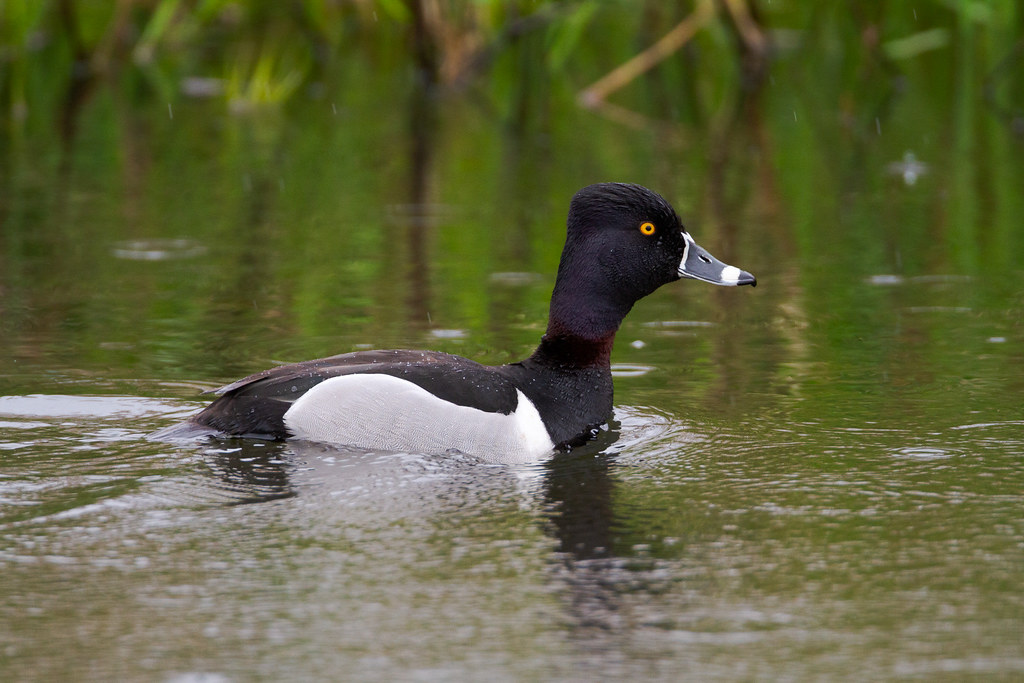
Swimming in the Rain
On the Lookout
There was a period of time at Ridgefield where I came across what I called Hawk-on-a-Stick, juvenile red-tailed hawks perched on signs around the large meadow that would allow me to view them from close range. They didn’t often look directly look at me, which was a good thing, as it meant they were comfortable with me and on the lookout either for voles in the meadow or older redtails that might chase them away.