Clues

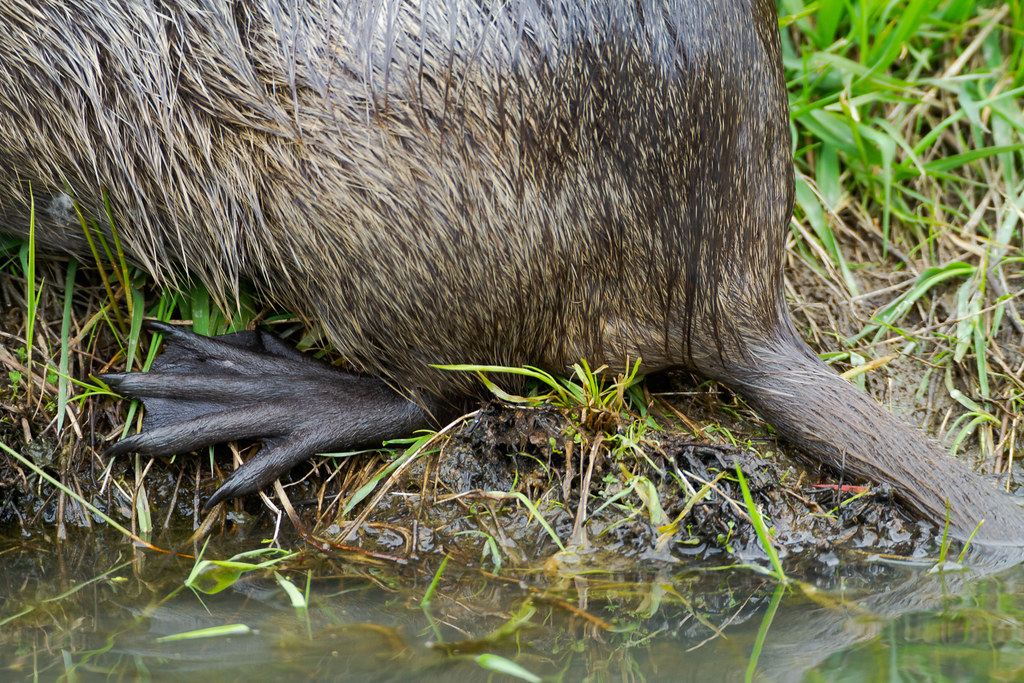
A close-up view of the rear foot of a nutria

Nutria are by far the most commonly seen of the aquatic rodents at Ridgefield, with muskrats being relatively common, beavers not common at all. There are enough clues in this picture to identify which of these rodents this is. The tail is the most obvious indicator, but the rear foot all by itself holds enough clues. A muskrat has white claws while those of a nutria and beaver are dark. Both beavers and nutria have heavily webbed rear feet, but all five of the beaver’s toes are webbed, on a nutria only the inner four.

Which begs the question: why?

I don’t know the answer but I do know this is a nutria.

Howling

A coyote howls at Ridgefield National Wildlife Refuge

I first met this coyote when we surprised each other on the short trail to the observation blind at Ridgefield. When I got back to the car I moved on to the Kiwa Trail parking lot and discovered the coyote had as well. I drove to the far side of the lot to get a better angle on the sunlight then gently swung the car into place. The coyote didn’t pay me much heed and hunted in the meadow for a while, then surprised me once more by howling a few times (unanswered). It then slipped through the gate and disappeared up the trail.

I’ve heard coyotes howl many times but it was fun to finally get to see it.

Visibility

A close view of the face of an eastern cottontail

As a fan of small cars, I’ve been thinking my next one should be in a bright color to make it more visible to other drivers, like the metallic red on the Chevy Sonic or the orange on the upcoming Subaru Crosstrek (although as much as it pains me to say it, perhaps it is too orange). But when I look at my tight animal close-ups and see my car reflected in the eye, I wonder if these brighter colors would also be more visible in the picture?

For some reason car reviews don’t touch on this sort of thing.

Not that I’ll lose any sleep over it since it could be fixed in post if necessary, plus for the most part I do prefer calmer colors like a nice sky blue or maroon or green or — oh wait, am I talking about cars again?

Rest Lake

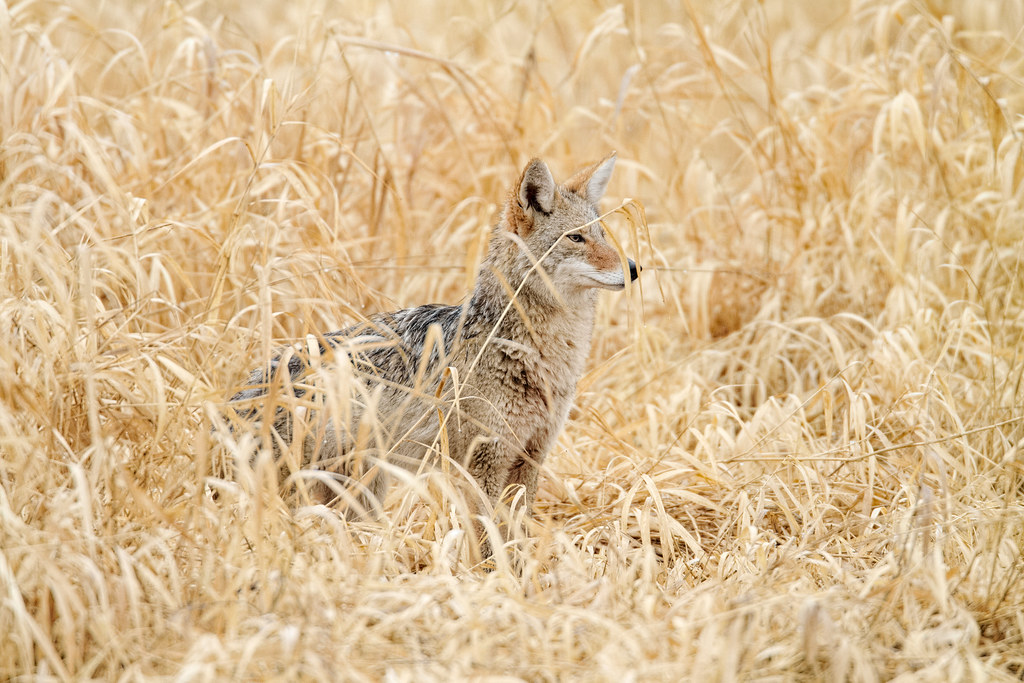
A coyote stands in a marsh

The picture above of a coyote hunting in the marsh is deliberately like this bittern picture, both taken at Rest Lake. The lake is the largest on Ridgefield’s auto tour and has water in it year round, but the marshy areas that ring the lake are my favorite places to watch. To survive in these areas is to avoid being eaten not just by coyotes and bitterns but herons and hawks and harriers and eagles and otters and mink and weasels and raccoons and snakes and bullfrogs and …

A coyote with wet fur walks along the edge of Rest Lake

A Good Year

One of a Pair

I knew it was going to be a good year for coyotes.

During a two week stretch in mid-to-late January, I saw a coyote pair frequently and took some of my best coyote pictures ever. But not long after I jammed up my ankle and took a two month sabbatical from Ridgefield. Even after the ankle healed, I’ve only been back to Ridgefield three times this spring with not a coyote picture to show for it. While it’s been an extremely wet spring here in the Northwest, many of the weekends have been sunny. The refuge gates are locked until well after sunrise and before sunset at this time of year, so the best light on sunny days is lost. And sunny days bring out the crowds, so I prefer to stay home and get in some extra hedgehogging.

I did see a young coyote on my visit a week ago. It was so close that getting a picture was going to be difficult from my angle without risking spooking it, so I just pulled over and watched as it hunted beside the road. But I saw a Subaru coming up quickly down the road, a car I recognized since we have one just like it. I knew they had seen the young coyote, and I also knew what was going to happen next. The coyote watched them approach and as they got on the brakes on the gravel road, the coyote bolted at the sound.

In the real world they weren’t going fast at all, just Ridgefield fast, and even a tolerant coyote won’t tolerate that.

This adult is one of the pair that I watched with such success in January, it’s coat drenched on a wonderfully wet winter’s day. And I know I said I wasn’t going to talk about cars anymore, but this is why I’ve been on the hunt for a quiet car. When I’ve worked to earn an animal’s trust, the sound of the gas engine firing up feels like a betrayal of that trust.

The Quiet American

A coyote eats a Townsend's vole on a rainy winter morning

So it always is: when you escape to a desert the silence shouts in your ear.
Graham Greene, The Quiet American

When I first had in mind to replace my 2001 Honda Civic, I was thinking about avoiding the maintenance and reliability issues that come with old cars, about improved safety of new models, about getting back to the hatchback form factor that I love to an admittedly irrational degree, about maybe even switching to an all-wheel drive model.

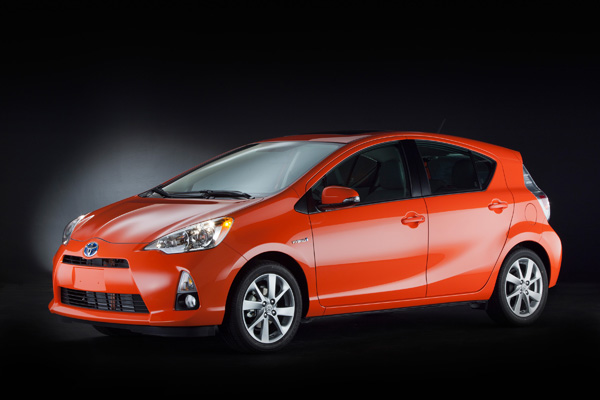
But as much as anything what I really wanted was a nice quiet car for the auto tour at Ridgefield. And as far as Ridgefield cars go, the new little Toyota Prius c is at the top of my list.

It’s not a plug-in hybrid and would need to run the gas engine for much of the loop around the refuge, but that’s OK, where I really want the quiet of an electric car is when I need to move the car over very short distances at very slow speeds, such as when I was photographing this hunting coyote, one of a pair that slowly worked the marsh for Townsend’s voles on a rainy winter’s day. They were comfortable with me and paid me little heed, but even so I cringed whenever I had to start the car and disturb the stillness of the early morning.

It is easy to cross from one front seat to the next in the baby Prius, perfect for when I want to photograph from the passenger’s side of the car. It’s nice and short and narrow, good for parking along sections where there isn’t much room for other cars to get by. Plus it gets crazy good gas mileage in the stop-and-go conditions that define the auto tour (I typically move about in the 2 to 5 mph range, with a top speed of 10 mph or so, and lots of starting and stopping).

And best of all, it doesn’t make an annoying beep when it backs up the way the rest of the Prius family does.

But sadly our visit to the Portland Auto Show at the start of the year diminished my enthusiasm for the car. While the exterior of the car seemed nice as long as you spring for the alloy wheels, the interior seemed a bit cheap. But such is my love for Ridgefield that the Prius c remains in my top tier of cars should I decide the time has come to say goodbye to the Civic.

2012_Prius_c_600

The First Carrot

A black bear in a tree reaches for a pine cone on the Mount Washburn Trail (South) in Yellowstone National Park in Wyoming on October 1, 2011. Original: _MG_1238.cr2

The past few years at work have been productive but stressful and the last year in particular left me worn down and burned out. I hadn’t taken much vacation time but we either use-it-or-lose-it at the end of the year, so I was trying to decide if I should take most of the month of December off, or if I should take my normal fall hiking trip and then take a few weeks off at the end of the year. While the idea of a month away from work was very appealing, I decided to split up the vacation and take the hiking trip instead.

I realized that as a reaction to the stress I had settled into a funk and wasn’t getting things done that needed to be done. Needing either carrot or stick to get back on track, I settled on carrots with Yellowstone & the Tetons as Carrot Number One. Planning for the weeklong trip of hiking and photography forced me into action.

My contacts had long since run out and while I had been wearing my glasses instead, I prefer to photograph in contacts so I finally scheduled my overdue eye exam and got new contacts. And since it often rains during my fall hiking trips, I picked up some waterproof hiking shoes to replace my worn out pair, a small army of hiking socks to replace my threadbare contingent, and a couple pairs of waterproof gloves. All of which guaranteed a week of unusually hot and sunny weather during my week in Wyoming, but the wet weather gear has been put to good use ever since with the return of the rainy season to the Northwest.

Since I would be taking our much loved but aging Subaru Outback, I took her in for everything from routine maintenance to replacing a broken sensor and leaking head gasket and especially the broken cargo cover that left all my gear exposed to prying eyes. I also fired up iTunes to create some new CD mixes of recent music purchases to keep me entertained on the long drive.

Then there was an extra memory card and battery for my Canon 7D, which I’ve been meaning to order for a year or two, plus a portable hard drive for storage on the road. The hard drive was a much improved solution compared to the DVD’s I used to burn, the backups of the day’s pictures went much faster meaning I could get to sleep sooner. And while I didn’t need the new memory card for most of the trip, oh was I thankful to have it when I met this black bear eating pine cones on my way down from Mount Washburn. Yellowstone put on a show on my last day and I had taken a ton of pictures, and if not for the new card I would not have been able to photograph this wonderful creature during my last hours before heading for home. The extra card was also put to good use during my Christmas visits to Ridgefield.

There were other things too, like the car mount for the iPhone so that the little genius woman in the TomTom GPS app could guide me safely there and back again despite my notoriously poor sense of direction. Both the mount (from RAM Mounts) and the little woman worked wonderfully and the pair have kept me on the straight and narrow navigating Portland ever since.

All of which is a long way of saying that the hiking trip was not only great stress relief but also great motivation for getting things done large and small that have made life better ever since.

But I wasn’t quite finished with my carrots …
Amateur

A young elk bull with stunted antlers in Yellowstone National Park

amateur |ˈamətər, -ˌtər, -ˌCHo͝or, -CHər|

noun
a person who engages in a pursuit, especially a sport, on an unpaid basis.

ORIGIN late 18th cent.: from French, from Italian amatore, from Latin amator ‘lover,’ from amare ‘to love.’

The term amateur has both positive and negative connotations. When it comes to photography I love being an amateur, and I love it precisely because of the origins of the term: I get to photograph what I love.

While on the way back to my hotel in Yellowstone, I came across a bunch of photographers pulled off to the side of the road to photograph a herd of elk. I took a variety of pictures and was about to wrap up when I noticed a young elk bull down a ways from where everyone else was. I walked down to him and realized why no one else was photographing him: his antlers were stunted.

I have a soft spot for animals who have more to overcome, so I settled in to spend the rest of the dying light photographing him.

Whether due to diet or disease or genetics, the poor thing wasn’t exactly photogenic compared not only to the dominant bull but even to the other young bulls in the herd. He was mostly grazing but occasionally raised his head and sniffed the air, so I positioned my tripod so that if he raised his head again, his face would be set against the strip of yellow plants behind him. And not only did he raise his head again, but as if on cue he even looked right at me.

You’re beautiful to me, little one.

Pronghorn to the Rescue

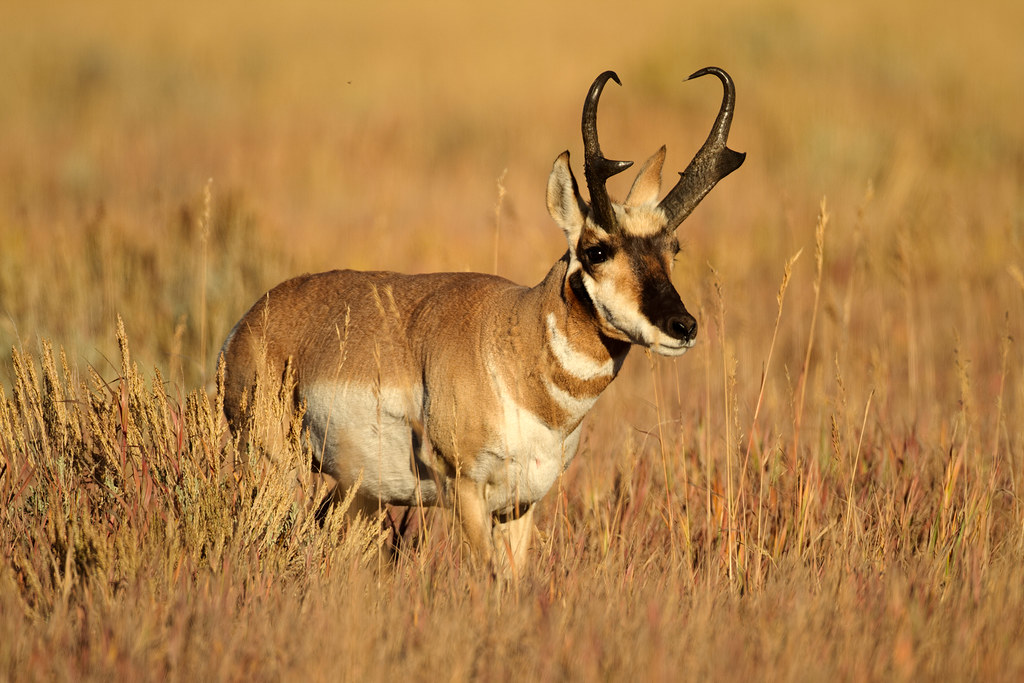
A male pronghorn in a meadow along Mormon Row in Grand Teton National Park

My plans for this fall’s trip to Wyoming were literally made at the last minute. I had planned to take the week off but wasn’t sure where I wanted to go. It had been a while since I had been to Yellowstone & the Tetons and I was itching to get back, but I was also worn out and not sure I was up to the drive. Then I checked the weather and it was supposed to be unusually sunny and hot, which if you’ve followed along here you know is not my favorite photography weather.

I decided to sleep on it and in the morning made my reservations for Wyoming, starting off in the Tetons and finishing up in Yellowstone, then headed out the door. And it was unusually sunny and hot during the day, despite being cold at night, so I had to deal with 40 or 50 degree temperature changes from when I started hiking in the morning to the heat of the day. While the sunny skies did provide good viewing of the Teton range at sunrise, the park staff had been doing controlled burns and a smoky haze hung around in the valley — not thick enough to be interesting, but enough to ruin the clarity of the pictures. The fall colors seemed to be late in arriving and while some of the aspens had turned, many were still green. And my chronic stomach problems flared up several times on the trip, though fortunately never on the trails despite one close call.

But the worst of it was, I wasn’t seeing much wildlife, and so while I was grateful for the chance to visit this wonderful part of the world, the trip wasn’t ranking very highly compared to some of my other visits. But then on my last night in the Tetons I discovered this male pronghorn in the evening light and things started looking up. The next morning I found the bison herd and my mood got even better.

Yellowstone was hit or miss the first few days too, but the last day turned out to be one of my favorite days in the park, ever.

A long way of saying, I’m glad I went.