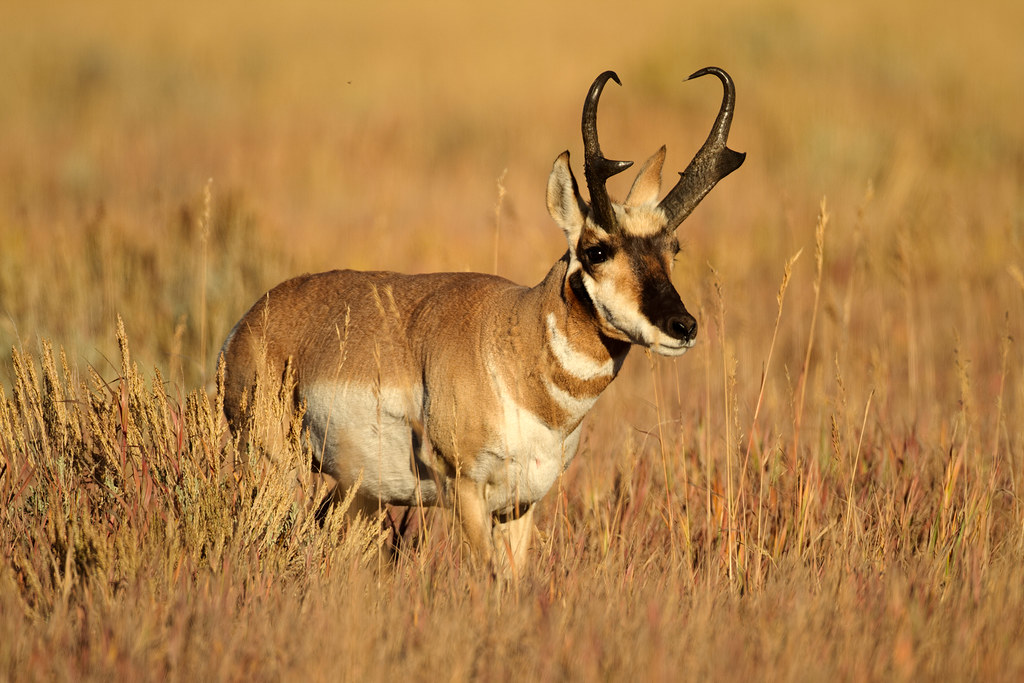
Pronghorn to the Rescue

A male pronghorn in a meadow along Mormon Row in Grand Teton National Park

My plans for this fall’s trip to Wyoming were literally made at the last minute. I had planned to take the week off but wasn’t sure where I wanted to go. It had been a while since I had been to Yellowstone & the Tetons and I was itching to get back, but I was also worn out and not sure I was up to the drive. Then I checked the weather and it was supposed to be unusually sunny and hot, which if you’ve followed along here you know is not my favorite photography weather.

I decided to sleep on it and in the morning made my reservations for Wyoming, starting off in the Tetons and finishing up in Yellowstone, then headed out the door. And it was unusually sunny and hot during the day, despite being cold at night, so I had to deal with 40 or 50 degree temperature changes from when I started hiking in the morning to the heat of the day. While the sunny skies did provide good viewing of the Teton range at sunrise, the park staff had been doing controlled burns and a smoky haze hung around in the valley — not thick enough to be interesting, but enough to ruin the clarity of the pictures. The fall colors seemed to be late in arriving and while some of the aspens had turned, many were still green. And my chronic stomach problems flared up several times on the trip, though fortunately never on the trails despite one close call.

But the worst of it was, I wasn’t seeing much wildlife, and so while I was grateful for the chance to visit this wonderful part of the world, the trip wasn’t ranking very highly compared to some of my other visits. But then on my last night in the Tetons I discovered this male pronghorn in the evening light and things started looking up. The next morning I found the bison herd and my mood got even better.

Yellowstone was hit or miss the first few days too, but the last day turned out to be one of my favorite days in the park, ever.

A long way of saying, I’m glad I went.

The Start of the Year

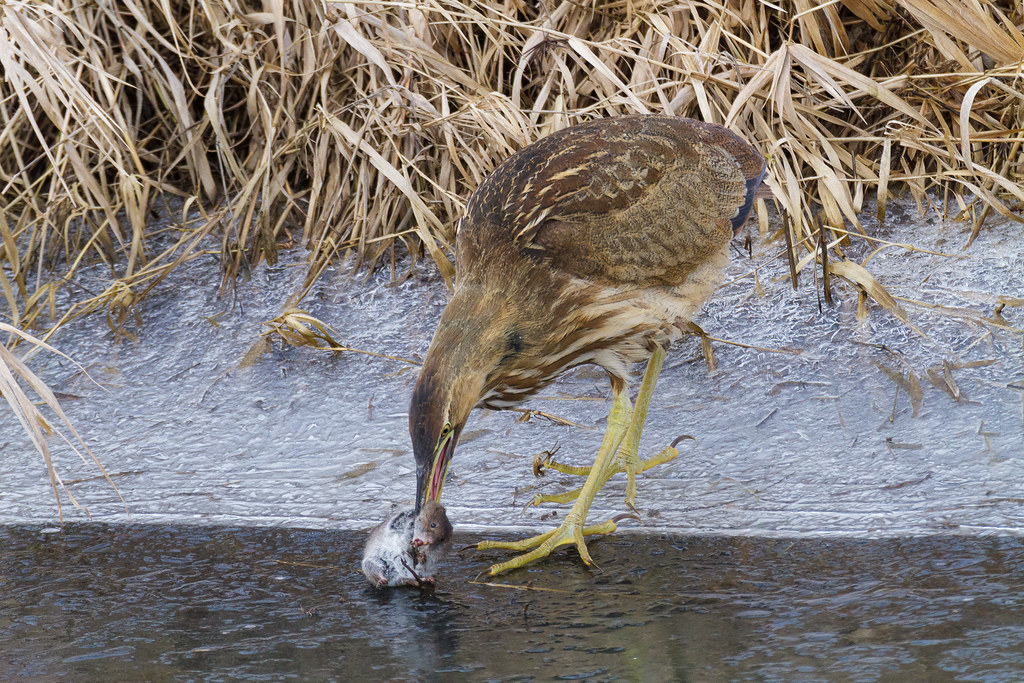
An American bittern brings a terrified vole from the grasses down to the water's edge to dunk it before swallowing it, but the water was frozen. Taken at Rest Lake at Ridgefield National Wildlife Refuge in Ridgefield, Washington on January 1, 2011. Original: _MG_2172.cr2

Although I failed in my quest to find a bittern in the frost on the last day of 2010, the first day of 2011 rewarded me with a bittern on the ice โ€” a hunting bittern on the ice. The day started out promising when I glimpsed a blacktail buck on the drive down through the canyon and onto the refuge at Ridgefield, but after putting on a show the day before the rest of the animals seemed to be sleeping in. While the early hours weren’t crowded, as the morning wore on the visitors picked up rapidly and the big lens attracted a small crowd whenever I stopped.

On the far side of the refuge, I like to drive slowly along Rest Lake to look for bitterns, so I pulled over to let an approaching car past so that I could move at my own pace. Even as I was pulling over I noticed this bittern down below in the frozen channel and settled in to watch. Within moments the bittern struck into the grass and brought out this terrified vole. Bitterns often like to dunk their prey in the water and so it gingerly stepped down the rim of ice, struggling not to slip, and then dunked the vole into the water. Or tried to at least, but failed, since the water in this section was still frozen. It seemed mystified for a moment and stood motionless before eating its meal undunked.

After taking a few environmental portraits of the bittern on the ice, I moved ahead just slightly to another nice location and waited for the bittern to come past. But a Land Rover came up behind me and the couple got out of their car (a no-no on the auto tour during the winter) to set up their scope to view the distant ducks and swans. Not surprisingly I didn’t see the bittern again.

When I got to the end of the auto tour, I was going to go around again but my heart sank when I saw a nearly solid line of cars between Horse and South Quigley Lakes. I learned my lesson from Christmas day, when I should have left when it got over-crowded but didn’t, and headed home. Ellie got an extra walk and playtime in the park, and extra hedgehogging as well, so all-in-all a fantastic start to the year for everyone but the vole.

An American bittern tries to dunk a terrified vole through the ice at Rest Lake at Ridgefield National Wildlife Refuge in Ridgefield, Washington on January 1, 2011. Original: _MG_2182.cr2

Hold Your Apples High!

A groundhog (woodchuck) soaked by rain holds an apple up high as it eats it at Gilsland Farm Audubon Center in Falmouth, Maine on July 14, 2010. Original: _MG_6659.CR2

I had been visiting Gilsland Farm for several days in a row letting this groundhog get used to me, so it was rather nonplussed when I slowly approached and lay flat on the rain-soaked ground. It worked an apple from start to finish, suddenly raising it high when it was nearly at the core, yielding one of my favorite pictures of the trip.

๐Ÿ“ท: Canon 7D | Canon 100mm-400mm
๐Ÿ—“๏ธ: July 14, 2010

Portland to Portland

A close-up view of a groundhog eating an apple

We recently returned to Portland from a trip to Portland.

My mother-in-law wanted her ashes spread near a favorite lighthouse in Maine so the family gathered in the Portland on the east coast and we spent a week visiting relatives in the area. Since it was a family trip and not a photography outing, I left the big lens and tripod at home in the Portland on the west coast. I did bring my camera and two zooms, I didn’t know what to expect but they pack down pretty small and were easy enough to take along even if I didn’t get a chance to use them.

My wife and I discovered the delightful Gilsland Farm Audubon Center in nearby Falmouth, Maine, on our first full day in the state. It was hot and humid and we didn’t expect to see much, but my spirits rose when we discovered groundhogs near the headquarters! Thereafter I started getting up at 4:30am each morning to visit the refuge for a few hours of photography and still got back in time for breakfast before most of the others had gotten up.

In this close-up of one of the adults about to take a big bite out of an apple, you can see an identification tag in its ear. The groundhogs there are being studied and sport tags in both ears.

Based on my studies, I’d say they really like apples.

Pride Goes Before Two Falls

A close-up view of an eastern cottontail near the auto tour at Ridgefield National Wildlife Refuge

Pride goes before destruction, a haughty spirit before a fall.
Proverbs 16:18

A while back my teleconverter started overexposing everything by a stop, so I had to remember to deliberately underexpose to prevent from blowing out the image, something I often forgot to do. Being a night owl, I was particularly pleased with myself when I arrived near sunrise at Ridgefield and, when photographing this cottontail beside the auto tour, actually remembered to dial in the underexposure. A few moments later I got my comeuppance. As I watched a muskrat swimming with its child, I realized that while I had remembered to compensate for my faulty teleconverter, I wasn’t actually using it so all I ended up doing was needlessly underexposing my images.

On a later visit I realized the converter was flaring badly under strong backlighting and ruined some images. Strike two.But the coup de grรขce was yet to come. While hiking along the auto tour, I watched helplessly as the camera separated from the lens and fell six feet to the muddy ground. On closer inspection it was the converter that had separated from the lens but I didn’t think much of it, I assumed I had accidentally bumped the release latch.

But it happened again a few minutes later, this time the camera clanged off the hard-packed dirt road hard enough that the batteries went flying from the flash. I suspect the teleconverter worked itself free just with the jostling motion of hiking. While the camera appears to have survived both falls with no damage save some scratches, I knew it was time to replace my old friend.

This Tamron teleconverter and my Tamrac bag are my oldest pieces of photography gear, I bought them in the early days so they’re almost 15 years old and have literally been along for every hike I’ve gone on during that time. The bag wears the crown alone from now on.

So long, old friend, and thanks for the memories.