Follow the Eyes

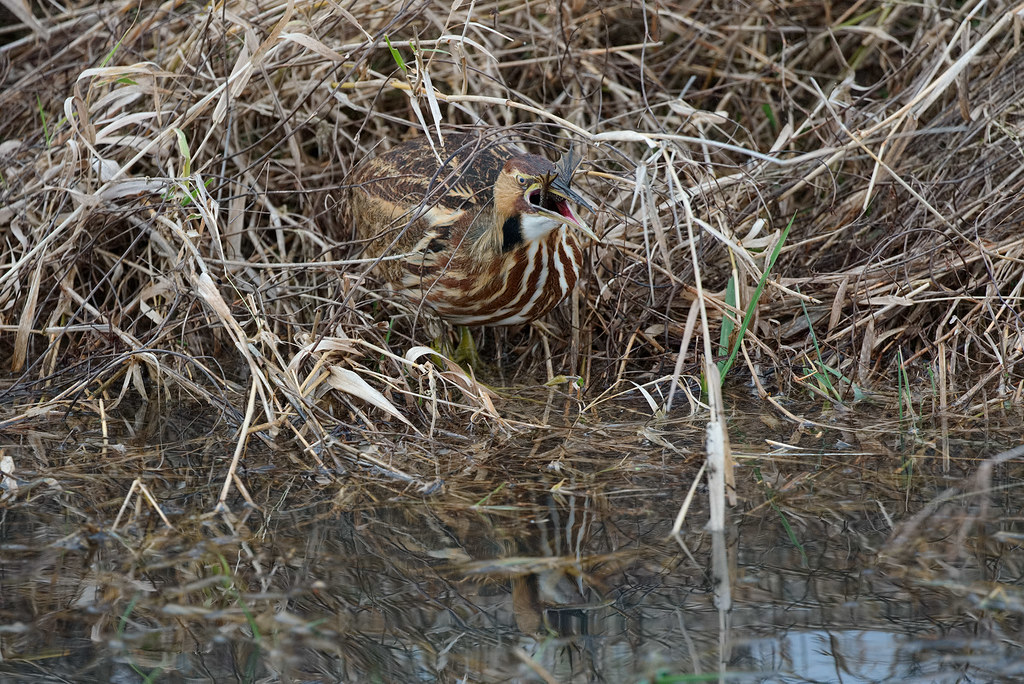
An American bittern with its mouth wide open

One thing I’ve long wanted in a camera is the ability for the focus to lock onto and track the eye of an animal I’m photographing. It would have come in handy here, I was testing out my Canon mirrorless camera to see how limiting its poor autofocus would be if used as a backup in case my main camera failed. I had been watching this bittern that had been mostly sitting still, with some occasional preening, when it suddenly threw its mouth wide open and shook its head about. While the camera had focused fine on the bird while it was sitting still, by the time this shot was taken the bittern had already moved far enough that it isn’t in good focus.

The technology is moving in this direction for photographing people at least, but I fear it will be a while yet before we can do it with moving animals. While my main camera would have handled this situation much better, it still requires thinking about it’s many autofocus modes, and I’d love to spend less time thinking about the technical side of photography and instead just enjoy the animals I’m watching.

Four Hours

A close-up view of the head of an American bittern

In December 2013 I visited Ridgefield after a long absence and came across this bittern late in the day as the sun momentarily peaked through the clouds, giving me some beautifully soft light. It lasted but a moment and the bittern was moving as it hunted along the shoreline, so I was thankful I got a nice picture when it paused for a moment in the open in front of water that was reflecting a patch of blue sky.

The funny thing is, I came across this same bittern four hours earlier in a very similar spot and a very similar pose, but then it was completely overcast and raining, leaving some small drops on the bittern’s head. I like each picture for different reasons, but it clearly shows the impact of not just the different light but also the different reflections in the water, as in this picture all of the sky was gray.

A close-up view of the head of an American bittern

A Mouthful of Bullfrog

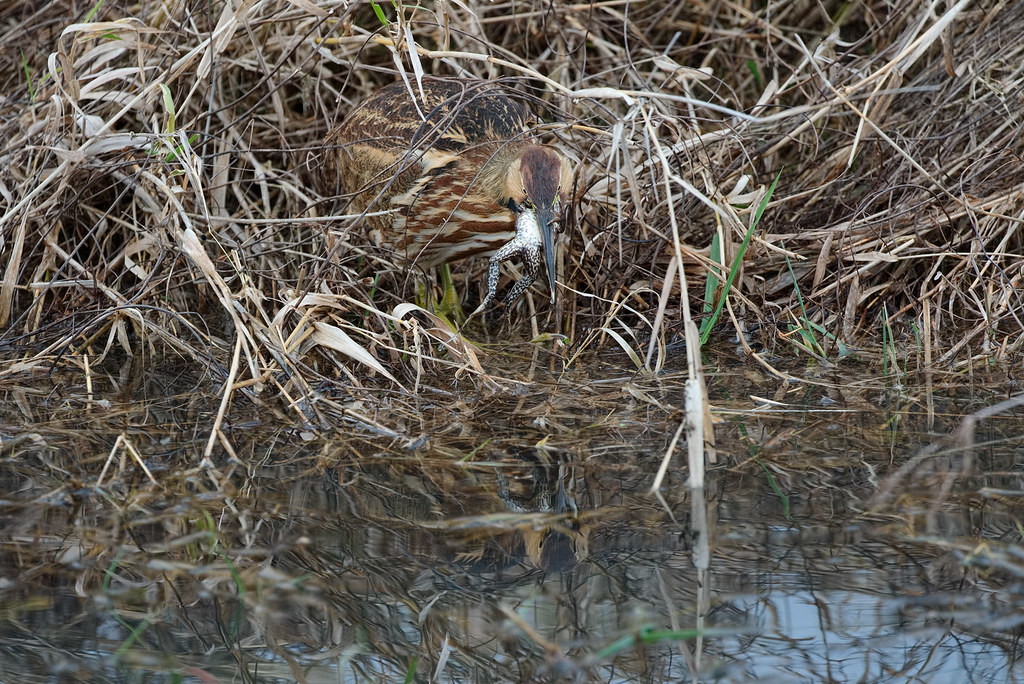
An American bittern prepares holds a large bullfrog in its mouth

Normally I’m pretty good at spotting bitterns at Ridgefield but I saw them on only three out of ten visits to the refuge over the Christmas break. I worried I was losing my touch until I found this bittern on Christmas Eve slowly working the channel beside Rest Lake. I suspect the real reason I haven’t seen as many this year is that the grasses in this area, normally my best spot for seeing them, have been cut lower in places, eliminating cover for both the bitterns and the animals they are hoping to catch.

The bittern snagged a large bullfrog from the water as you can see in the top picture. In the picture below the bittern has swallowed most of the frog with only the rear feet sticking out of its mouth. The bittern has protected its eyes from the frog’s claws with a nictitating membrane, a common tactic in the chaos of swallowing something that doesn’t want to be swallowed.

An American bittern swallows a large bullfrog

Raindrops

Raindrops

I spent about 20 minutes watching this American bittern in the pouring rain on Christmas afternoon of 2012. I’ve photographed bitterns many times on the auto tour and knew to approach slowly and shut off the car once I got close. It was my first time out in my new car but I treated it the same as the old, I rolled down the window and placed some old towels around the opening to absorb the rain. The bittern wasn’t actively hunting so the water accumulated in giant drops on its head.

The peace and quiet ended when a diesel pickup drove up and idled beside me. The bittern slowly turned around and disappeared into the marsh but I was very thankful for our time together, bitterns are one of my favorite subjects and it was a lovely way to end the day.

A Mystery

An American bittern stands in the water next to Rest Lake at Ridgefield National Wildlife Refuge in Ridgefield, Washington

This is one of my favorite bittern pictures as it shows the way I often wind down a day at Ridgefield, watching bitterns near the end of the auto tour before I have to leave to beat the closing of the automated gate, the setting sun leaving the bittern to hunt in shadow. These last moments always make me wonder — what do bitterns do in the dark?

(Almost) Missed You

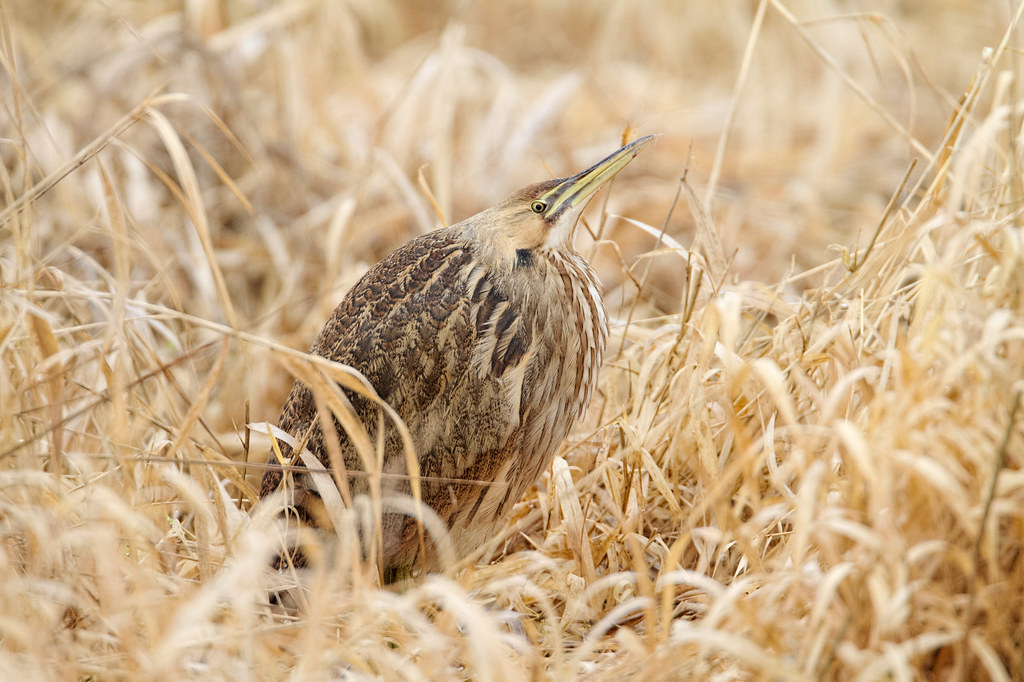
An American bittern sits in dried grasses

As you know by now, one of my favorite things to do at Ridgefield is to photograph bitterns. After having such great success last winter and spring, this year I’ve seen them mostly in glimpses and rarely had a chance to photograph them. I was tickled to have the chance to photograph this one in January, showing how well it’s coloring matches that of the dried grasses in which it loves to hunt.

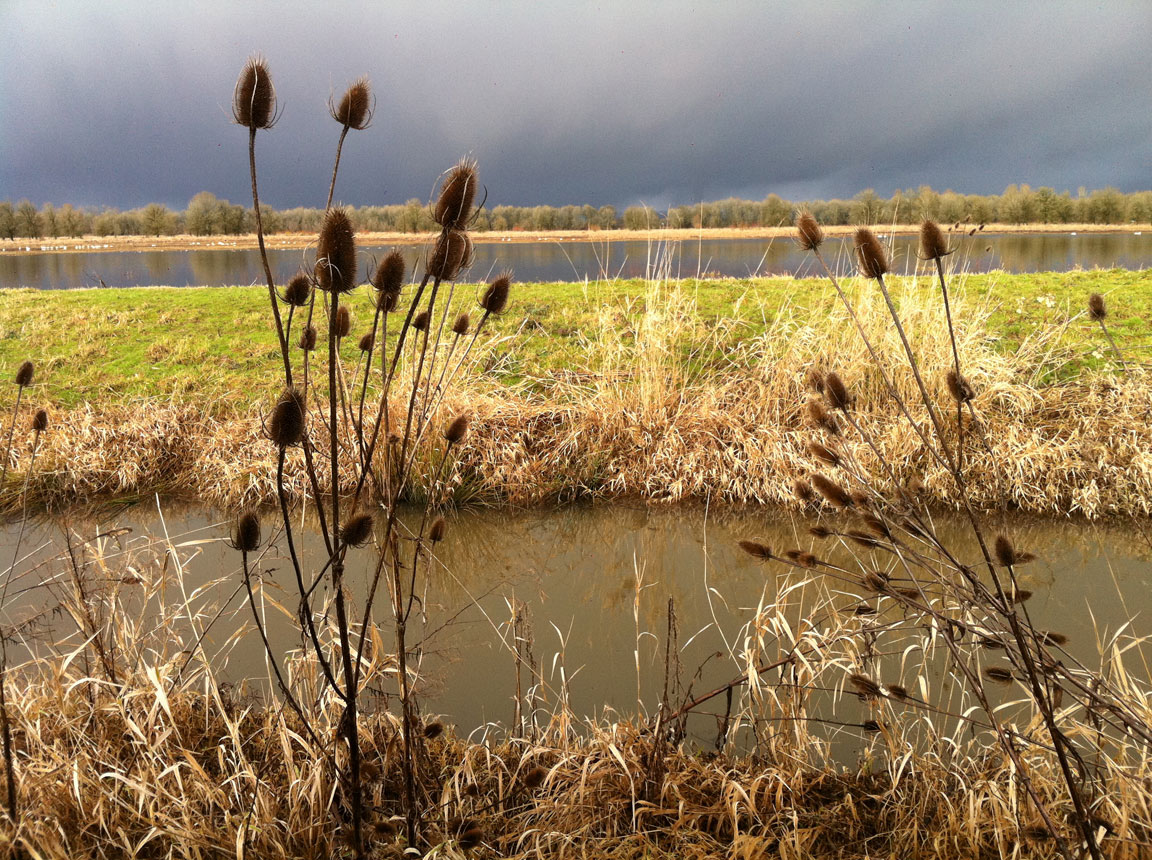
I took the picture below last winter with my iPhone, just wanted a quick shot of my favorite place to look for bitterns, I took it with the phone since the view is similar to what I see with my eyes as I drive along. It’s a bit hard to see but there’s a bittern almost dead center in the picture, on the opposite side of the channel a few feet up from the water line.

Suffice it to say they’re hard to see but I’ve gotten pretty good at it. Once I get to my favorite bittern areas, I wait until there’s no traffic behind me and then let the car creep along as slow as possible as I scan the grasses for these elusive birds. I normally take our Subaru to the refuge but this spring I’ve been taking our Civic, mostly to see if I could tolerate driving a stick shift at the refuge.

The biggest problem I encountered is exactly this scenario. At these speeds, the car is right at the stall speed and it requires a lot of pedal work to keep the car front stalling out. It’s doable, but annoying, and probably not so great for the clutch. So my preference for the next car will be an automatic, although if the stick is a particularly good one, the irritation at Ridgefield might be balanced out by fun on the commute.

And honestly, I’m done talking about cars, starting now!

By the by, the body of water on the other side of the the berm is Rest Lake, and those white dots are tundra swans that winter at the refuge in the hundreds. The bittern above was also at Rest Lake, but at a different spot than this one.

IMG_0494_1152

The Wonderful Wet

IMG_1132

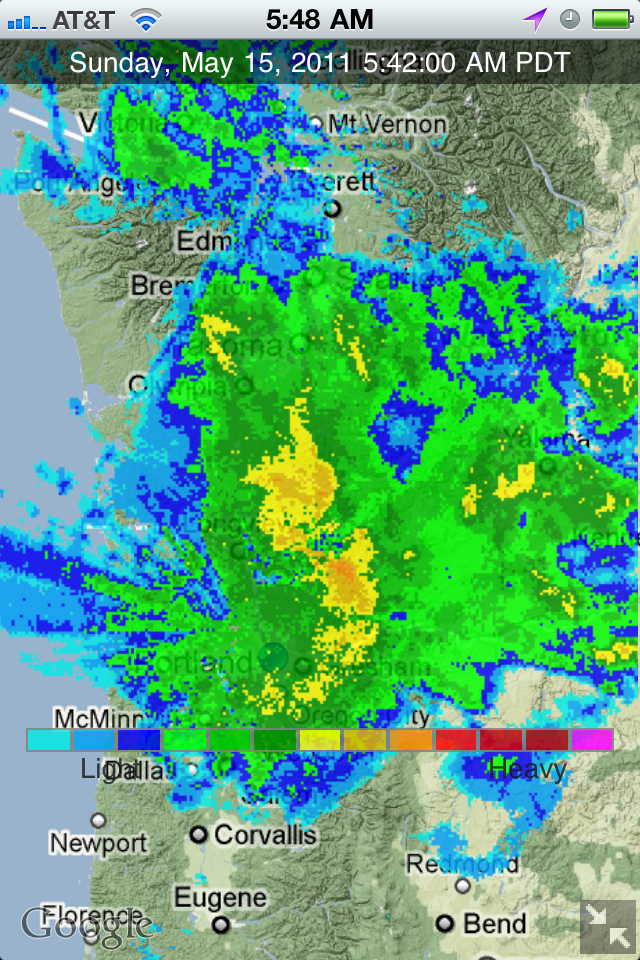
The iPhone is one of the best devices I’ve ever owned. One little thing I love is the ability to set multiple repeating alarms. I have one for 7:00 a.m. on weekdays to get me up for work, and another for 5:00 a.m. on the weekends to get me up for Ridgefield. Another thing I love is the ability to carry around weather maps in my pocket. And oh how I loved the weather map on the morning of May 15th!

I love photographing wildlife in the rain (and snow and frost and fog) and the beauty of the auto tour is I can do it from the relative warmth of a dry car seat. Not everyone shares my love for the rain of course and I didn’t see another car on the refuge for the first couple of hours. It rained much of the day and traffic on the tour was fairly low despite being in the midst of spring migration.

I kept an eye on the weather maps during the day to try to be at a favorite location when the best weather (in this case, the heaviest rain) hit. Even so, I got caught out by a sudden downpour. I had just finished driving past the lakes and started onto the large meadows at the end of the tour where there isn’t much to see at this time of year. So I couldn’t believe my luck when I saw this bittern in the tall grass of the meadow near Schwartz Lake, where I’ve not seen bitterns before, the green grass nicely showing off the pouring rain.

I stayed all day from sunrise to sunset (assuming there was a sunrise and sunset), you’ll see a number of pictures in the coming days and weeks of the Ridgefield rain.

The Wonderful Wet

The Start of the Year

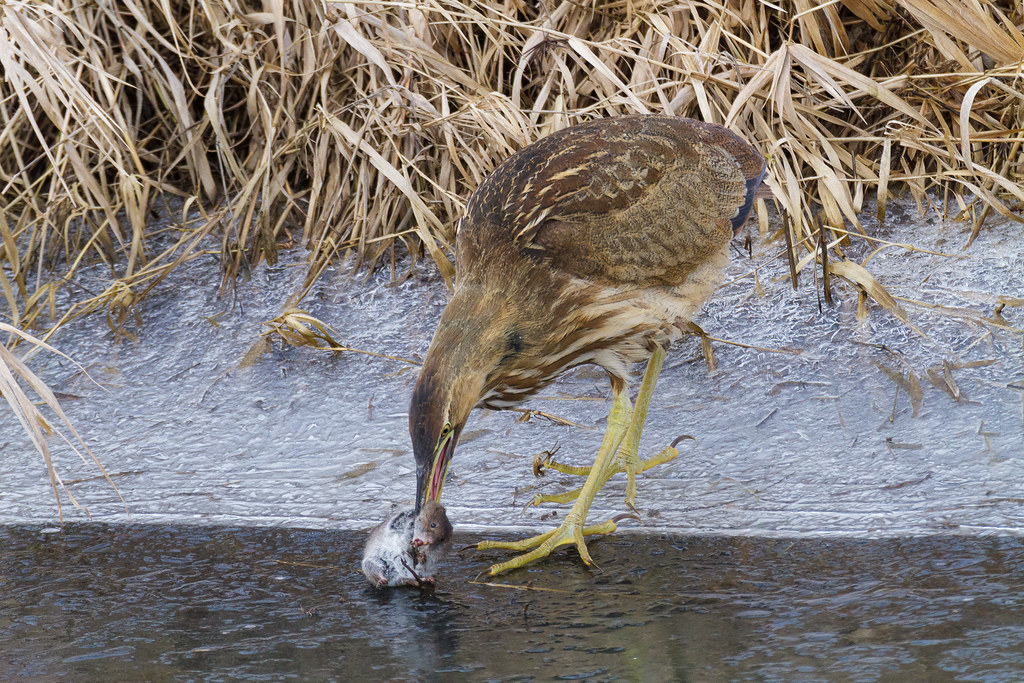
An American bittern brings a terrified vole from the grasses down to the water's edge to dunk it before swallowing it, but the water was frozen. Taken at Rest Lake at Ridgefield National Wildlife Refuge in Ridgefield, Washington on January 1, 2011. Original: _MG_2172.cr2

Although I failed in my quest to find a bittern in the frost on the last day of 2010, the first day of 2011 rewarded me with a bittern on the ice — a hunting bittern on the ice. The day started out promising when I glimpsed a blacktail buck on the drive down through the canyon and onto the refuge at Ridgefield, but after putting on a show the day before the rest of the animals seemed to be sleeping in. While the early hours weren’t crowded, as the morning wore on the visitors picked up rapidly and the big lens attracted a small crowd whenever I stopped.

On the far side of the refuge, I like to drive slowly along Rest Lake to look for bitterns, so I pulled over to let an approaching car past so that I could move at my own pace. Even as I was pulling over I noticed this bittern down below in the frozen channel and settled in to watch. Within moments the bittern struck into the grass and brought out this terrified vole. Bitterns often like to dunk their prey in the water and so it gingerly stepped down the rim of ice, struggling not to slip, and then dunked the vole into the water. Or tried to at least, but failed, since the water in this section was still frozen. It seemed mystified for a moment and stood motionless before eating its meal undunked.

After taking a few environmental portraits of the bittern on the ice, I moved ahead just slightly to another nice location and waited for the bittern to come past. But a Land Rover came up behind me and the couple got out of their car (a no-no on the auto tour during the winter) to set up their scope to view the distant ducks and swans. Not surprisingly I didn’t see the bittern again.

When I got to the end of the auto tour, I was going to go around again but my heart sank when I saw a nearly solid line of cars between Horse and South Quigley Lakes. I learned my lesson from Christmas day, when I should have left when it got over-crowded but didn’t, and headed home. Ellie got an extra walk and playtime in the park, and extra hedgehogging as well, so all-in-all a fantastic start to the year for everyone but the vole.

An American bittern tries to dunk a terrified vole through the ice at Rest Lake at Ridgefield National Wildlife Refuge in Ridgefield, Washington on January 1, 2011. Original: _MG_2182.cr2