Although I failed in my quest to find a bittern in the frost on the last day of 2010, the first day of 2011 rewarded me with a bittern on the ice — a hunting bittern on the ice. The day started out promising when I glimpsed a blacktail buck on the drive down through the canyon and onto the refuge at Ridgefield, but after putting on a show the day before the rest of the animals seemed to be sleeping in. While the early hours weren’t crowded, as the morning wore on the visitors picked up rapidly and the big lens attracted a small crowd whenever I stopped.
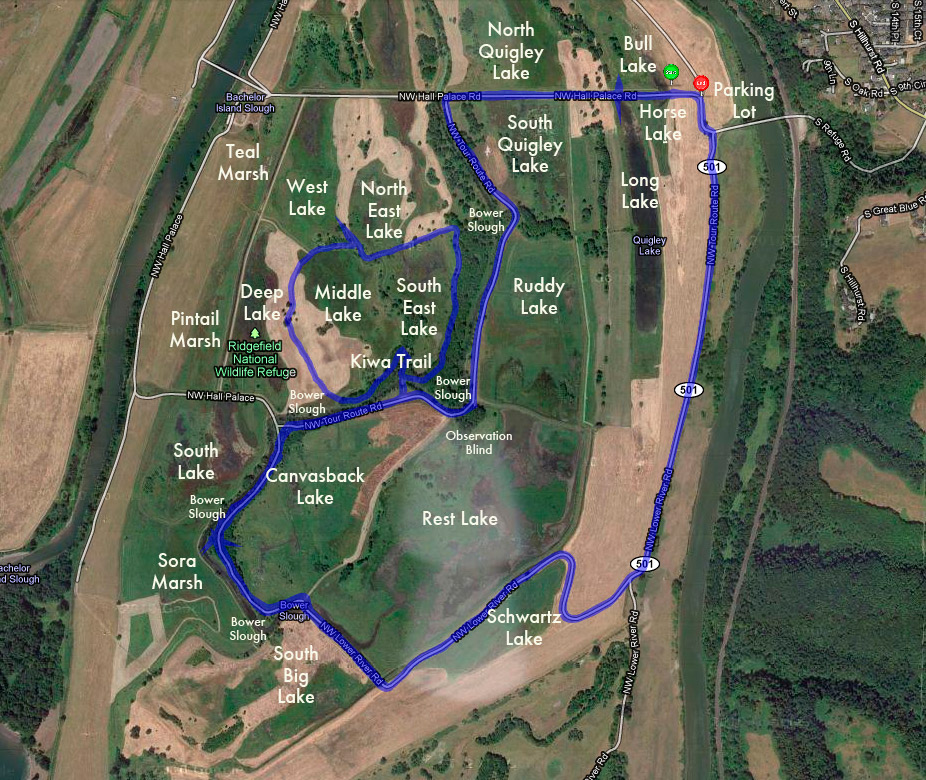
On the far side of the refuge, I like to drive slowly along Rest Lake to look for bitterns, so I pulled over to let an approaching car past so that I could move at my own pace. Even as I was pulling over I noticed this bittern down below in the frozen channel and settled in to watch. Within moments the bittern struck into the grass and brought out this terrified vole. Bitterns often like to dunk their prey in the water and so it gingerly stepped down the rim of ice, struggling not to slip, and then dunked the vole into the water. Or tried to at least, but failed, since the water in this section was still frozen. It seemed mystified for a moment and stood motionless before eating its meal undunked.
After taking a few environmental portraits of the bittern on the ice, I moved ahead just slightly to another nice location and waited for the bittern to come past. But a Land Rover came up behind me and the couple got out of their car (a no-no on the auto tour during the winter) to set up their scope to view the distant ducks and swans. Not surprisingly I didn’t see the bittern again.
When I got to the end of the auto tour, I was going to go around again but my heart sank when I saw a nearly solid line of cars between Horse and South Quigley Lakes. I learned my lesson from Christmas day, when I should have left when it got over-crowded but didn’t, and headed home. Ellie got an extra walk and playtime in the park, and extra hedgehogging as well, so all-in-all a fantastic start to the year for everyone but the vole.
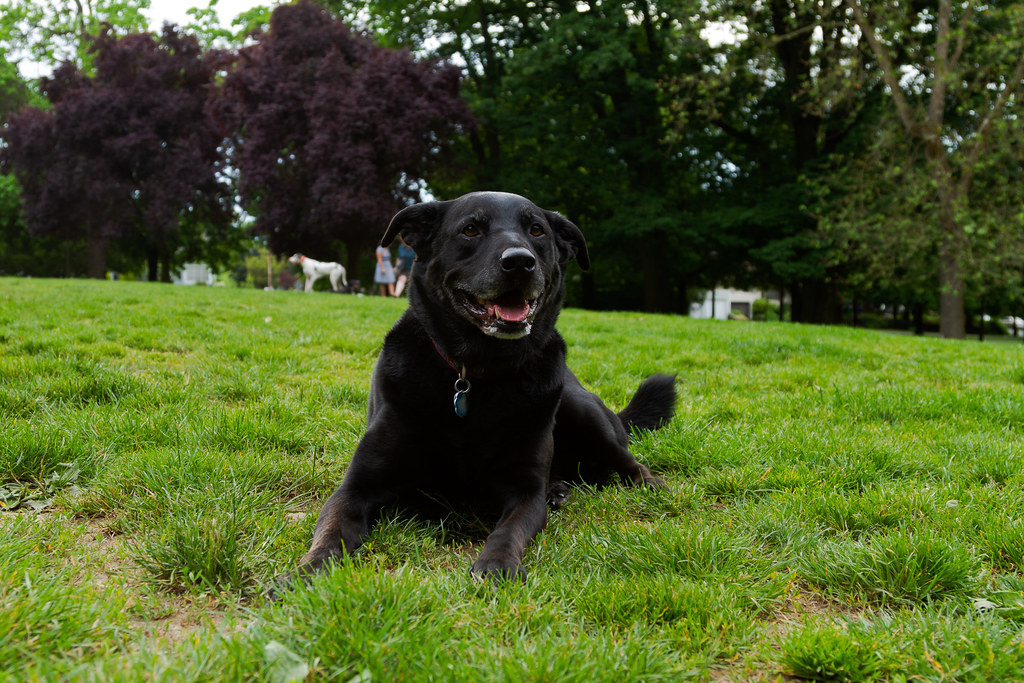
We adopted our sweet girl two years ago and, since we don’t know her real birthday, we celebrate it today as well. She was five when we adopted her and so now turns seven. This picture is from June when she was still recuperating from her surgery, this is the look I get in between sleeping and snuggling and hedgehogging. Speaking of which, someone has been patiently waiting all night for me to finish my chores, so I’d better go.
A month or two ago Ellie’s famous chop chop turned into cough cough so she was off to the vet. She had picked up kennel cough so we picked up cough medicine. And what medicine! She hardly coughed after taking it, dogs must get some magical stuff that isn’t approved for us humans. She wasn’t allowed to socialize with dogs for a while so her walks were sadly solitary. But if you thought a cough was going to slow down her hedgehogging, you don’t know our Ellie.
Hedgehogging did get shelved temporarily a few weeks later when we were playing and she split a nail up close to the quick. After taking it easy she was back at it and we spent a beautiful Thanksgiving hedgehogging on the leaf-covered lawn. She came up limp during the next day’s game, I felt her paw and it seemed fine but I called the game as a precaution. As soon as we got inside the floor was covered with bloody paw prints so I applied pressure while my wife called the vet. Thankfully the pressure stopped the bleeding and they were able to see us right away. One of the punctures was large enough to require stitches so Ellie came home with a big bandage on her front paw. She had a follow-up visit this morning and got the bandage off but stays in stitches for a week yet.
Hedgehogging has once again been sidelined, not that she has gotten the message. Dear Ellie, how many legs would have to be hobbled before you stopped pelting me with hedgehogs?
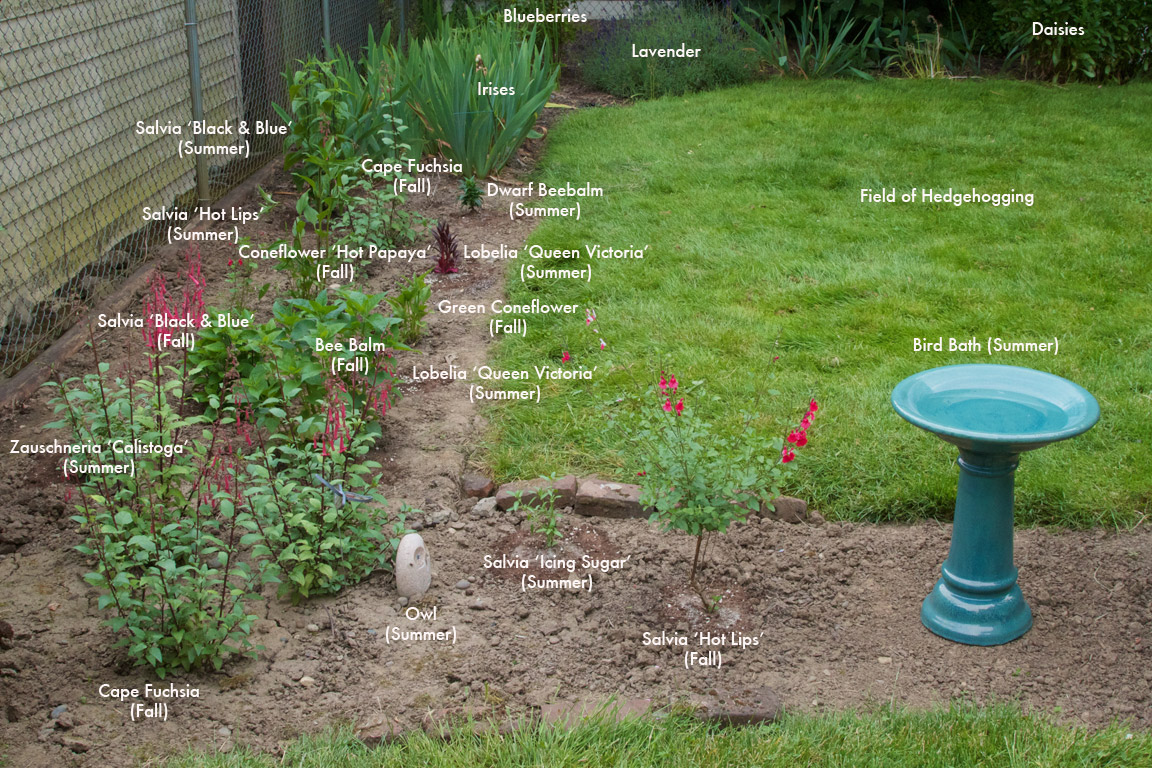
The hummingbird garden in memory of my mother-in-law got off to a slow start. I first needed to clear out some of the raspberries, but when I dug down into the clay to remove raspberry and root, the next week another young plant sprouted up and it was once more down into the clay. This continued week after week until it was time for Ellie’s surgery, our trip to Maine, and suddenly we were well into the summer.
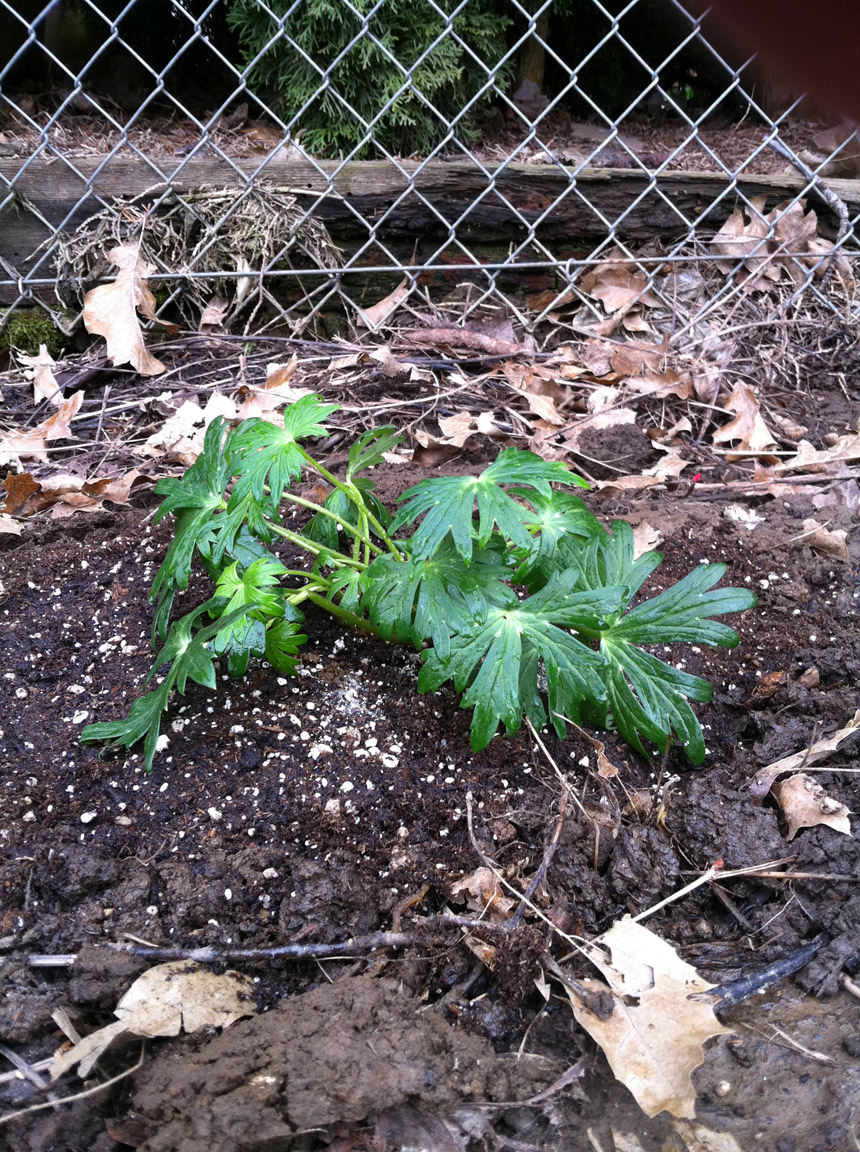
I didn’t want to risk planting new plants during the dry season, but since there was a Cape fuchsia out front (a sun-loving plant that a previous owner planted in total shade), I dug up some of its runners and transplanted them to the back. Unfortunately I didn’t have any potting soil to ease them into their new homes, so it was clay-to-clay for them. I hoped at least one would survive, and if not, it was no great loss.
To my surprise, all but one not only survived but even bloomed during the summer, and then grew quite a bit in the fall. An occasional hummer came by, a surprise given how low the plants were when they blossomed, but it was a promising start. Still, they stood alone until cooler weather returned.
When it did, I was ready list-in-hand and we were off to local nurseries recommended by a friend. We started off at Cornell Farms since my wife’s friends had kindly gotten us a gift certificate to start us on our way, and when we got there I realized it’s just minutes from where I work. It’s also close to Ellie’s surgeon, I had almost driven right past it on the way to one of Ellie’s appointments after a wrong turn sent me astray.
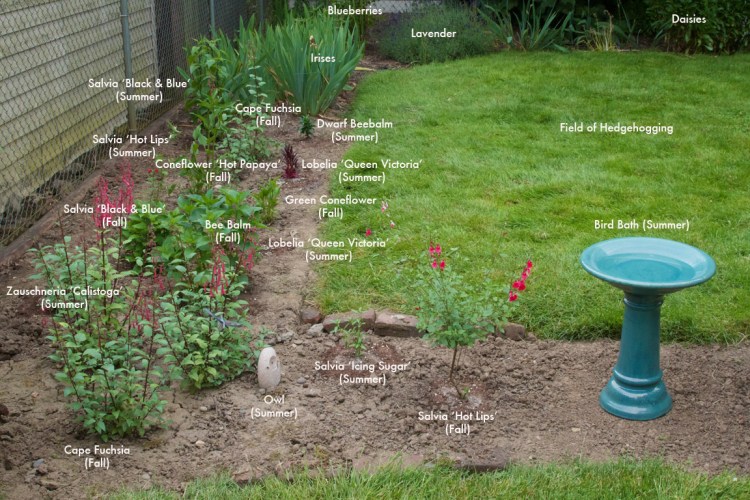
For the hummingbird garden we started with a showy ‘hot papaya’ coneflower balanced by a subdued green coneflower, as well as a distinctively pretty black-and-blue salvia. We also picked up a couple each of black-eyed Susans and hostas for other parts of the garden.
The first wave of new plants from the good folks at Cornell Farms, the first picture on my blog taken with my iPhoneGood pictures of the new plants will have to wait until spring, but even this snapshot shows the distinctive blossoms that give the black-and-blue salvia its nameThe all-green subtlety of this small coneflower will contrast nicely with the colorful blossoms all around itWill the hot papaya coneflower survive the winter and bloom again next year? Here’s hoping!
The black-eyed Susans were added to the wildflower garden in front to add color beneath the ever-encroaching mass of daisies. When we moved here all of the landscaping was completely overrun with weeds and this garden was the first to be rescued, but this is the first time I’ve added new plants to the survivors. When I first started pulling weeds back then, I found a golf ball buried below the plants and while not a golfer myself, decided to keep it in place in honor of my golf-loving stepfather. It now serves in his memory since he passed away a few years back, a pleasant reminder each time I work in this part of the garden and discover it anew.
The new black-eyed Susans joined the golf ball out front to add some color in front of the daisies
I’m not traditionally a fan of ferns but got religion while hiking in the redwoods surrounded by the ancient plants carpeting the forest floor. We had some ferns along a side of the house where they literally can’t be seen, so I moved them beside the trillium to create my own Redwood Corner, just like the redwood forests but for the minor point that I have no redwoods. The two new hostas sit nestled in among the ferns.
One sad note is that to make way for Redwood Corner I dug up Sam’s Grove, a patch of daisies that I moved to the backyard a few years ago. They just weren’t getting enough sun and needed to be tied up to avoid falling over. Little Sam loved playing in the daisies so I was sorry to do it, but I think he will enjoy the ferns even more than his old grove.
The next week we were off to Portland Nursery in SE Portland, starting off with a white dogwood for the back to complement the pink dogwood out front. The new one is a Korean dogwood (Cornus kousa) that is more disease-resistant than our native dogwood (native to the US, not Oregon), although our biggest consideration was finding one that would fit into the space available in the backyard — that is, it couldn’t impinge upon the hedgehog field of play. Some things are sacred.
The leaves of the Korean dogwood just starting to turn red with the fall
The hummingbird garden swelled with two new salvias, hot lips and Mexican sage, plus bee balm. A hummingbird hovered above me as I held the hot lips salvia before I even had it planted, then returned the following morning to work over all of the blossoms. I haven’t seen hummers much since, although I also haven’t spent much time out there between travel and the weather and the early approach of darkness.
The bee balm was past its prime but still gave some nice color until it finally yielded to the fall
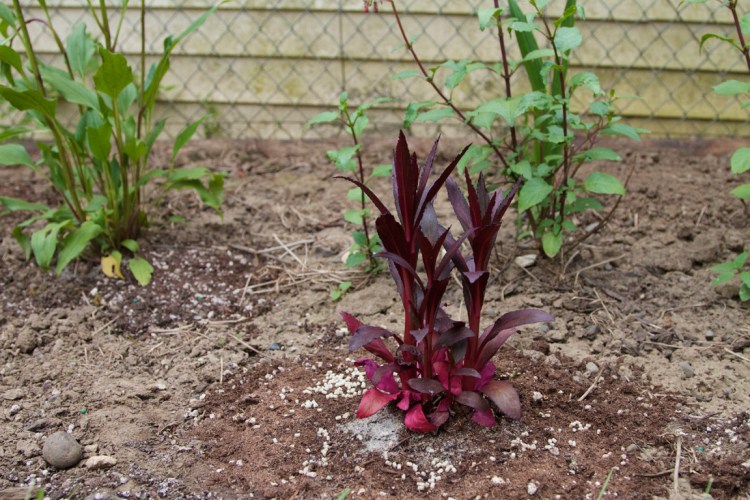
We also picked up a stunning Lobelia hybrid, Queen Victoria, which unfortunately the slugs love as much as I do. It will be difficult to photograph, as even viewing with the naked eye it’s blooms seem impossibly red. Its dark maroon stem and leaves contrast nicely both with the red flowers as well as the green leaves of the surrounding plants. It was flopped over when we bought up but straightened right up until the wind and rain finally humbled it. It was still actively blooming last I checked so it should give us a nice explosion of color late in the season.
The lobelia (the maroon plant on the left) straightened up and prepared to bloom, setting a good example for the others. It has since bloomed the most violent red flowers I’ve ever seen.
So far everything has survived despite by lack of experience, we’ll see what survives the winter. The hot papaya coneflower is the biggest risk as it doesn’t like the cold, so hopefully it will at least survive one winter so I can see it bloom. Just once is all I ask.
And I have to say, I did enjoy myself putting in the new plants even if it did keep me from hiking in the Gorge, gardening is a lot more fun when you love the plants you’re working with. You’re on notice plants-of-the-garden-I-don’t-like, sleep tight this winter but don’t say I didn’t warn you if the shovel comes digging your way come spring.
The humble start of our hummingbird garden, with the ever menacing raspberries in backAll of the plants in the lower two-thirds of the picture are new, the cape fuchsia in the lower left was transplanted from the front while the rest were purchased at nurseries.
One of the previous owners of the house must have really loved this one type of bulb because they are literally planted everywhere around the house. Unfortunately that includes some places where they shouldn’t be, such as in and around my favorite rose bush (which is actually a few rose bushes planted together). While the bulbs do have a pretty flower, they also are so thick they keep the roses from drying out, leaving them susceptible to the black spot fungus which has plagued our roses.
So earlier this summer I dug out as many of the bulbs as I could from underneath these roses. I tried to avoid damaging the roses but it was slow going as many of the bulbs were up tight against their roots. Also because the thorns of these old roses are both large and malevolent. The going got even slower when Sam came over to help. The stalks were still attached to many of the bulbs, as I pulled a few of them up he started playing with them. So we turned it into a game, I’d drag the stalks through the grass and he’d try to catch them and knock the seed pods off. When the stalk was sufficiently flayed, I’d toss it up and he’d somersault through the air after it.
Eventually I dug up as many bulbs as I could and all of Sam’s organic cat toys were gone. I took this picture of him after our fun and games were over.
A bird in the hand is worth two in the bush.
English proverb
A bird book in the hand is worth two in the house.
Boolish proverb
I’m a nerd.
When I’m about to make a big purchase, I make an equally big spreadsheet comparing the pluses and minuses of each option. Computers, cameras, lenses, cars, houses, doesn’t matter, there’s always a spreadsheet. Until now. Until the iPhone.
Even without firing up Excel (or lately, Numbers) to map out the alternatives, I knew the iPhone 4 was the one to finally replace my ancient and little-loved Sony. I’ve been playing with it for a few weeks now and I have to say the little thing really tickles my fancy.
It probably won’t surprise you to learn that the first three apps I’ve purchased are all related to birds.
When I ordered the phone, I knew there were birding apps for it but I didn’t know which ones. So I did a little happy dance when my wife informed me that the Sibley guide was available for the iPhone. The Sibley guide is my favorite of my four printed field guides because of the breadth and depth of the illustrations, but it’s also the largest and heaviest so not the one I carry into the field.
Sibley has the answer
On our recent trip to Maine, I brought my second favorite guide, Kenn Kaufman’s excellent guide. But it was left behind in the hotel room when we went out to visit a relative, who it turns out had hairy woodpeckers coming to her feeders. There was a male and female and another similar bird, but with an orange patch on top instead of a red cap in back. Was this a juvenile hairy or another species altogether?
We consulted a bird guide at the house but it didn’t provide any clues. Even my book back at the hotel didn’t provide the answer. It wasn’t until I got back home that the Sibley guide showed not only the location of the juvenile’s patch but also the clue about the color.
With the iPhone app we would have known the answer straight away. And to top it off, the guide includes a lot of audio files so I can better learn to bird by ear. I was convinced of the need to improve in this area while taking a guided tour offered by the Audubon Society in Maine, I was stunned at how readily the leader could pick out birds by song.
When I’m at home, I’ll still prefer the printed guide, but I’m terribly excited now that I can carry hundreds of birds in my pocket.
Next up was Angry Birds, a game where you use a slingshot to toss birds at the creatures that stole their eggs. It’s a delightful little game but would be even more fun if you used a black lab to toss hedgehogs at the creatures who stole her food. Just a suggestion.
The next app not only has birds like eagles and falcons and cardinals, but other wildlife like bears and panthers and rams. I still have a big learning curve but I’m looking forward to playing Madden NFL 2011 as I start riding the train again.
Despite the pouring rain, this male red-winged blackbird collected a beakful of bugs to take back to the nest. Both redwings and yellowheads, male and female alike, heavily worked this section of Long Lake to feed the relentless hunger of their young.
I just looked up on this sunny afternoon and noticed all the pets are asleep in my office. Ellie is to the right of my feet and Sam to the left. Emma is dozing in a sunbeam under a window. Scout, bless her heart, is in her favorite spot in the heated bed despite the hot day.