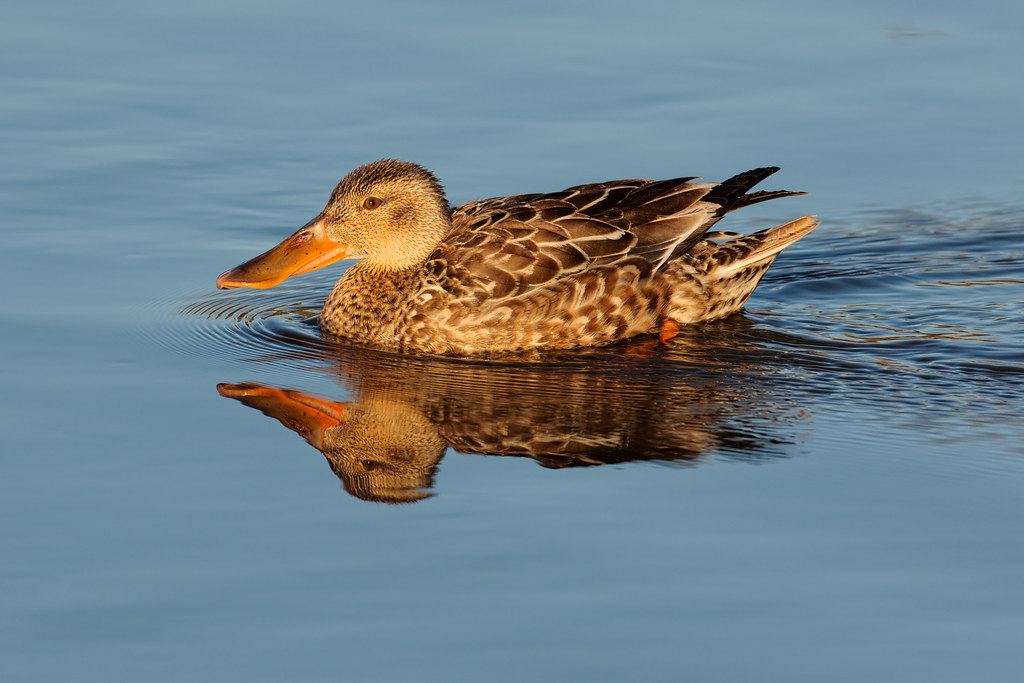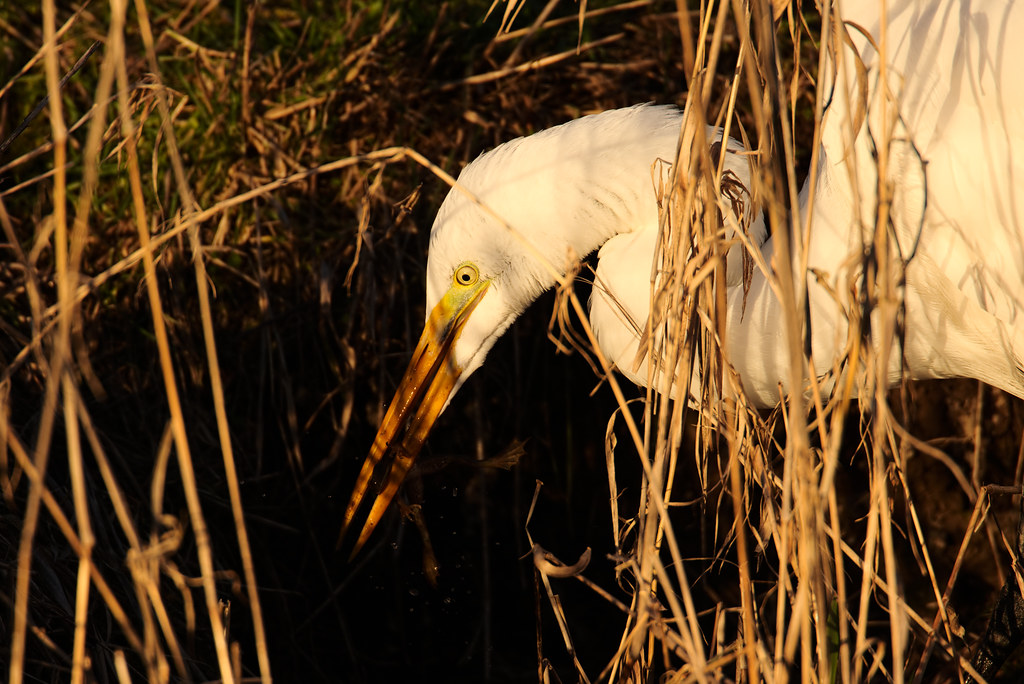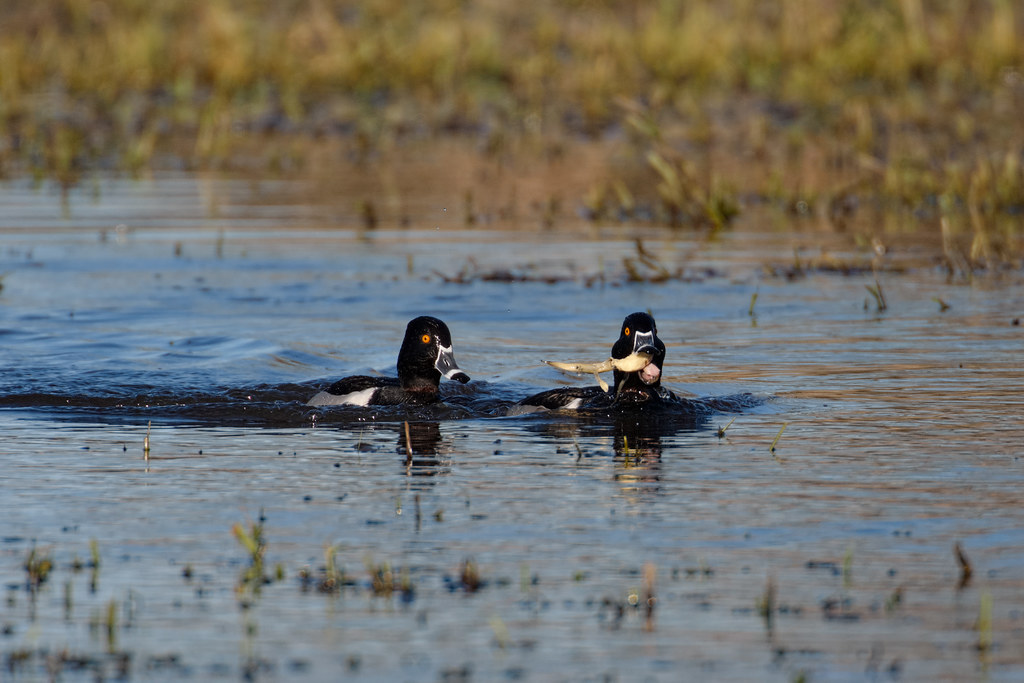
A shoveler swims past late in the day on New Year’s Eve of 2014, meaning she likely survived into the new year. The little bullfrog below almost made it into the new year but an egret plucked it from the shadows shortly before sunset. The bullfrogs move pretty slowly in the cold of winter and if spotted are easy pickings for the egrets and herons and bitterns that patrol these shores.
Tag: eating
A Surprise in the Salvia
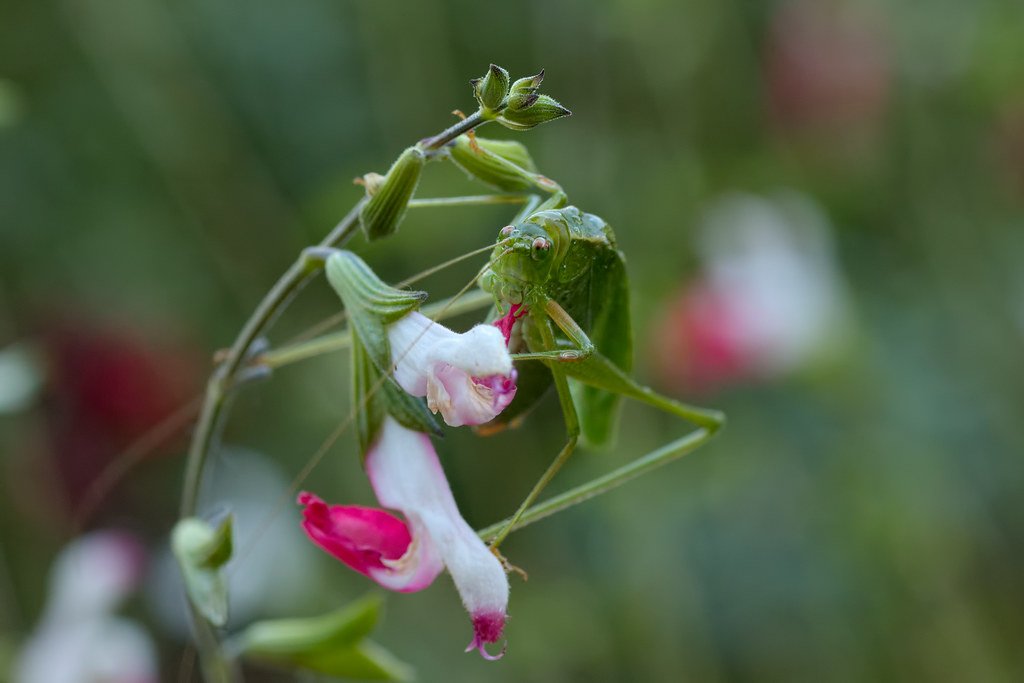
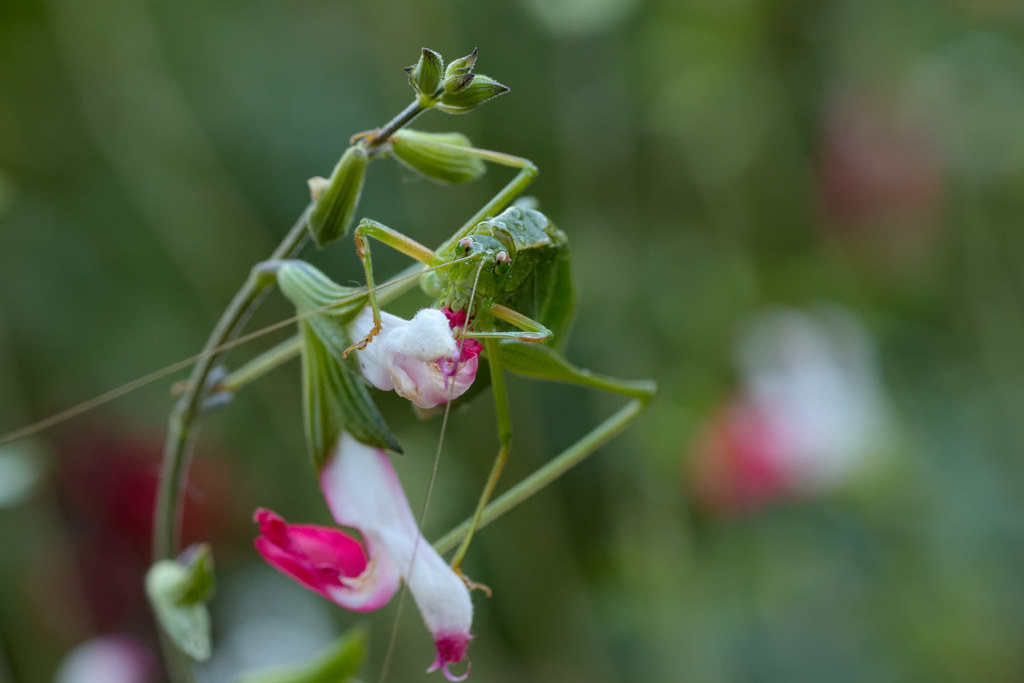
I normally like to photograph the insects and flowers in our garden the same way I shoot animals and plants when I’m hiking, which is to photograph them how I find them. In this case though the water drops on this katydid came not from rain but from me. It’s been a brutal summer here in Portland so even though our plants our drought tolerant to deal with the normally dry Northwest summers, I’ve been giving them an occasional drink of water since they missed out on the rains that usually last through June.
While watering the wildflower garden I saw something jump from the plant I was watering into our bee balm. I dropped the hose and ran over to see what it was, expecting a moth, and was delighted to instead find my favorite insect to photograph, a katydid. I had the chance to photograph them from 2006 to 2009 but hadn’t seen one since, so I put aside the watering and ran inside to grab my camera and tripod and macro lens and try for some pictures, even though the breeze was going to make things difficult.
I was a bit crushed when I got back to the bee balm and discovered the katydid was gone. But it hadn’t gone far, as I saw it moving on the nearby salvia and settled in for some pictures. In the top picture it is about to jump from one branch to another, its two front legs in open space balancing in the wind while the back four maintain purchase on the salvia. In the bottom two pictures it is using its mandibles to cut off pieces of the flower to eat. It was hard to get any pictures as the breeze was blowing the flowers around, I did my best to manually focus whenever the katydid came back into view and hoped for the best.
I planted the salvia for the hummingbirds, and the bees and butterflies like them too, so I was delighted to see the katydid enjoy them too. The katydid’s enjoyment is more destructive than the others, but no worries, there are plenty of blossoms to choose from. I hope it can forgive the disturbance of my watering, as the same water that upset it nurtures the flowers it loves to eat.
Dinner Time, Decision Time
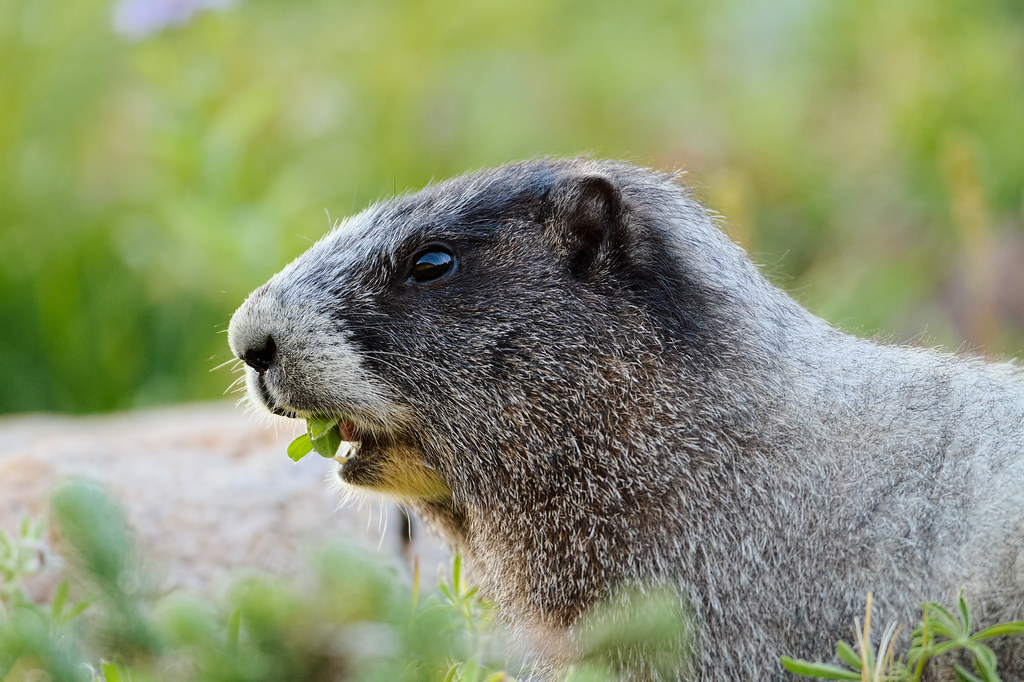
A hoary marmot eats the leaves of wildflowers late in the day in Mount Rainier National Park, taken soon after I arrived on my trip to the park last fall. I’ll be deciding within the next couple of weeks on my trip for this fall, the two major candidates are returning to Mount Rainier and/or Olympic National Park, or heading out to Yellowstone and possibly the Tetons. Also might look into Glacier National Park or taking several small trips so I could also hit the Oregon coast and the redwoods in California.
Usually it comes down to lodging availability, road construction, weather, how long it’s been since my last trip, and how much driving I feel up to. Sometimes I feel a particular pull to see certain types of wildlife, and at the moment the marmots and pikas of Mount Rainier are calling me back, even though I was there just last year. I didn’t see them as much as I would have liked, and it poured rain during much of the trip. Except it didn’t rain when I was in the Hoh Rain Forest like I wanted, so maybe the fifth visit will be the charm.
On the other hand, I haven’t been to Yellowstone in four years. The last trip wasn’t as much fun as other years, although a couple of days were two of my favorites of any trip, and even a lesser visit to the area is still a pretty great time.
The other little wrinkle this year is my cameras. My Canon 7D II and 100-400 II lens were both released too late last year for any major hiking trips, so it would be fun to try them out in the wildlife-heavy parks. I did cancel my pre-order for the new Sony A7R II, I would have been a part of the initial shipment but it was just too much expense to risk without waiting for more thorough reviews. If I had kept the order I’d lean towards Yellowstone, as the Sony can shoot lovely 4K video and I’ve long wanted to video the geothermal features there. It’s high-resolution full-frame sensor would also be fantastic for still shots, so I probably would have spent the entire week in Yellowstone and split my time between the scenery and the wildlife.
Strangely enough it’s the scenery of Yellowstone that is attracting me more this year than the wildlife, I should probably check myself for a fever.
I wouldn’t complain about a week of hiking in the Tetons either except I’m out of good hiking shape and all that elevation change while carrying the cameras might do me in. I love photographing the mountains at sunrise but I’ll want a better camera before making that a priority, the full-frame cameras are much better suited to that than the 7D.
The good news is these are all fun places to visit so there are no bad choices. It’s the planning I hate.
Ring-necked Thieves
Sometimes animal behavior seems all too familiar to our own.
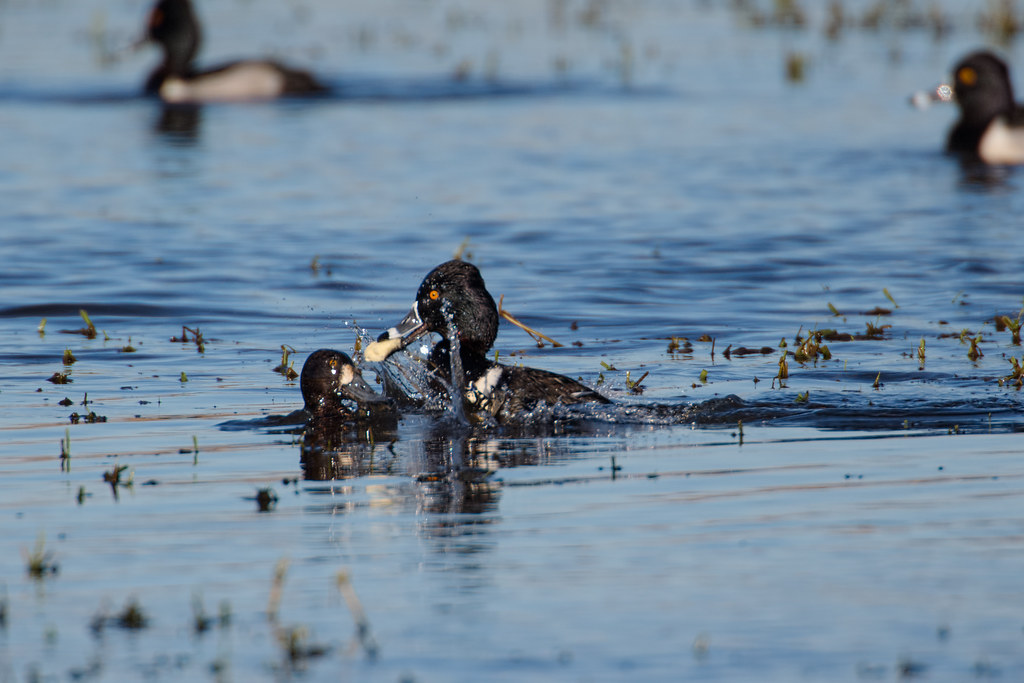
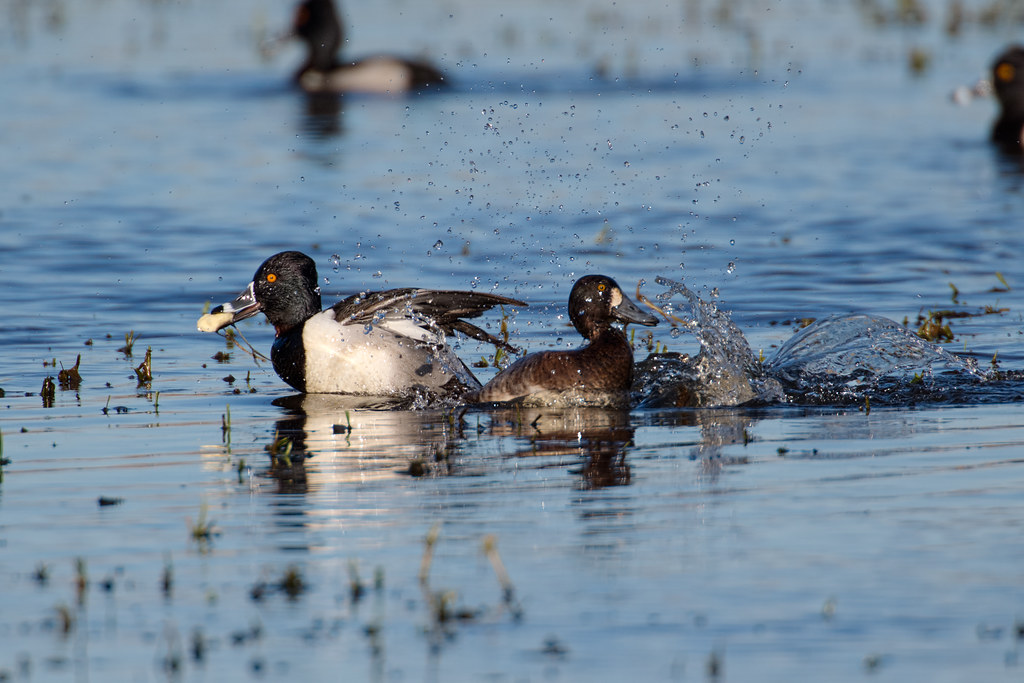
A small flock of ring-necked ducks was diving under the shallow waters of Bull Lake to feed, sometimes bringing up what I’m guessing is the root of an aquatic plant. Whatever it was, the ducks were very fond of it, and the one that surfaced with it would swim away from the others while trying to quickly eat it, all while any nearby ducks would try to swim over and steal it and eat it for themselves. I wasn’t sure which of these two males actually surfaced with the plant but the chase was on.
While in a mad dash to escape with his food, the ring-neck swam directly over a lesser scaup as she was surfacing, leaving her rather startled but none the worse for wear. He held onto his prize and was able to eat it at last.
Round Two
Dining on Wildflowers
A hoary marmot eats wildflowers on a rainy fall afternoon in Mount Rainier National Park. The pouring rain reduced the crowds on the trails compared to the previous sunny day, but the marmot has to eat rain or shine, for a cool wet afternoon is nothing compared to the brutality of the coming winter that will drive it into hibernation.
Strike While the Iron Is Hot
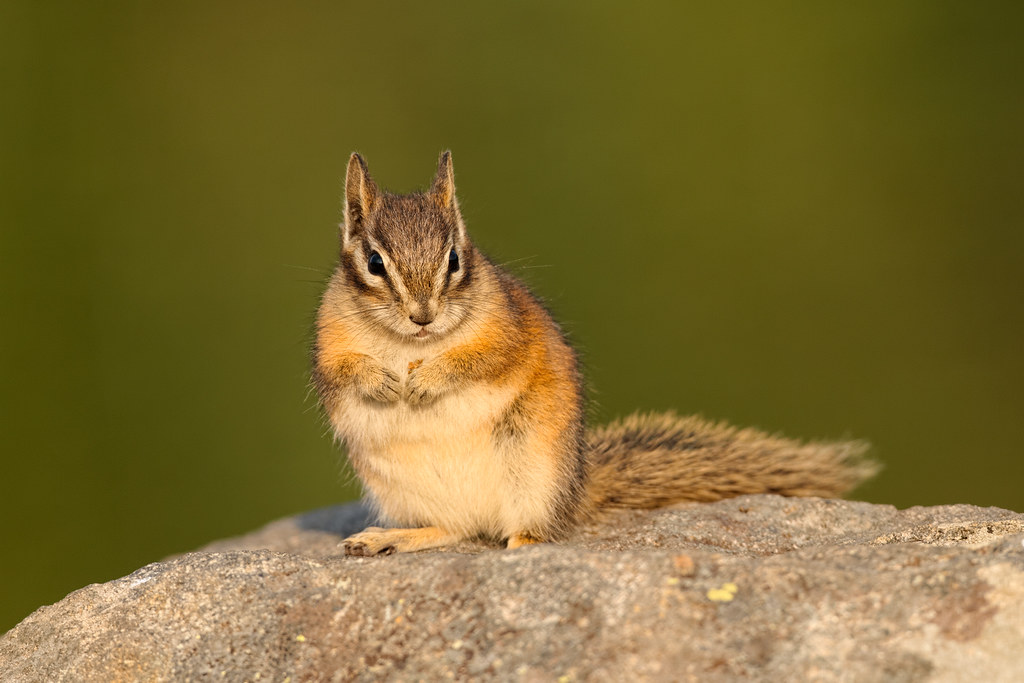
My first full day in Mount Rainier last year started off with a bit of rain but was sunny and warm most of the day, before it started raining buckets for the rest of my trip. This chipmunk was taking full advantage of the sunshine, and the hikers it brought in numbers, to fatten up for the coming winter by eating the many grasshoppers that people had crushed underfoot on the nearby trails.
A Sense of Scale
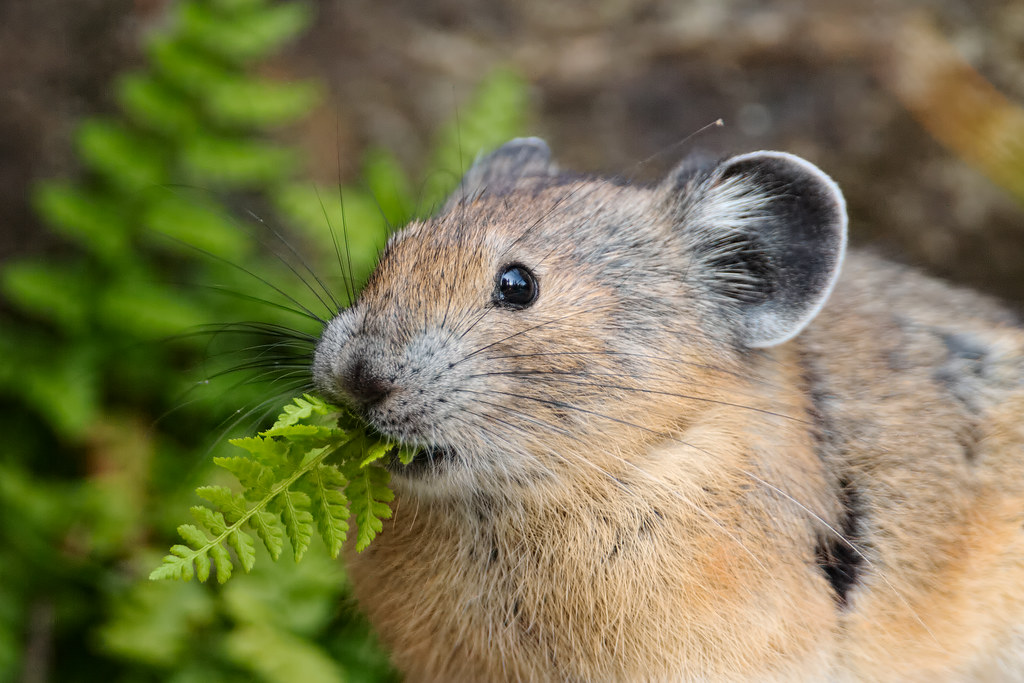
Sometimes when looking at my wildlife pictures it’s hard for me to remember how big or small an animal really was without something familiar to provide a sense of scale. I don’t get to see pikas that often so this time, to help me remember their size, I took a picture of one eating a Christmas tree.
Tiny Catch
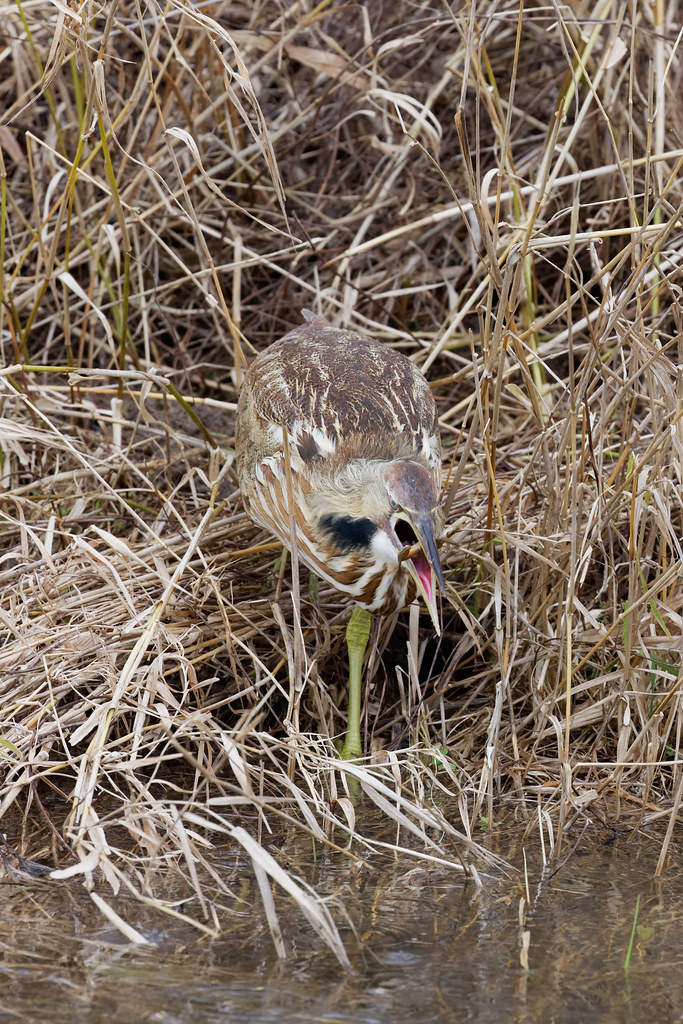
I’ve frequently seen bitterns catch tiny little fish like this one and I often wonder if it’s worth the effort (especially so when the larger herons and egrets do it). I guess they’re not expending much extra effort while on patrol looking for all kinds of prey, be it fish or frog or vole or snake or earthworm.
Catch, Dunk, Swallow
They say pictures never lie but they can certainly give the wrong impression. This American bittern, swallowing a treefrog it just caught, caught it further away from the water but came down to the water, dunked it, and swallowed it. As adults treefrogs often live near water but spend most of their time on land (and more often near the ground rather than in trees). The bittern has covered both its eyes with a nictitating membrane to protect them as it flips the frog down towards its throat.