Rest Lake

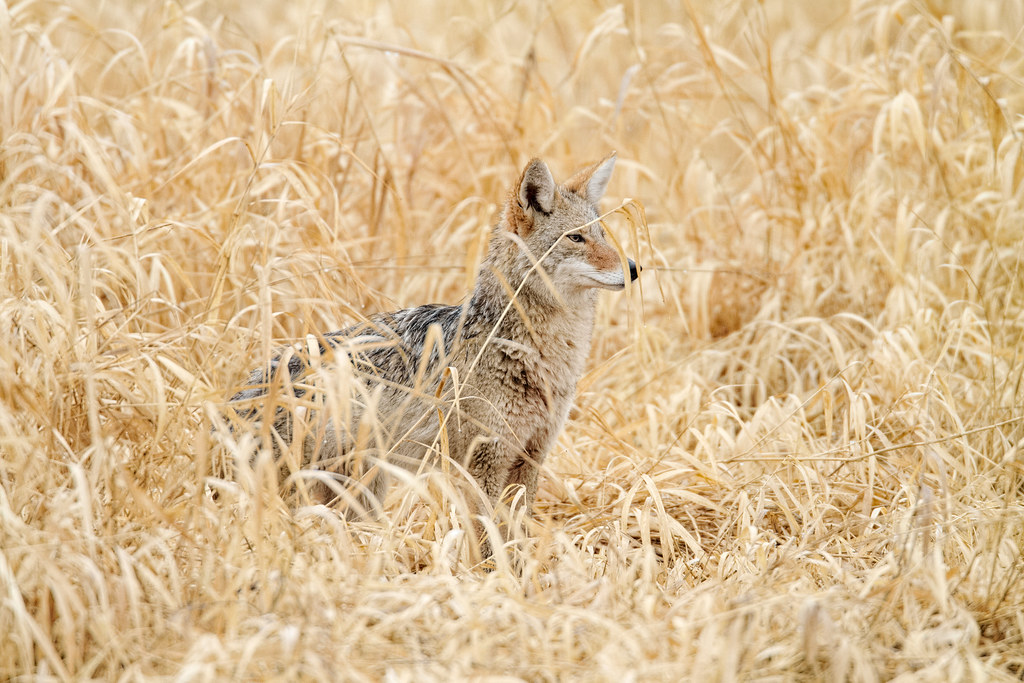
A coyote stands in a marsh

The picture above of a coyote hunting in the marsh is deliberately like this bittern picture, both taken at Rest Lake. The lake is the largest on Ridgefield’s auto tour and has water in it year round, but the marshy areas that ring the lake are my favorite places to watch. To survive in these areas is to avoid being eaten not just by coyotes and bitterns but herons and hawks and harriers and eagles and otters and mink and weasels and raccoons and snakes and bullfrogs and …

A coyote with wet fur walks along the edge of Rest Lake

(Almost) Missed You

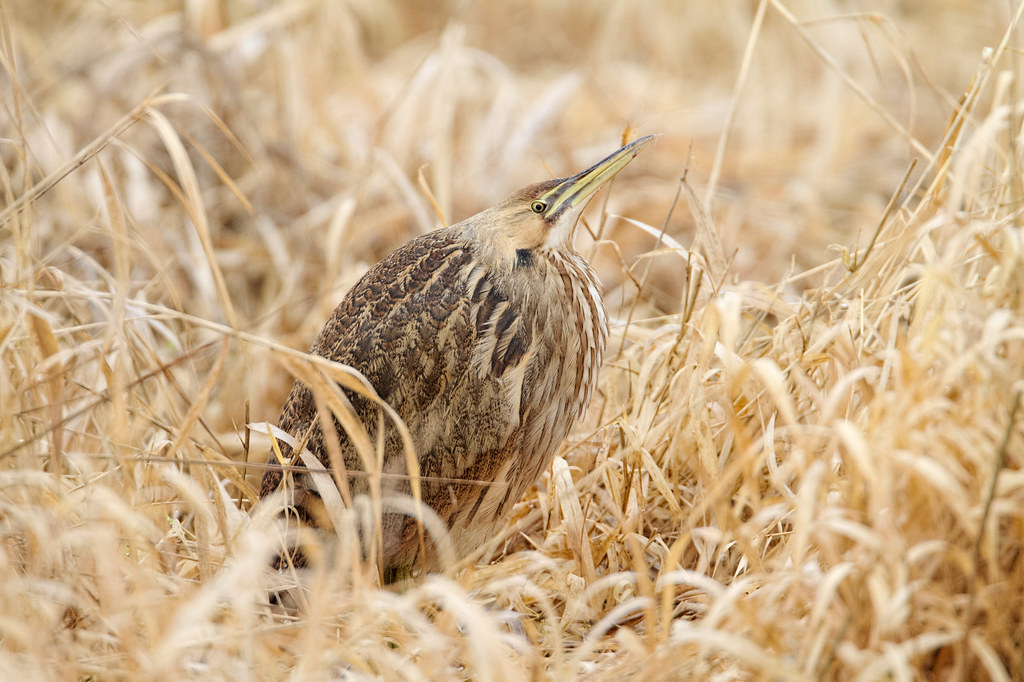
An American bittern sits in dried grasses

As you know by now, one of my favorite things to do at Ridgefield is to photograph bitterns. After having such great success last winter and spring, this year I’ve seen them mostly in glimpses and rarely had a chance to photograph them. I was tickled to have the chance to photograph this one in January, showing how well it’s coloring matches that of the dried grasses in which it loves to hunt.

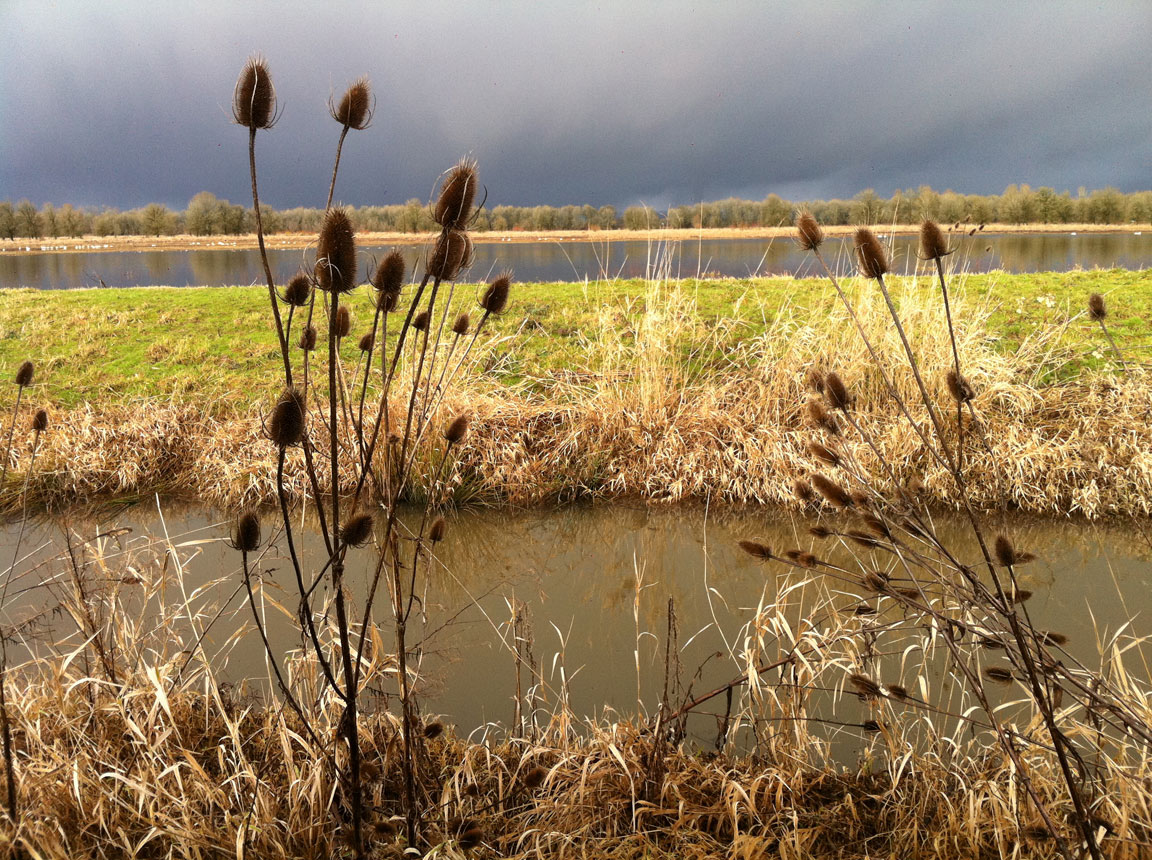
I took the picture below last winter with my iPhone, just wanted a quick shot of my favorite place to look for bitterns, I took it with the phone since the view is similar to what I see with my eyes as I drive along. It’s a bit hard to see but there’s a bittern almost dead center in the picture, on the opposite side of the channel a few feet up from the water line.

Suffice it to say they’re hard to see but I’ve gotten pretty good at it. Once I get to my favorite bittern areas, I wait until there’s no traffic behind me and then let the car creep along as slow as possible as I scan the grasses for these elusive birds. I normally take our Subaru to the refuge but this spring I’ve been taking our Civic, mostly to see if I could tolerate driving a stick shift at the refuge.

The biggest problem I encountered is exactly this scenario. At these speeds, the car is right at the stall speed and it requires a lot of pedal work to keep the car front stalling out. It’s doable, but annoying, and probably not so great for the clutch. So my preference for the next car will be an automatic, although if the stick is a particularly good one, the irritation at Ridgefield might be balanced out by fun on the commute.

And honestly, I’m done talking about cars, starting now!

By the by, the body of water on the other side of the the berm is Rest Lake, and those white dots are tundra swans that winter at the refuge in the hundreds. The bittern above was also at Rest Lake, but at a different spot than this one.

IMG_0494_1152

A Good Year

One of a Pair

I knew it was going to be a good year for coyotes.

During a two week stretch in mid-to-late January, I saw a coyote pair frequently and took some of my best coyote pictures ever. But not long after I jammed up my ankle and took a two month sabbatical from Ridgefield. Even after the ankle healed, I’ve only been back to Ridgefield three times this spring with not a coyote picture to show for it. While it’s been an extremely wet spring here in the Northwest, many of the weekends have been sunny. The refuge gates are locked until well after sunrise and before sunset at this time of year, so the best light on sunny days is lost. And sunny days bring out the crowds, so I prefer to stay home and get in some extra hedgehogging.

I did see a young coyote on my visit a week ago. It was so close that getting a picture was going to be difficult from my angle without risking spooking it, so I just pulled over and watched as it hunted beside the road. But I saw a Subaru coming up quickly down the road, a car I recognized since we have one just like it. I knew they had seen the young coyote, and I also knew what was going to happen next. The coyote watched them approach and as they got on the brakes on the gravel road, the coyote bolted at the sound.

In the real world they weren’t going fast at all, just Ridgefield fast, and even a tolerant coyote won’t tolerate that.

This adult is one of the pair that I watched with such success in January, it’s coat drenched on a wonderfully wet winter’s day. And I know I said I wasn’t going to talk about cars anymore, but this is why I’ve been on the hunt for a quiet car. When I’ve worked to earn an animal’s trust, the sound of the gas engine firing up feels like a betrayal of that trust.

Not As Easy As It Looks

An adult and baby pied-billed grebe

I’ve hoped to photograph pied-billed grebe chicks each spring, as their fantastic faces look nothing like the birds they will become, but this is the first year I’ve had the chance. The two parents had a handful of chicks and were busy feeding them, catching a variety of underwater creatures and feeding them to the hungry chicks. It seemed to me the adults were killing their prey before handing it off to the youngsters, but even so the chicks often dropped their food into the water as they learned to move items about in their bills. The adult was always nearby if necessary to retrieve the food, but in this case the chick was able to pluck it from the water on its own.

The Quiet American

A coyote eats a Townsend's vole on a rainy winter morning

So it always is: when you escape to a desert the silence shouts in your ear.
Graham Greene, The Quiet American

When I first had in mind to replace my 2001 Honda Civic, I was thinking about avoiding the maintenance and reliability issues that come with old cars, about improved safety of new models, about getting back to the hatchback form factor that I love to an admittedly irrational degree, about maybe even switching to an all-wheel drive model.

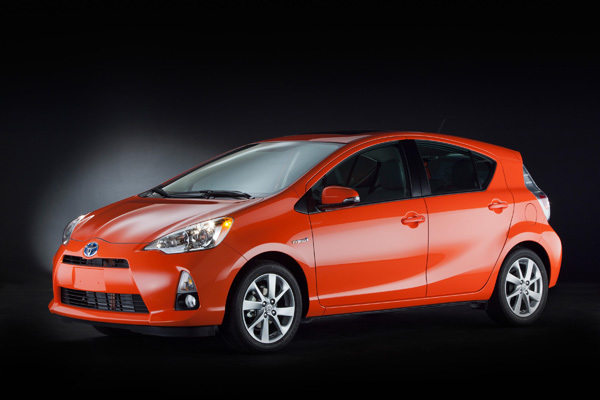
But as much as anything what I really wanted was a nice quiet car for the auto tour at Ridgefield. And as far as Ridgefield cars go, the new little Toyota Prius c is at the top of my list.

It’s not a plug-in hybrid and would need to run the gas engine for much of the loop around the refuge, but that’s OK, where I really want the quiet of an electric car is when I need to move the car over very short distances at very slow speeds, such as when I was photographing this hunting coyote, one of a pair that slowly worked the marsh for Townsend’s voles on a rainy winter’s day. They were comfortable with me and paid me little heed, but even so I cringed whenever I had to start the car and disturb the stillness of the early morning.

It is easy to cross from one front seat to the next in the baby Prius, perfect for when I want to photograph from the passenger’s side of the car. It’s nice and short and narrow, good for parking along sections where there isn’t much room for other cars to get by. Plus it gets crazy good gas mileage in the stop-and-go conditions that define the auto tour (I typically move about in the 2 to 5 mph range, with a top speed of 10 mph or so, and lots of starting and stopping).

And best of all, it doesn’t make an annoying beep when it backs up the way the rest of the Prius family does.

But sadly our visit to the Portland Auto Show at the start of the year diminished my enthusiasm for the car. While the exterior of the car seemed nice as long as you spring for the alloy wheels, the interior seemed a bit cheap. But such is my love for Ridgefield that the Prius c remains in my top tier of cars should I decide the time has come to say goodbye to the Civic.
2012_Prius_c_600

The Start of the Year

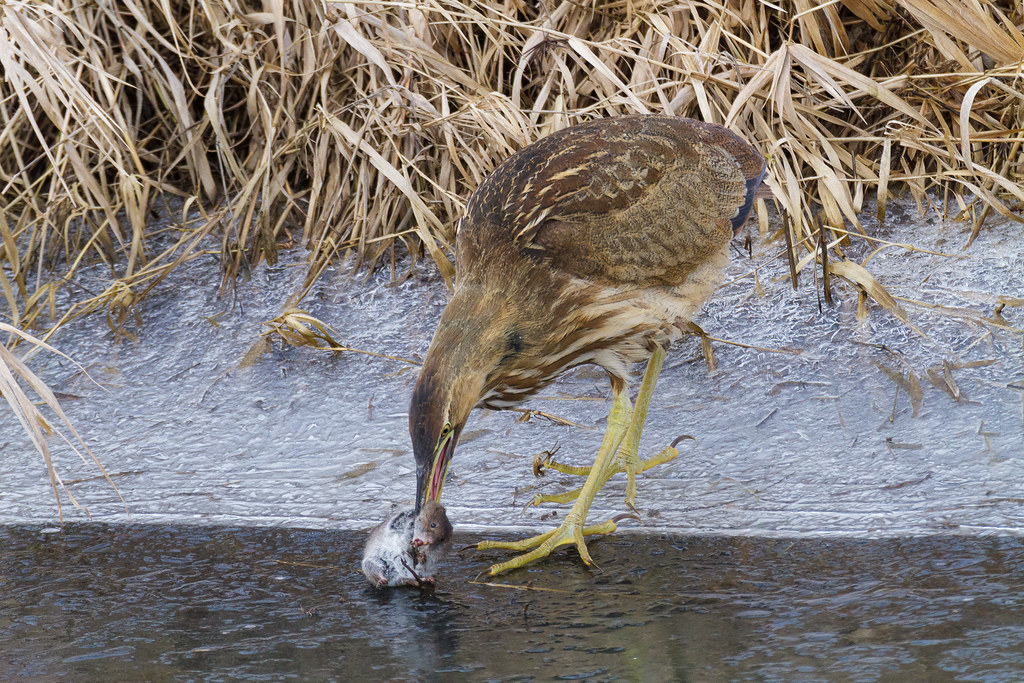
An American bittern brings a terrified vole from the grasses down to the water's edge to dunk it before swallowing it, but the water was frozen. Taken at Rest Lake at Ridgefield National Wildlife Refuge in Ridgefield, Washington on January 1, 2011. Original: _MG_2172.cr2

Although I failed in my quest to find a bittern in the frost on the last day of 2010, the first day of 2011 rewarded me with a bittern on the ice — a hunting bittern on the ice. The day started out promising when I glimpsed a blacktail buck on the drive down through the canyon and onto the refuge at Ridgefield, but after putting on a show the day before the rest of the animals seemed to be sleeping in. While the early hours weren’t crowded, as the morning wore on the visitors picked up rapidly and the big lens attracted a small crowd whenever I stopped.

On the far side of the refuge, I like to drive slowly along Rest Lake to look for bitterns, so I pulled over to let an approaching car past so that I could move at my own pace. Even as I was pulling over I noticed this bittern down below in the frozen channel and settled in to watch. Within moments the bittern struck into the grass and brought out this terrified vole. Bitterns often like to dunk their prey in the water and so it gingerly stepped down the rim of ice, struggling not to slip, and then dunked the vole into the water. Or tried to at least, but failed, since the water in this section was still frozen. It seemed mystified for a moment and stood motionless before eating its meal undunked.

After taking a few environmental portraits of the bittern on the ice, I moved ahead just slightly to another nice location and waited for the bittern to come past. But a Land Rover came up behind me and the couple got out of their car (a no-no on the auto tour during the winter) to set up their scope to view the distant ducks and swans. Not surprisingly I didn’t see the bittern again.

When I got to the end of the auto tour, I was going to go around again but my heart sank when I saw a nearly solid line of cars between Horse and South Quigley Lakes. I learned my lesson from Christmas day, when I should have left when it got over-crowded but didn’t, and headed home. Ellie got an extra walk and playtime in the park, and extra hedgehogging as well, so all-in-all a fantastic start to the year for everyone but the vole.

An American bittern tries to dunk a terrified vole through the ice at Rest Lake at Ridgefield National Wildlife Refuge in Ridgefield, Washington on January 1, 2011. Original: _MG_2182.cr2

Turnabout is Fair Play

A close-up view of an American bittern catching a bullfrog at Ridgefield National Wildlife Refuge

One of the stories at Ridgefield this winter has been the American bitterns which have been putting on a show at several spots around the auto tour during many of my visits. I’ve always been on the lookout for bitterns so I’m not sure why I’ve had so much success watching them hunt lately, although it may have something to do with the fact that I spent far more time at the refuge over the Christmas break than I usually do. This bittern was mostly snagging small fish as it worked the channel beside Rest Lake, but at one point it stopped and started wiggling its neck side to side and then struck into the middle of the channel, bringing up this bullfrog. Bullfrogs themselves are voracious predators and, since they aren’t native to the Northwest, have combined with habitat loss to cause problems for some of our natives. This little bittern was doing its part to turn the tables and win one for the home team.

No Blackberry Breakfast

Close-up of juvenile red-tailed hawk's face looking down

There’s an invasive species of blackberry that has spread across the Northwest and is prevalent at Ridgefield. A variety of animals will use the berries as food or the thickets as cover, but this young hawk was using it as a place to listen for breakfast, every sound from below drawing its eyes downward. It didn’t end up catching anything, at least not during our time together.

Is It Morning Already?

A rough-legged hawk yawns at sunrise

I had the chance to photograph this rough-legged hawk over several weeks as she was often hanging out near the auto tour at Ridgefield, but I wasn’t happy with the close-up shots as the skies were always a dull gray overcast. I arrived at sunrise on Saturday morning specifically with the hope of photographing her under clear skies, so I ignored all of the other animals at the refuge and headed straight to where I had seen her last. Thankfully not only did I get my blue sky but she was waiting on a sign post near the road. There was little traffic at the refuge at that hour so I had the chance to watch her for some time. She eventually let out a large yawn in the beautiful morning light, and I was very lucky that she turned back towards the sun when she yawned so that the sun illuminated her mouth.

I laughed to myself thinking that I wasn’t the only one who thought it was awfully early in the morning to be out and about.