Three sandhill cranes, part of a much larger flock, fly in formation over Rest Lake at the end of a cold winter’s day. The skies above Ridgefield can be noisy in the winter, usually from the large flocks of cackling geese and tundra swans that overwinter at the refuge, but particularly early or late in the day sandhills may join the chorus.
Tag: Washington
The Quiet Blue Horse
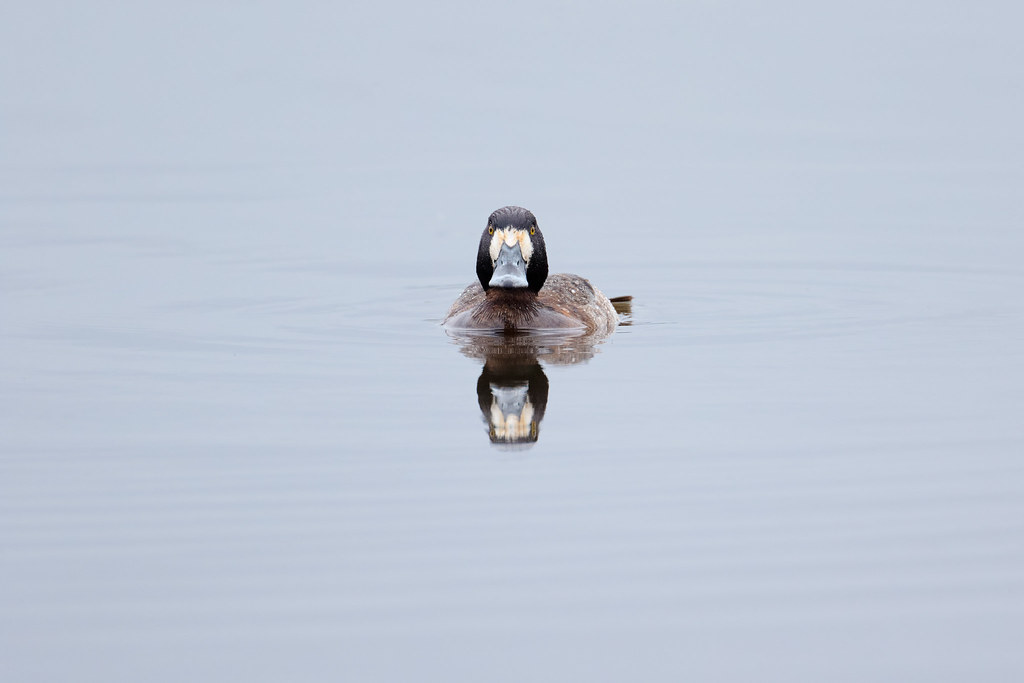
There is much of me in this simple portrait of what may be my favorite duck. Not lesser scaup in general, but this particular duck. Over the past handful of years I’ve spent many hours sitting at Horse Lake watching a female lesser scaup dive for food. I don’t know that it’s the same individual from year to year, or even visit to visit, but I’m a little disappointed if I drive by and she’s not there.
Many photographers only like to shoot on sunny days but I also love days like this, the typical winter day of the Northwest, heavy overcast with an occasional gentle rain. I often won’t go to the refuge on sunny days since it brings out the crowds, but if it’s raining I can sometimes sit quietly and enjoy the subtle beauty of this seasonal pond without the constant noise of cars driving by (or idling while parked behind me). The scaup often hangs out on the far side of the pond but if there isn’t much traffic she’ll swim over and feed near the road.
While there are often other ducks present, she’s usually the only scaup. Perhaps she enjoys the solitude of the place as much as I do. She’s tucked her feathers tightly against her head, a sure sign that even though she just surfaced, she’s about to dive underwater to feed again.
Constant Movement
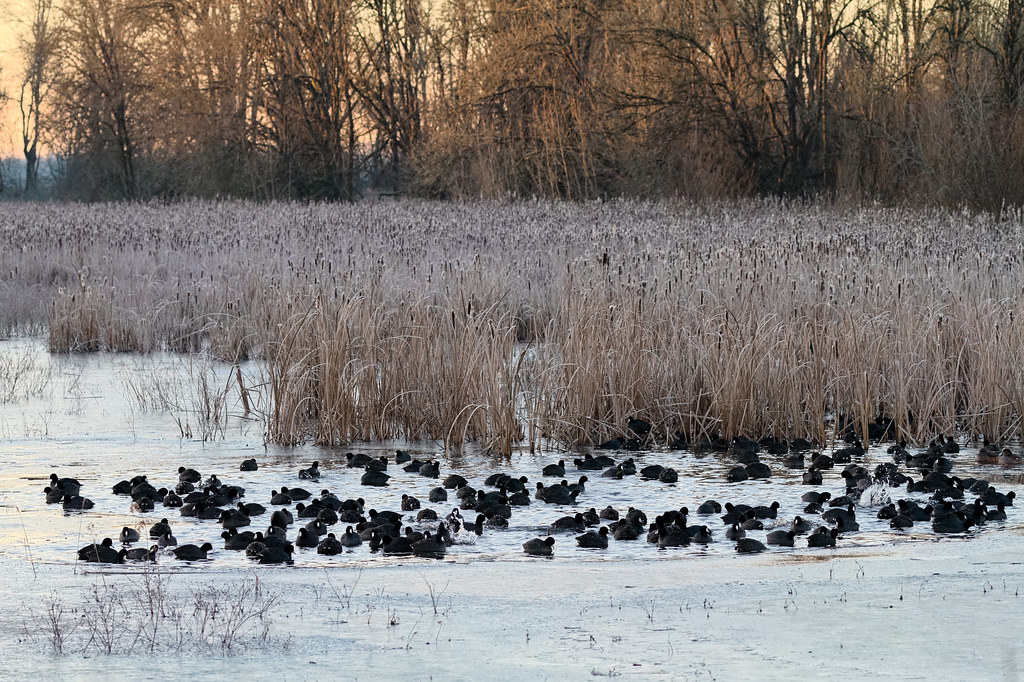
A cold snap at the end of 2014 left many of the ponds and lakes at Ridgefield frozen over, but this group of American coots was helping keep a section of South Quigley Lake open with their constant movement as they dove under water in search of plants to eat. There’s a culvert near here that runs under the road and keeps water flowing between the north and south lakes, so the water here tends to stay open longer than the other parts of the lake.
The handful of splashes in the picture are from coots diving under the water, in the splash on the far right one of the coot’s legs is visible sticking up above the water. There’s also a pair of American wigeon on the far right, they frequently will try and take some of the plants that a coot brings to the surface, but on this morning they seemed content to just hang out with the coots and enjoy the safety in numbers as well as the open water. The sun was just starting to rise on this New Year’s morning, there’s a hill above the refuge that blocks the sun right at sunrise but it was just starting to crest the hill and illuminate the trees at the far side of the lake.
Wingtips
Just your typical “Say, you didn’t bring any of your delicious cats with you, did you?” bald eagle flyby.
This young bald eagle had been heading in a direction to take it over to my left but it changed course and headed straight toward me. This was the last picture I could take showing its full body as with its long wings it was already wingtip-to-wingtip in the frame. The eagle was flying much too fast for me to change lenses as it flew closer, and it did fly quite close to my car before turning to follow the edge of the lake.
I’ve noticed many times before how the birds that soar above Ridgefield’s meadows and lakes have their flight feathers spread apart at the wingtips, both vertically (as you can see in this head-on view) and horizontally, but this time I was finally compelled to do a little reading to see if there was a benefit to it or if the birds lacked the structures necessary to keep them locked together under the pressures of flight. It appears that the spread feathers affect the vortices that form behind the wings when they’re providing lift, reducing drag as the bird soars through the air.
📷: Canon 7D II | Canon 500mm f/4L IS USM + 1.4x III
🗓️: January 1, 2016
The Fallen
When I arrived at Ridgefield in late 2013, after an absence of nearly a year, I lamented how many of the snags near the road in Long Lake had fallen over as they were a great place in spring to photograph songbirds up close. This more distant snag was still standing and offered a lovely background hinting at the surrounding environment with the blue of the water and the green plants at the edge of the lake and the brown grass of the meadow beyond. In the spring of 2014 I was watching barn swallows hunting for insects over the lake when this one perched for a moment and chirped to its compatriots still in the skies.
This snag has since fallen and there are no more near the road. I once saw a Jedi knight lift a sunken X-wing fighter out of a swamp, so I remain hopeful that one will visit Ridgefield and set some of the fallen snags upright once more.
A Meal of Grasshoppers
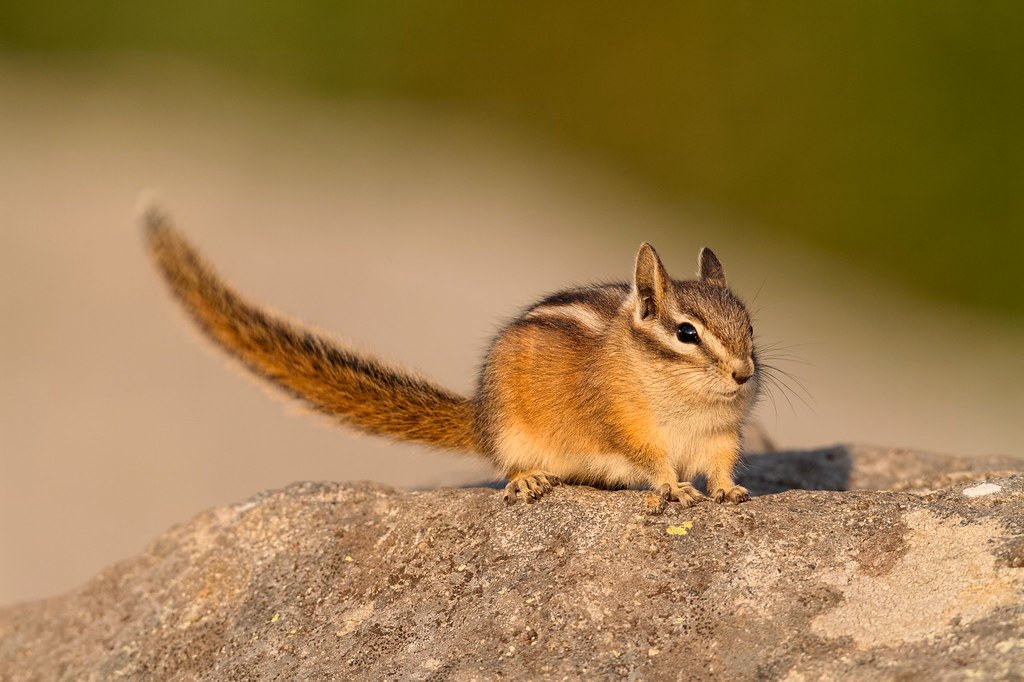
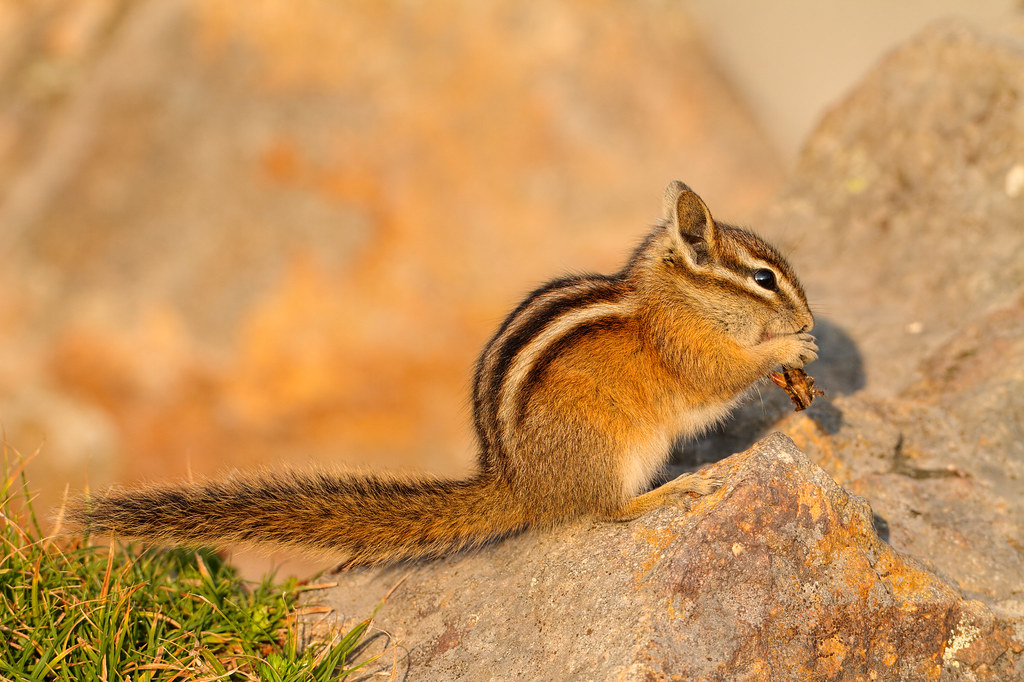
I had been watching this chipmunk feeding near the trail in Mount Rainier National Park for quite a while when it straightened out its tail and began whipping it back and forth. I looked behind me, then checked the skies, but couldn’t see what had raised the alarm. There were some grouse feeding nearby that were partially obstructed but they had been there even longer than I had.
I soon got my answer when it ran over right in front of me and picked up a grasshopper that had been smashed underfoot by a hiker, then ran back to the big rocks to eat it. Even though I had been watching it for a while, I’m guessing the tail flashing was one last test to make sure I meant it no harm. When it was done eating, it actually ran between my legs and on down the trail.
I guess I passed the test.
Last Light
A great egret hunts in the last light of the day. The sun was setting but its direct rays were already blocked in this channel, leaving a nice soft light. I didn’t expect the egret to catch much but it caught three bullfrogs in quick succession. I don’t know how many more it caught before calling it quits as at that point I had to leave both because the light was gone and to get out of the refuge before the automatic gate closed for the night.
Hooded White Horse
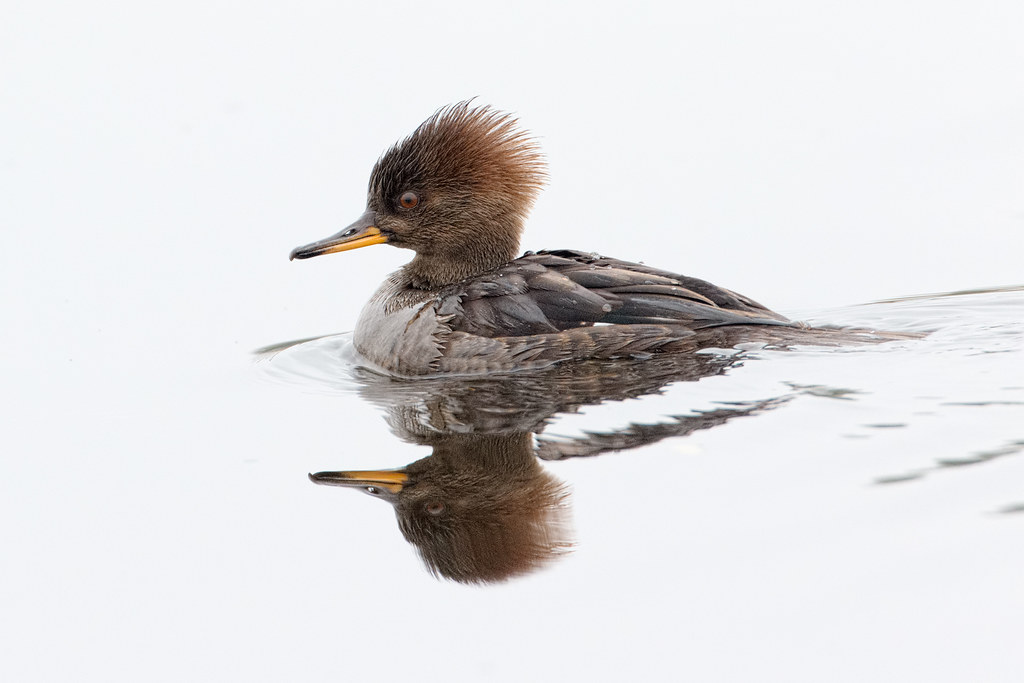
Reflections on a cloudy day turned the surface of Horse Lake white when I exposed for a female hooded merganser as she swam past my car. The auto tour at Ridgefield is one of my favorite places in the Northwest as you get to see such lovely wild animals like this up close and behaving naturally, frequently without disturbing them.
Settling In
An American bittern seemingly ready to settle in for the night. It had been hunting up and down the channel in a light afternoon rain, but as the sun peaked out at sunset it settled into the grasses and hunkered down. Which made me wonder, where do bitterns spend the night? I’ve no idea if it was going to stay here for a while, but it was a lovely little parting gift on Christmas of 2014, as after taking these pictures I left for home.
The picture below is a zoomed in version of the bittern. I had upgraded my camera gear not long before, picking up the Canon 7D Mark II camera in late October and the Canon 100-400 mm II lens in mid-December. The new lens replaced my old 100-400 lens which I had for almost 14 years, but it was having some issues after so much use (I took it on every hike I went on) so I’m glad Canon finally updated it. This picture was zoomed in to 400mm, the top picture was at 100mm.
Really love this lens, very thankful for it.
Death of a Salamander
While I normally like to arrive before sunrise, I got a late start to my visit to the refuge in late February, as I was tired and decided to sleep in, arriving after noon. There was a great egret at the edge of Horse Lake, right at the start of the auto tour, so I pulled over and set up to take portraits since it wasn’t on the hunt.
Or so I thought.
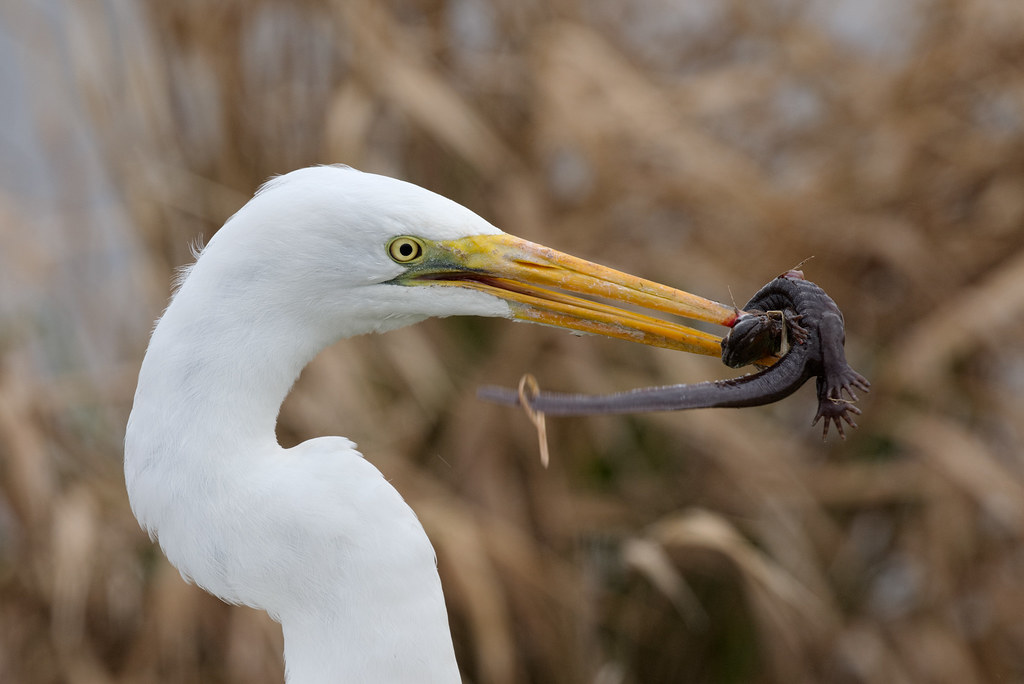
Unfortunately my camera wasn’t set up for action as the egret suddenly struck into the water and brought up this northwestern salamander. I’ve rarely seen these lovely salamanders, and only when they’re being eaten, as the terrestrial form (adults can be aquatic or terrestrial) is usually below ground. During breeding season they move to the water to breed, and I believe late February is prime mating season for these salamanders at sea level, so hopefully it had a chance to pass on its genes before the egret caught it. I’ve never seen one this large, I was rather taken aback when I saw what it was.
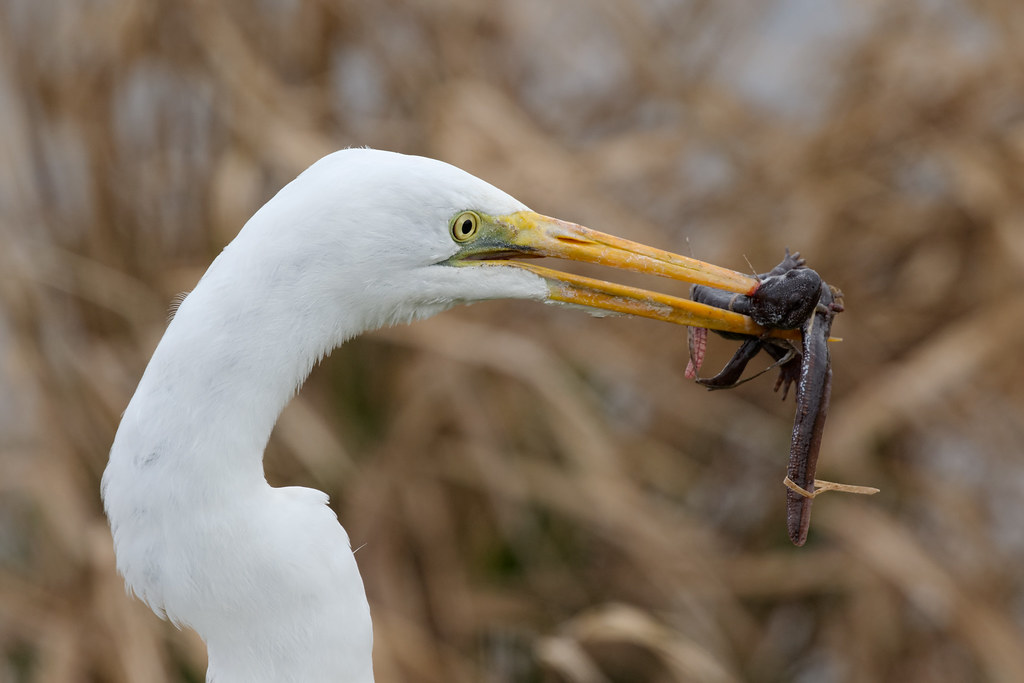
When i first saw the white spots running from the head of the salamander down to its tail, I assumed it was part of its coloration and was confused when I later read that this is not the case. I couldn’t see that it could be any other species, but then I read that the white spots are poison that the salamander releases as a defense mechanism.
I don’t know if it explains something I found a little odd, as when the egret first caught the salamander it brought it out of the water and tossed it several yards away into the grass. It seemed rather upset and agitated with the salamander, perhaps I thought because the salamander’s long tail kept thrashing back towards the egret’s eyes, and I thought to myself, “Well, you are trying to eat it!”, but perhaps it was upset because it got a taste of the poison.
The egret grabbed and tossed the salamander multiple times, I was surprised at how long the little thing put up a fight. The egret’s first strike had opened a hole in the salamander’s side and some of its internal organs had come out, so it was going to die even if it managed to get away, so I wished I could tell it to just give up and its agony would end. Eventually it did stop fighting as much and the egret gave it a good dunking in the water, after which the salamander’s body went limp and its legs hung to its sides. The egret swallowed it in one fell swoop. I wonder now, although probably much too large to be killed by the poison, if it made the egret sick, and perhaps it might give the next salamander a pass.
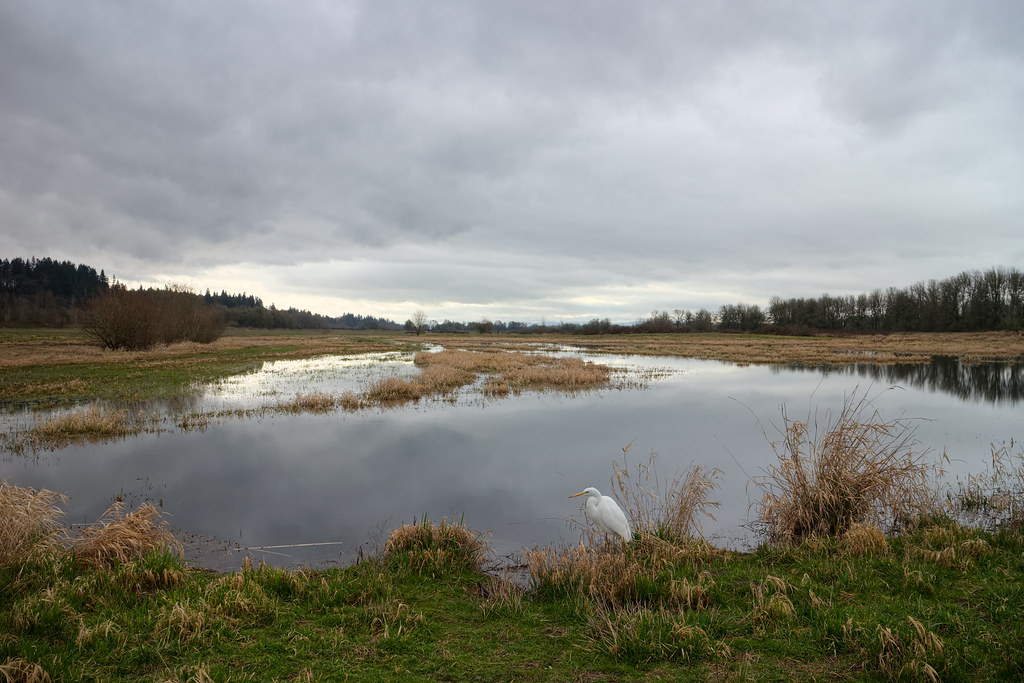
After I got over the thrill of seeing this magnificent little creature and the shock of watching it die, I reflected on how amazing it is that, just feet from where I have spent many, many hours sitting and watching and listening at this pond, an entire world exists under the water that I have little knowledge of and no way to observe. I would have never known this magnificent salamander was there if not for the egret (this wider view of Horse Lake shows the egret not long before it caught the salamander, just over to its left).
Above the water I can watch and learn, but the things below I see only when they are brought out from the water and into the air, usually as they die. That makes me a little sad, but this encounter did encourage me to learn about the salamanders as I knew nothing about them before, apart from the name. Their numbers declined by one that day, but the northwestern salamander population in general is doing well in its range on the western edge of North America, from northern California up through British Columbia.
Maybe one day we’ll meet on friendlier terms. In the meantime it makes me happy knowing they are there, even if I can’t see them.
It also made me happy to see that, a while back, one of my pictures was used for the good of salamanders, as the U.S. Fish & Wildlife Service used my favorite rough-skinned newt picture on their Facebook page to announce some steps they are taking to protect our salamanders from a fungus that is killing them elsewhere. I like how Flickr displays the usage rights I set for my pictures, as I set most of them so they can be used for non-commercial purposes, a long-standing tradition dating back to when I first started putting my pictures online back in the mid-90’s.