
A saguaro at first light on the Chuckwagon Trail. The old ones don’t have so many spines left at their base.

Scratcher of heads, rubber of bellies
A saguaro at first light on the Chuckwagon Trail. The old ones don’t have so many spines left at their base.

A rock squirrel calls out atop a large granite boulder near Granite Mountain. It had a piece of saguaro fruit but instead of eating it was sending out the alarm for much of the time I watched it during a food and water break. At first I thought it was complaining about me to the other nearby squirrels, even though I was far down the hill, but it kept looking in other directions and went quiet for a while before starting up again. It has lots of enemies in the desert, most of whom would not have been visible from my vantage point, but I haven’t spent much time with these squirrels yet to get a feel if it was sending out an alarm or claiming this spot as its own.

We discovered early on that Boo had no bones, this was a common sleeping pose a couple of months after we adopted him in 2013. The clock with the translation of a proverb attributed to the Zuni I bought at an art fair in Salem years ago. Though it no longer works I keep it out as I bought it for the art not the clock.

Most of the desert washes I cross when I hike are fairly small but not so Apache Wash, there are signs as you approach warning you not to enter when flooded and the large debris scattered around tells you why. It was damp on the morning I crossed on my first visit to Phoenix Sonoran Preserve but the rains and thus the danger had long since passed the day before, so I and a pair of desert cottontails enjoyed the quiet before the sun came up.


Ellie in 2013 on high alert after my wife opened the refrigerator door. She’d wait and see what you took out of the fridge before deciding if she should get up, she’d come running if you pulled out the cheese and meat drawer but stay where she was for vegetables.


One of the difficulties I had when learning to identify lizards after we moved here was getting a feel for the size of lizards based on pictures. Guide books have typical measurements but that isn’t as helpful until you can narrow down the search. I wish there was an app that would let you sort them first by geography and then by size. Over time I’ve gotten much better at identifying most of the common lizards including the one I see most often, the common side-blotched lizard.
I met this one in July on the Bootlegger Trail near Granite Mountain, he’s nicely showing off the dark blotch behind his front legs for which he is named as he perches on his own granite mountain. I’ve been getting a bit worn down the past few weeks and have only gone out hiking once each weekend so I’m going to take a couple of days off this week to hopefully recharge a bit. I saw a handful of these little lizards on the trail this morning but didn’t see any opportunities for pictures so I enjoyed my time with them instead.
As for their size, it can be hard to tell from a telephoto shot like this but thy are tiny, typically 1.5″ to 2.5″ SV (snout-to-vent, which goes from the tip of the nose to the vent near the base of the tail). They mostly eat insects and the like but lots of things eat them, including larger lizards. They are active throughout the year at my elevation (at least on warm winter days) so I’m happy they’ll keep me company when the other reptiles are hibernating.
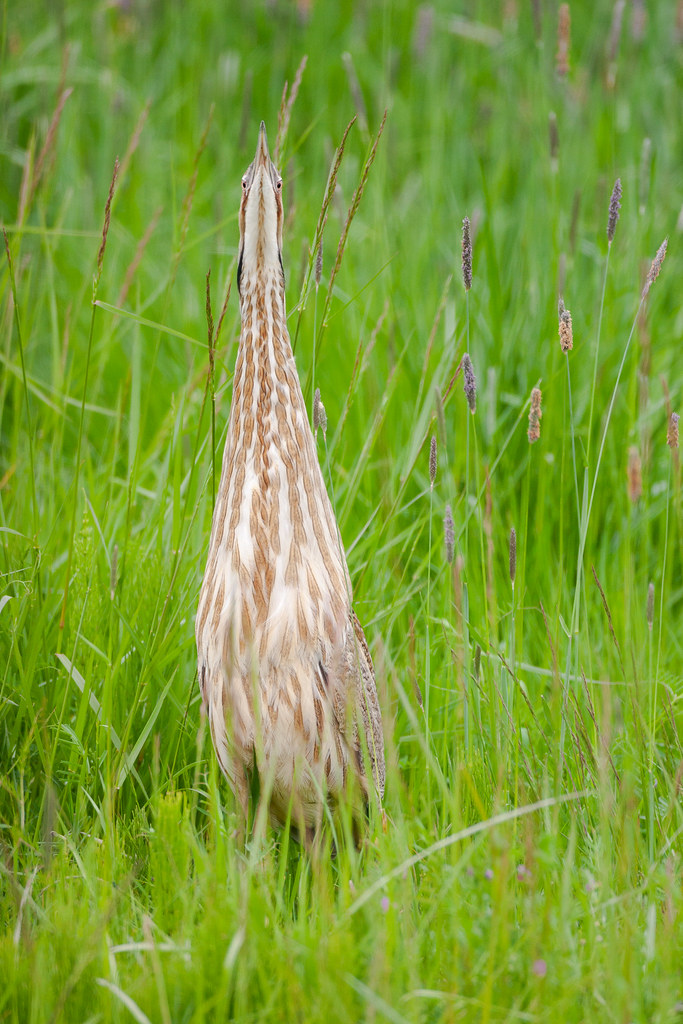
Bitterns can look like a football with a head attached so it always amazed me when they’d stand and stretch their necks up, and up, and up. Useful for seeing over tall grasses and also as a defensive pose, I saw them do it multiple times when bald eagles soared high overhead, although the subterfuge worked best when the grasses were brown instead of green. I was never quite sure how they distinguished the distant eagles from other birds of prey but I did a quick check of the skies if a bittern I had been watching suddenly struck a thin vertical pose.

The disembodied head of Boo sees all, knows all.

Two black bear cubs follow their mother into the forest in Yellowstone National Park (from 2006).

